

















The Verdict
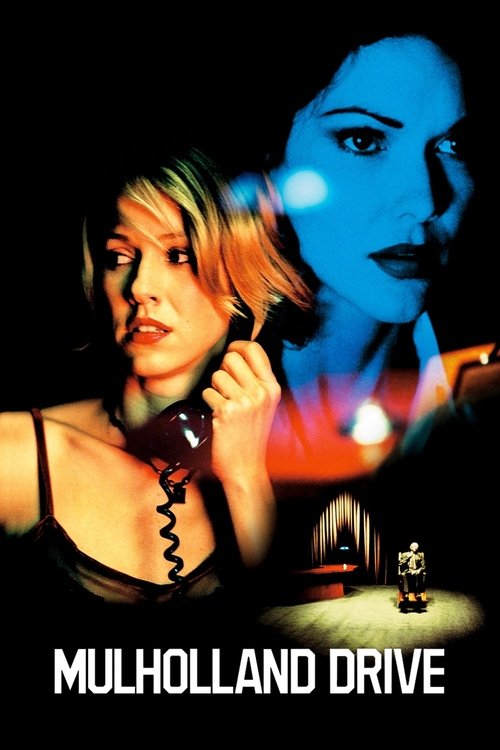
On "Mulholland Drive", a young brunette suffers an accident and loses her memory. A young blonde aspiring actress moves to Hollywood in an apartment left at her disposal by an aunt and finds the brunette inside, distraught and unable to remember anything.
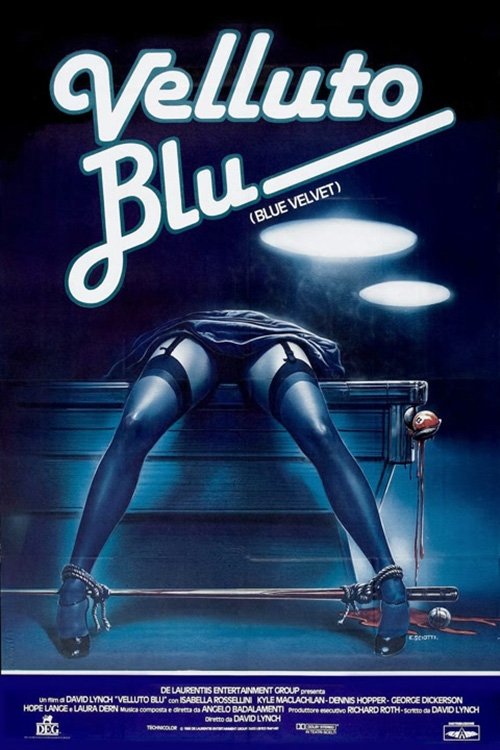
On "Mulholland Drive", a young brunette suffers an accident and loses her memory. A young blonde aspiring actress moves to Hollywood in an apartment left at her disposal by an aunt and finds the brunette inside, distraught and unable to remember anything. Between them, friendship is born first and then sexual attraction (yes, in "Mulholland Drive" there is also a lesbian scene, and it is well done and full of eroticism), and between the search for the lost identity and a parallel story that shows the difficult production of a film, a plot develops that intertwines until a final that overturns all the space-time perspectives of the story. The silence. The body that loses all its referential connotation. The subject that transforms itself into a perpetual becoming. The transfiguration of identity as the death of meaning. The darkness and the mystery correlatives in the ineffable sense of being. The absolute genius of a director who disregards narrative coherence to immerse the viewer in a gloomy spectacle of dreamlike representation that plunges into unease and leaves shaken in the soul and stunned in the mind. All this is "Mulholland Drive", the most recent work of who is perhaps the greatest living director (although the Hollywood circus seems not to notice preferring to award the Oscar to the modest craftsman Ron Howard), a director who is either adored or hated, for whom one loses oneself in an infinite cult or is horrified by the incomprehensibility of a cinema from which the soft and conventional palates flee at full speed. Those who know Lynch, who have seen masterpieces like "Blue Velvet", "Eraserhead", "Twin Peaks", "Fire Walk With Me", know that watching one of his films means taking a risk. Risking not understanding anything, risking feeling some irritation in front of an apparent hodgepodge of images and meanings that seem put there without any logical connection, risking being marked by the materialization of our worst nightmares, risking a kind of temporary (or perhaps definitive?) mental and physical madness. And yet this is art, in its purest form, as rarely seen. So one can let it go and watch a little movie of pure entertainment with zero pretensions and zero originality and no depth. Or one can take the risk, and one discovers that Lynch is such a splendid author that defining him in words is almost impossible. Lynch plays with the viewer, quotes himself (in the film appears the mythical dwarf of the red room of "Twin Peaks"), relies on two good and beautiful protagonists, the emerging Naomi Watts and Laura Harring, accompanies himself with the splendid music of the omnipotent Angelo Badalamenti (who also acts in a small and hilarious scene), terrifies and hypnotizes us with the class of every single shot, wins a well-deserved Palme d'Or for best direction at the Cannes Film Festival (where, unlike the Oscars, the concept of auteur cinema still counts something), and takes us once again into the nightmare. Sometimes it is worth taking the risk.
Comments
Comments (0)







Comments