






The Verdict
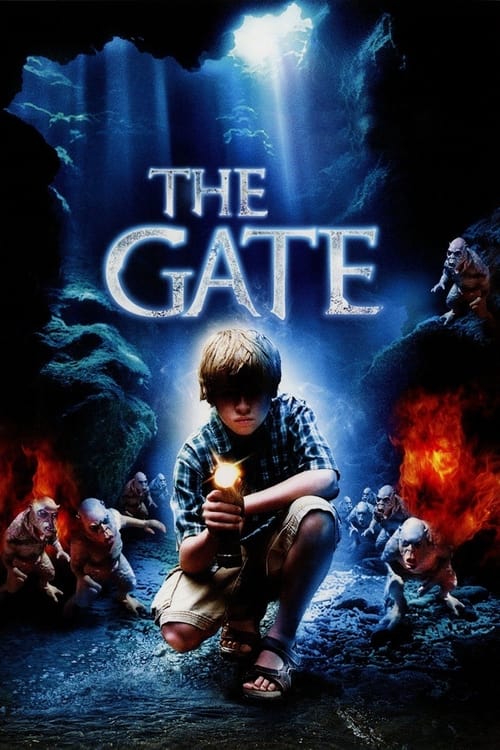
In the courtyard of little Glen's house, a tree struck by lightning is uprooted and taken away by some workers, leaving a gaping hole in the ground. The boy, together with his friend Terry, begins to fantasize about the possibility that this hole is actually a passage through which some demons could come to Earth and enslave humanity.
In the courtyard of little Glen's house, a tree struck by lightning is uprooted and taken away by some workers, leaving a gaping hole in the ground. The boy, together with his friend Terry, begins to fantasize about the possibility that this hole is actually a passage through which some demons could come to Earth and enslave humanity. But the boys' hypotheses are not entirely fantastic because, after Terry read a magic formula in one of his occult books, the demonic forces really unleash and attack Glen's house in search of two victims to sacrifice to the Prince of Darkness to allow his return to Earth.
Dated 1987, "Don't Open That Gate" is one of the most famous horror films of the late 80s to deal with childhood horrors framed from a completely childlike perspective: the protagonists of the story are two boys and one of their teenage sisters, the threat is represented by demons and infernal creatures that come from the underground, the action takes place between childish pranks, atavistic fears, and fantastic resolutions always strictly linked to the pre-teen universe.
Seen from this perspective, "Don't Open That Gate" immediately reveals its characteristics as a naive product of entertainment destined for a strictly "of the era" teen audience, but if observed with an internal look at the subgenre, one cannot help but notice that this film represents one of the most successful and happy marriages between horror and childhood from those years.
Among "Trolls", "Ghoulies", "The Cat's Eye", "The Killer Doll" and many others, the 80s were marked by a real subgenre that made children the protagonists of very bad stories, often tending towards fantasy, in which the universe of childhood fears was explored, most of the time with a disarming superficiality, putting together stories that represented a metaphorical passage from the state of childhood to an inner maturity caused by the traumatic experience.
In "Don't Open That Gate" we do not have a difficult and introverted child as happens in most of these films (attention, it was thought to introduce this character, but not in the leading role!), but a loved boy with no psychological problems, destined however to come out with force from the protective shell in which he is enclosed to be able to face the external problems, here represented by demonic invaders. And to do this, all the topoi that represent childhood fears are explored: loneliness and, above all, the loss of loved ones; the wardrobe and "under the bed" as places where threats lurk; the death of a pet as a cause of pain and ominous omen; the dream and unconscious world (not by chance the film opens with a nightmare of the little protagonist).
The use of special effects in this film is fundamental and the aesthetic that the demons have, created with a successful stop motion, is one of the highest levels reached in this field: the Lilliputian demons that come out of the hole are terrifying and at the same time extremely fascinating, the giant Lovecraftian demon that appears in the final also has a stunning representation. There is not a considerable dose of gore, but frankly, it would have been intrusive in a work of this type, more dedicated to creating the atmosphere.
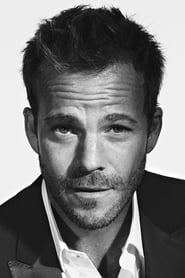
Among the actors, a very young Stephen Dorff ("Blade", "Paura.com") can be recognized in the role of Glen. The direction is by Tibor Takacs who knows how to effectively dose a first part of presentation, more reflective and with good moments of suspense, and a second frenetic and dedicated to easy scares and special effects. Remember that Takacs, in addition to "Don't Open That Gate", directed in 1989 a terrifying and very successful story of love and madness with "Alone in That House" to then lose himself inexorably among the direct-to-video productions (his is the recent and bad "Rats").
There is also a "Don't Open That Gate 2", always directed by Tibor Takacs, in which the character of Terry becomes the absolute protagonist of the story, but it is a difficult-to-find film and really bad.
Comments
Comments (0)






Comments