













The Verdict
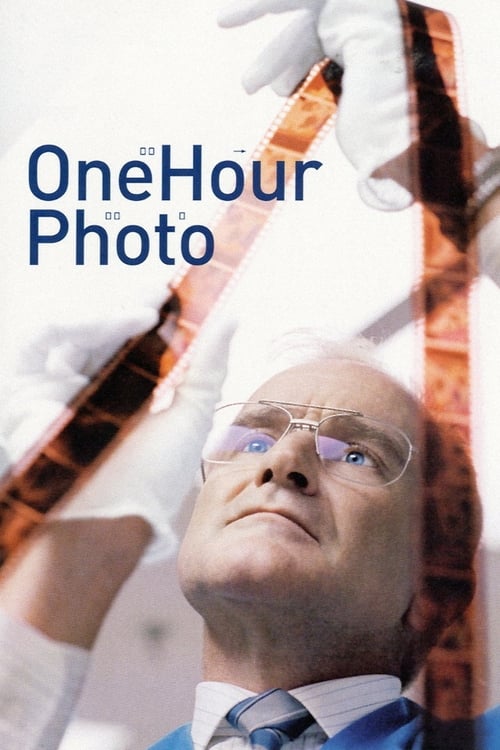
Sy Parrish (Robin Williams) is a smiling middle-aged man who makes his job, the development and printing of photographs, his only reason for existence. He steals the images he develops, appropriates the happy moments immortalized by the lens of a camera.
Sy Parrish (Robin Williams) is a smiling middle-aged man who makes his job, the development and printing of photographs, his only reason for existence. He steals the images he develops, appropriates the happy moments immortalized by the lens of a camera. Sy's miserable existence is entirely based on the Yorkin family, whose events he follows from the birth of their son Jake: he has developed all the photos that have marked the life of what seems, on the surface, a beautiful and happy family. Often he imagines himself in front of that lens, celebrating with the Yorkins, father, mother, and son, and dreams of being a dear uncle, loved and welcomed into the family environment. But when he is fired and, almost simultaneously, discovers that behind the apparent harmony of what he believed to be the "perfect" family there are actually problems, arguments, and misunderstandings, Sy begins to lose control... First-time director Mark Romanek (who also wrote the screenplay of the film) directs with surprising skill a photographic and hyper-realistic thriller. Instead of seeking the usual sterile exuberance of images and special effects, Romanek opts for a film with a dry and straightforward style, a pessimistic work based entirely on details and particulars; a film almost "cold," set in a white and aseptic space, constructed maniacally like the photos developed inside the printing lab of the mad protagonist Sy. The film takes off immediately, essentially centered on Mr. Parrish's obsessive activity: the director decides to leave the entire spotlight to an exceptional Robin Williams, who really impresses with the lucid madness of his gaze and that unsettling smile that foreshadow the madness that will soon unleash. Accustomed to seeing him always play positive and comforting roles, it surprises the sure and absolutely convincing way in which Williams manages to tackle a character totally different from the previous ones, demonstrating great skill and versatility and remaining sure and effective even in the final part, when the film shows all its limits. It is indeed in the second part that the film gets lost when, instead, it should have led to the conclusion that long, albeit engaging, premise staged in the initial part. Romanek, faced with the need to devise a convincing ending and, above all, coherent with the story that precedes it, gets lost in altogether approximate solutions (like the absolutely gratuitous anti-pedophilia final moral) that end up invalidating all the good that had been seen before. A film that convinces halfway, therefore, but that is absolutely recommended if not to miss the excellent performance of a Robin Williams never so convincing since the Oscar.
Comments
Comments (0)






Comments