
















The Verdict
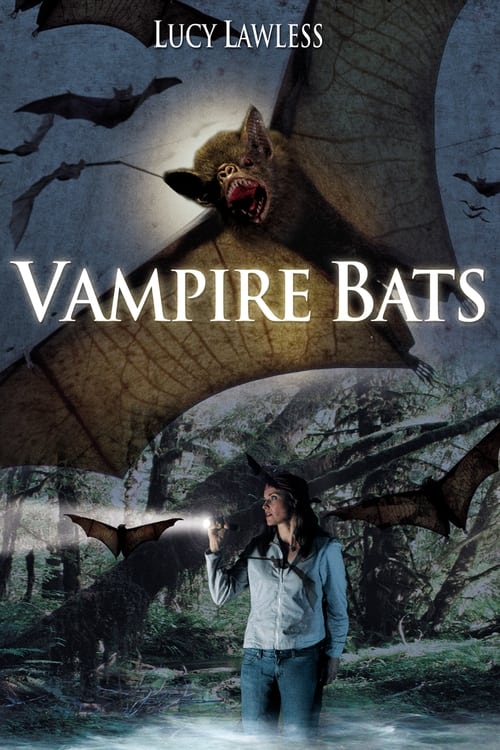
In a small town in the northern United States, local authorities discover the horribly blood-drained corpses of several deer and, subsequently, those of a boy and two fishermen.
In a small town in the northern United States, local authorities discover the horribly blood-drained corpses of several deer and, subsequently, those of a boy and two fishermen. A college professor assembles a research team composed of her students to discover which animal was capable of committing such crimes, eventually concluding that the culprits are ravenous vampire bats made more aggressive by a toxic substance in the water.
Within the vast and now classic genre of the beast movie/eco revenge, there is a small subgenre that chooses various types of chiropters (especially vampires) as antagonists of the story, in most cases sufficiently genetically altered by a crazy scientific experiment that escapes human rationality.
Pioneer of the "killer bats" subgenre may be considered "Night of the Day of the Dead," a 1979 b-movie directed by Arthur Hiller, to reappear on cinema screens in 1999 with "Bats" by Louis Morneau. A decidedly small subgenre, although the bat has always been associated with "evil," to the point that, in addition to the numerous popular traditions that want the bat as a "devil's animal,"
this cute little beast is often present in horror cinema, presenting itself as one of the creatures into which Dracula can transform, up to representing the cause that triggers the hydrophobia madness of the dog "Cujo".
"Vampire Bats" is the unappealing title of this film directed by Eric Bross and distributed only for the home video market; a film that places the bats of the title as absolute protagonists of the story. In this case, a greater adherence to reality was sought, avoiding exaggeration in the physical representation of the animals and their behavior, therefore taking as a model more "Night of the Day of the Dead" than "Bats," although the triggering cause of their aggressiveness may seem as fantastic as banal to the viewer.
The film, although a home video product, possesses a dignity characteristic of the classic b-movie, although, unfortunately, it exceeds in the superficiality of the character description and includes, alas, some odious teenagers characteristic of modern American horror. The protagonist of the story is a youthful and always attractive Lucy Lawless (the Xena of the eponymous TV cult), here in the role of an
intelligent biology professor with husband and children attached, dealing with the problems dictated by the move; the other actors, on the other hand, are all of a concerning anonymity.
The direction of Bross is also decidedly anonymous, adapting to the television standard although supporting a good photography and special effects of all respect (realistic the bats both when they are digital and when they are made with mechanical models). Gore below standard.
In conclusion, "Vampire Bats" is a harmless and negligible b-movie that will hardly be remembered, although it could be decidedly suitable for a carefree viewing on a hot summer evening, supported by popcorn, ice-cold beer, and air conditioning at maximum.
It deserves half a pumpkin more.
Curiosity. The film in question can be considered a sequel to "Invasion - The Day of the Locusts," in which the characters of biologist Maddy Rierdon and her husband Dan Dryer already appeared, always played respectively by Lucy Lawless and Dylan Neal.
Comments
Comments (0)









Comments