












Le Verdict
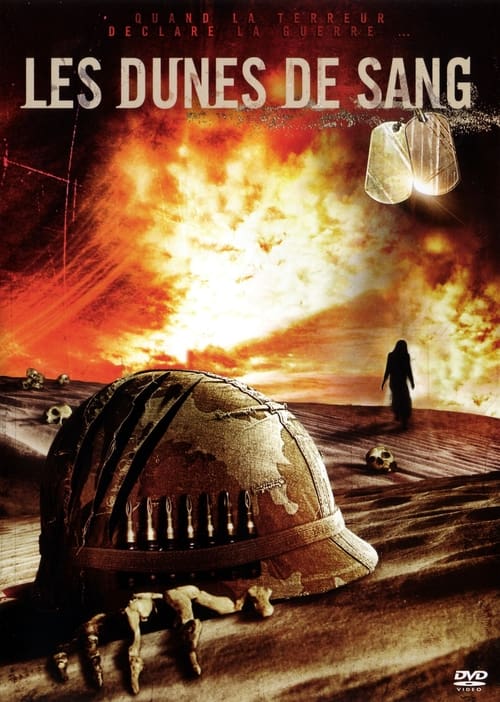
Afghanistan, 2002. Un peloton de soldats américains est envoyé en patrouille sur une route stratégique, mais tuer le temps n'est pas simple et, entre blagues typiques de la camaraderie et pensées tournées vers les petites amies à la maison, il y a aussi ceux qui décident de faire du tir au but avec une effigie religieuse étrangement cachée parmi les rochers.
Afghanistan, 2002. Un peloton de soldats américains est envoyé en patrouille sur une route stratégique, mais tuer le temps n'est pas simple et, entre blagues typiques de la camaraderie et pensées tournées vers les petites amies à la maison, il y a aussi ceux qui décident de faire du tir au but avec une effigie religieuse étrangement cachée parmi les rochers. Cette même nuit, une femme est retrouvée errant près de la tente et à partir de ce moment, des événements étranges commencent à se produire, menant progressivement à la paranoïa et à la violence mutuelle des soldats.
Les cas d'horreur belligérants sont très rares, peut-être parce qu'il est difficile de marier l'horreur de la guerre avec l'horreur surnaturelle sans dénaturer fortement l'un ou l'autre ; ces deux genres cinématographiques, d'ailleurs, reposent sur des langages parfois aux antipodes et donc difficilement assimilables. Il est curieux de noter, par exemple, que pour trouver un ancêtre à ce filon, il faut se rapprocher relativement dans le temps, en 1983, lorsque Michael Mann, encore débutant, dirigeait "La forteresse". Ces dernières années, il y a eu quelques tentatives de contamination intergenre entre films de guerre et films d'horreur et sont nées des œuvres plus ou moins réussies comme "Below", "The Bunker", "Deathwatch – La tranchée du mal", tous des produits qui doivent beaucoup au prototype mannien, tant pour la conception existentialiste du soldat que pour les rythmes calmes qui accompagnent la narration. "Red Sands – La Force Occulte", deuxième œuvre d'Alex Turner après "Dead Birds – La Maison Maudite", ne diffère pas de la norme. Ce film suit l'effondrement dans un abîme de folie d'un peloton de soldats confrontés à de vrais démons qui rappellent métaphoriquement l'absurdité de la guerre et des raisons qui poussent à la mener.
L'intention de Turner est louable et dès la deuxième tentative, on peut déjà entrevoir une empreinte autoriale qui rend le réalisateur de "Dead Birds" bien reconnaissable ; les deux films, en effet, ont vraiment beaucoup de points communs et, surtout, tous deux cherchent la combinaison de l'horreur avec d'autres genres qui y ont rarement été associés : ici, la guerre, là, le western. Mais les atmosphères lovecraftiennes et la tranquillité fonctionnelle du rythme de "Dead Birds" se perdent dans "Red Sands" qui, à la fin, peut être considéré comme un échec expérimental.
Turner nous dit que la mort et la damnation peuvent venir d'un geste aussi petit qu'irresponsable, comme détruire une effigie sacrée, et ce n'est pas un hasard si la guerre dans laquelle sont impliqués les protagonistes est précisément l'actuel différend au Moyen-Orient, où la différence idéologique et culturelle (et donc religieuse) a toujours été très présente et pertinente. La manifestation du démon à travers les traits d'une femme qui est accueillie au sein du groupe américain, tentant d'attenter à l'intégrité des soldats après avoir subi des violences sexuelles et morales de la part de l'un d'eux, n'est certainement pas un hasard et dans ce choix, on peut sans aucun doute entrevoir la métaphore du mélange culturel et du positionnement social stratégique qui, à l'époque récente, a conduit à des événements connus de la chronique internationale.
Le réalisateur, avec le scénariste fidèle Simon Barrett, parvient donc à porter un discours complexe et intéressant mais malheureusement échoue précisément sur le présupposé de base du divertissement qu'une œuvre cinématographique devrait quand même garantir, au moins en partie. "Red Sands" manque complètement de rythme, est répétitif, à certains moments réellement lourd : en somme, c'est ennuyeux. Les personnages qui peuplent l'histoire n'ont pas de charisme, semblent singer les stéréotypes du militaire-recrue des blockbusters cinématographiques, entre exemples de camaraderie et fréquentes diatribes. Après une première partie entièrement construite sur les clins d'œil/affrontements entre les protagonistes, le film devient une sorte de "La Chose" dans le désert, mais sans l'action et les créatures monstrueuses du film de Carpenter. Les personnages ne font que s'accuser mutuellement, montrent des signes de paranoïa et de tension émotionnelle constante, jusqu'à s'entretuer ou être tués par le démon.
Le démon, justement, autre pierre d'achoppement de "Red Sands". De plus en plus fréquemment, le Djinn, démon de la mythologie islamique déjà protagoniste de films d'horreur comme "The Lamp", "Long Time Dead" et surtout la saga "Wishmaster", est évoqué. Ici, le Djinn, ou Génie, possède les corps et se matérialise dans le sable ou sous des formes monstrueuses et longilignes ; malheureusement, sa présence reste constamment marginale et n'est jamais présenté comme une réelle menace physique pour les protagonistes, malgré le fait que ce soit sa présence malveillante qui déclenche toutes les situations de danger. Avec un grand effroi pour les yeux du spectateur, Turner & co. ont eu la mauvaise idée de montrer au spectateur un Djinn réalisé numériquement de manière horrible, exploitant une CGI vraiment incroyable pour 2009, de celles que même les films ultra low budget n'ont plus.
"Red Sands" apparaît donc comme une œuvre réussie seulement en partie, capable de moments de réflexion et d'un bon potentiel métaphorique, mais malheureusement absolument inefficace sur l'aspect purement cinématographique, apparaissant excessivement plat et ennuyeux.
Essaie encore, Turner.
Commentaires
Commentaires (0)












Commentaires