








The Verdict
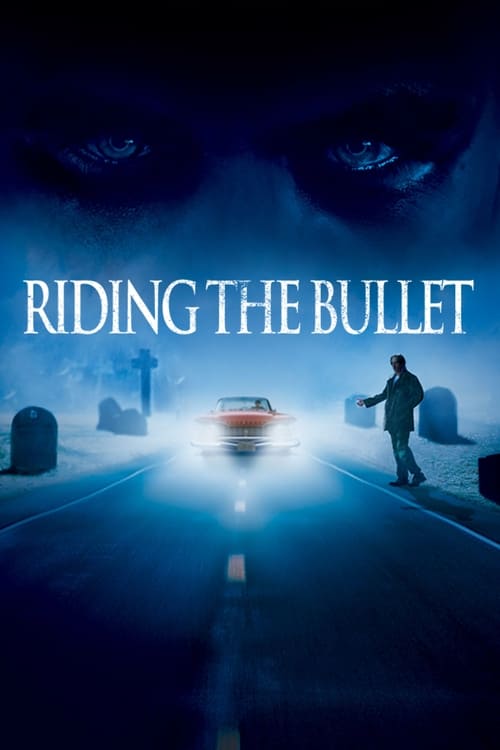
Maine 1969. Student Alan Parker is preparing to go, with his friends, to the highly anticipated John Lennon concert that foreshadows the reformation of the famous band "The Beatles", when suddenly an unpleasant phone call informs him that his mother has just suffered a stroke and has been urgently admitted to the hospital.
Maine 1969. Student Alan Parker is preparing to go, with his friends, to the highly anticipated John Lennon concert that foreshadows the reformation of the famous band "The Beatles", when suddenly an unpleasant phone call informs him that his mother has just suffered a stroke and has been urgently admitted to the hospital. Alan can no longer go to the concert with his friends and, without a car, decides to set off immediately towards the distant hospital hoping to find someone who can offer him a ride. During the night, while Alan crosses the desolate countryside and the full moon shines high in the sky, someone finally decides to pick up the boy: it is George Staub, a mysterious young man of twenty-one who will show from the very beginning a strange behavior that will make Alan understand that getting into that car was not a good idea at all.
The summer of 1969 has just passed and has already become legendary. More than eight hundred thousand young people gather around a farm in Bethel (80 km from New York) to spend three days of rock, pop, and folk music under the banner of peace, drugs, free love, and the overcoming of any taboo; the Vietnam War continues relentlessly for eight years and many are the pacifist movements that arise in protest against that war; the flower children dominate the social landscape by putting into practice their ideals based on peace and equality among peoples.
It is in this landscape that this "Riding the Bullet" takes place, a cinematic adaptation of the eponymous story written by the king of horror Stephen King.
Mick Garris ("Sleepwalkers") writes, produces, and directs a particular but fascinating film, which alternates black comedy (which dominates the entire first part of the film) with a second horror act characterized by supernatural elements typical of the writer's works. The "kinghian" elements are really all present: we have the memory (by the protagonist) of a happy childhood on one hand but terribly bitter on the other, fears related to childhood memories, the sense of guilt, the "conversations" with his materialized mind, the return from the world of the dead, and even the good old Castle Rock. Many are the references to King's previous works: we have a car very similar to the famous Christine, a head-injured road accident victim that strongly reminds one of "Pet Sematary", a villain who seems to have come out of "Sometimes They Come Back..." and who has the name frequently used by King as a pseudonym for his novels, etc.; frequent are the homages to masterpieces of the genre like "Night of the Living Dead" (in one scene the phrase "They are coming for you, Barbara" is spoken). To these nice homages are added (to make everything even more pleasant) rather original and nice ideas but which, unfortunately, are too exploited by Garris resulting, at the end of the film, repetitive and predictable, as happens with the frequent "returns to reality" of the protagonist.
Surely, the film works better in the first part that manages with great ease to drag the viewer into the mythical 60s, making him relive with much pleasure and nostalgia those magnificent years. It is this, in fact, the aspect that most fascinates about the film and it is for this reason that in the second act the film loses some momentum, that is, from the moment it is decided to set aside the "black comedy of the 60s" component (fascinating and unusual) to devote more attention to the horror component and it is from this moment that the film begins to lose that "freshness" that previously characterized it and becomes a bit too repetitive in some sequences and unoriginal.
In addition to the excellent idea of reviving the past years, the film has its strong points in the beautiful soundtrack formed by unforgettable songs of that period and in the excellent performance of the actors, among whom stands out a good Jonathan Jackson ("Venom") in the role of the protagonist Alan, a reserved boy who hides a rather gloomy personality, and David Arquette (the "Scream" saga) in the role of the evil George Staub.
In conclusion, "Riding the Bullet" turns out to be a particular film, far above the many other mediocre/poor home video products, that manages to involve from the opening credits (accompanied optimally by the song "Time of the season" by The Zombies) the viewer.
A film to see especially if you are fans of the writer because you will hardly be disappointed.
Curiosity. The story from which "Riding the Bullet" is taken was the first experiment by Stephen King to spread one of his unpublished writings through the Internet in e-book format. Written in 2000 and published online the following year with considerable success (400,000 people downloaded the work only on the first day of publication), the story was subsequently included in the anthology (published in printed form) "Everything's Eventual."
Comments
Comments (0)


Comments