







Le Verdict
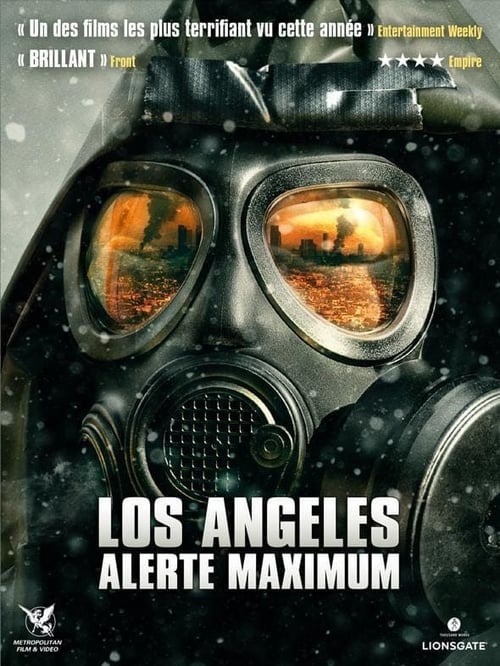
Los Angeles. Lexi vient de partir au travail lorsque son mari Brad apprend qu'une série de "dirty bombs" (bombes à faible puissance explosive mais chargées de gaz toxiques) viennent d'exploser en centre-ville.
Los Angeles. Lexi vient de partir au travail lorsque son mari Brad apprend qu'une série de "dirty bombs" (bombes à faible puissance explosive mais chargées de gaz toxiques) viennent d'exploser en centre-ville. Le centre de Los Angeles est immédiatement considéré comme une "zone rouge" et Brad, inquiet pour sa femme, se met en voiture pour aller à sa rencontre. Toutes les routes sont surveillées par des agents équipés de masques à gaz qui n'autorisent personne à entrer ou sortir de la zone radioactive. Les autorités conseillent aux citoyens de se réfugier chez eux et de bien fermer toutes les portes et fenêtres, ne laissant entrer personne. Brad suit le conseil et se barricade chez lui, mais peu après, Lexi revient, couverte de cendres radioactives. La femme supplie son mari de la laisser entrer. Que faire ?
Ces derniers années, nous assistons à une véritable invasion de films traitant du thème du contagion, de la catastrophe virale et de la peur des attentats terroristes. Une telle tendance était inévitable depuis le 11 Septembre, qui a offert des sujets de réflexion et des histoires à raconter à l'industrie cinématographique, influençant en grande partie le genre fanta-horreur. Mais si l'immédiat post-11/09 était timide dans le traitement de thèmes pouvant heurter les esprits encore choqués de ceux qui ont vraiment vécu l'horreur, dans le tard post-11/09, où nous nous trouvons actuellement, cette pudeur semble désormais dissipée et les films qui racontent, de manière plus ou moins explicite, les peurs de la société américaine (mais pas seulement) pullulent.
Dans le cas de "Right at your Door", nous ne sommes pas exactement dans le domaine de l'horreur de contagion comme dans "28 jours plus tard" ou "[Rec]", et nous ne sommes pas non plus dans le territoire de l'horreur, mais plutôt dans le genre dramatique. "Right at your Door" est un cauchemar de chambre, un petit film qui ne vise pas à faire peur au spectateur, mais se concentre plutôt sur la peur que les personnages protagonistes éprouvent face à une situation de danger réaliste.
Tout commence par une alerte à la bombe frénétique et inquiétante, la mobilisation d'un homme qui vient d'apprendre la nouvelle d'une catastrophe survenue précisément à l'endroit où sa femme se déplaçait. L'agitation, l'emphase, l'hystérie contrôlée d'un homme inquiet sont ici représentées de manière crédible, réaliste, tout comme l'ensemble du déroulement du film. Le rythme est croissant, angoissant, par moments martelant, accentué par le commentaire radio omniprésent, jusqu'à la situation qui représente le cœur de l'histoire, l'idée dont le réalisateur et scénariste Chris Gorak est probablement parti pour construire l'ensemble du film. Faut-il privilégier l'instinct de survie ou l'affection pour une personne chère ? Si au début Brad est certainement motivé par l'amour altruiste, avec le passage des minutes et l'aggravation de la situation, c'est l'amour-propre qui semble prévaloir et c'est ainsi que commence l'odyssée à deux de celui qui sait qu'il est condamné et de celle qui se sent coupable de ne pas avoir le pouvoir de sauver les autres.
Une fois que l'idée gagnante a été mise en scène, nous nous trouvons cependant face à un blocage, une de ces situations de stase narrative prolongée dont il semble impossible de trouver une issue. À ce stade, "Right at your Door" commence à ralentir progressivement le rythme d'action et narratif, se répétant, s'enroulant sur lui-même et devenant parfois même pesant. Heureusement, Gorak montre qu'il n'a pas seulement une idée narrative gagnante et conclut le film avec une fin incroyable, une de ces conclusions qui valent à elles seules la vision du film.
Chris Gorak est un factotum du cinéma : il a occupé le rôle de directeur artistique pour Terry Gilliam, les Coen, David Fincher et même Spielberg ; il a été acteur, effets spéciaux et bien plus encore, mais avec "Right at your Door" il fait ses débuts en tant que réalisateur et scénariste. Son style dans ce film est minimaliste et réaliste, tant pour la mise en scène que pour la narration. Tout se déroule à l'intérieur/dehors d'un logement et les personnages impliqués sont le minimum indispensable. Il est difficile d'imaginer un film catastrophe sans scènes de panique de masse et de destruction, et pourtant dans ce cas, il n'y a pas de foules hurlantes ni de façades de bâtiments qui écrasent les passants. L'horreur est toujours suggérée, décrite par le speaker de la radio qui semble imiter l'Orson Welles de "La Guerre des Mondes", et tout comme dans ce célèbre cas médiatique, il est permis de se demander si le danger est réel ou si tout cela pourrait se résoudre comme un simple cas d'alarmisme préventif.
"Right at your Door" est un film à voir surtout pour profiter d'un point de vue différent sur la situation cinématographique classique de la catastrophe, c'est un produit anormal au sein d'un genre trop exploité et désormais dans un état de préoccupante homogénéisation.
Commentaires
Commentaires (0)


Commentaires