





The Verdict
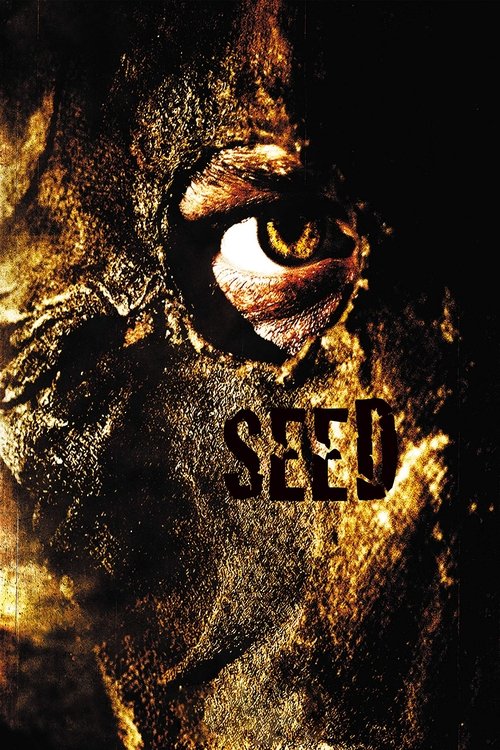
The serial killer Max Seed is captured and sentenced to the death penalty, but the electric chair is not enough to kill him, so the prison owner, in agreement with the doctor and the police officer who captured him, decides to falsify documents and bury Seed alive. But the assassin manages to get out of his tomb and heads to exact his revenge on those who wanted to kill him.
The serial killer Max Seed is captured and sentenced to the death penalty, but the electric chair is not enough to kill him, so the prison owner, in agreement with the doctor and the police officer who captured him, decides to falsify documents and bury Seed alive. But the assassin manages to get out of his tomb and heads to exact his revenge on those who wanted to kill him.
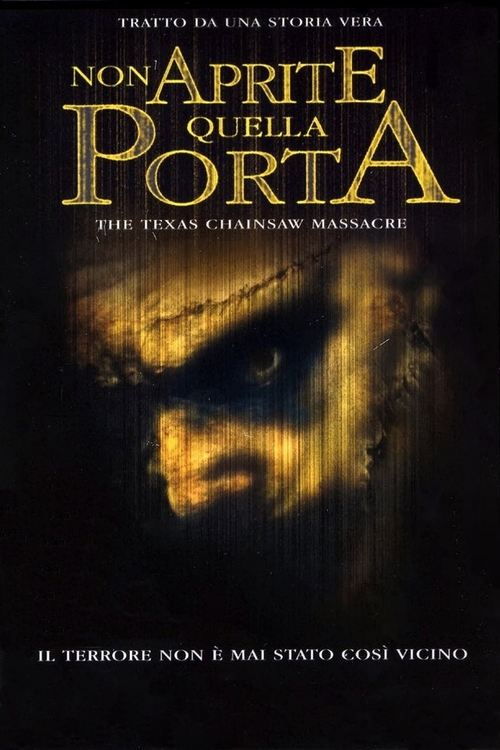
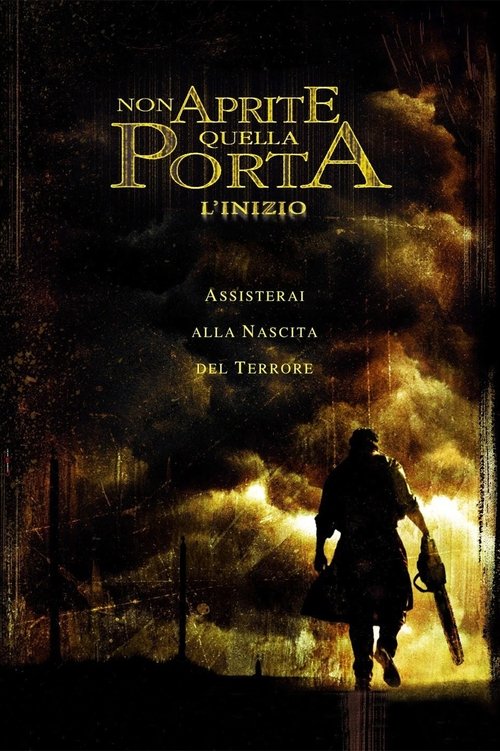
The tireless Uwe Boll (from 2 to 4 films a year) puts aside video games and decides to venture into a work entirely his own, with the intention of riding the wave of torture films in vogue at this time. To do this, Boll takes inspiration from an urban legend (presented as truth at the time of the film's release) according to which if a death row inmate (electric chair) survives three electric shocks, he must be released. And this is what happens to the serial killer Max Seed, whom the newspapers in the connecting scenes inform us is the author of 666 murders in 6 years, a man with long greasy hair and a dirty mask on his face to hide his disfigured features (played by Will Sanderson) who gradually becomes the protagonist of a bloody revenge. And up to here, you will say, we are in the usual routine: the plot is as thin as a cricket's leg, the banalities are there but do not necessarily imply the failure of the film, the character is an outright plagiarism of Leatherface seen in the "Don't Open That Door" more recent ones.
The real problem arises when we note that although many have reiterated that this time Boll has directed his best film, it does not mean that Boll has directed a good film! The standards of the German director are so low that it is definitely easy to do better than what he has done so far. I am not among those who enjoy throwing mud at Boll, on the contrary, I have recognized a certain "growth" in the making of "Bloodrayne" (which remains a mediocre film anyway), but it is a fact that his films are technically and narratively disasters; Boll is certainly not the worst living director, as someone keeps pointing out punctually, but he has now made an all-out subscription for a place in the limbo of the sympathetic incompetents, who, despite awareness of their own limits, continue undaunted to make mistakes, probably moved by the passion for the job and the now assured gain. And this "Seed" does not work at all in its structure, in its packaging, in the details.
Let's start by saying that the film enjoys a particularly messy narrative construction that in the first abundant half hour is hard to even reconstruct from a purely chronological aspect (are we witnessing flashbacks? Flashforwards? Real-time development? Who knows!). Then it is immediately noticed that the film does not have much to tell and that little is told particularly badly, since the temporal continuum is managed very badly and the frequent ellipses of the second part do not really manage to make the viewer understand the passage of time in the story (occasionally entrusted to the titles of the newspapers that serve as connecting scenes). The frightening absence of content and arguments that the film lacks is masked by a sensationalistic use of violence, sometimes even excessively gratuitous, which ranges from torture to women, the elderly, children, and animals, the latter also protagonists of a video (real, taken by the director from the PETA archive) that opens the film and largely anticipates what the true and only chord that "Seed" wants to touch is. In this regard, however, it must be recognized that the film in question contains a scene (unfortunately badly inserted within the narrative itself) among the most incredibly sadistic seen in recent times, which shows an elderly lady whose skull is shattered with hammer blows; a very long scene shown in real-time and with the aid of digital effects that, although too obvious, do not nevertheless ruin the great impact of the sequence.
Excluding the aforementioned scene, which shows a certain directorial inventiveness, "Seed" also proves to be very poorly directed. Much of the film is shot with a handheld camera and the reason is not understood; probably Boll wanted to give a touch of realism to the story, a sort of "Real TV" with a serial killer theme, but this use of the shot seems excessive and gratuitous because, in addition to being poorly used (sometimes the camera shakes while the characters talk leaving even the face out of frame ending up framing the neck, for example), it is also used in situations where it is really not necessary: I can understand an action scene, but when the protagonist is at home with his family or discusses with his colleagues in the office, what does it have to do with it? The same can be said of the photography by Mathias Neumann, appreciable in some parts for the sepia tones, but often unnecessarily and excessively dark.
Last piece of a substantially formless puzzle is the far too excessive number of naivetes that the film contains, which really challenge the viewer's suspension of disbelief. Among the many "easinesses" present, the irruption of the resurrected Seed in the maximum security prison, carried out with such ease that we are led to believe there was not even a guard, and his escape from the same which is located on an island from which the killer leaves, obviously, swimming must absolutely be cited. Come on, holy patience.
In short, entrusting a film exclusively to the crudeness of some images and not caring at all about the rest is synonymous with the "non-existence" of the film itself, a useless and not at all interesting vision, incapable of entertaining and leaving the viewer with even the minimum content.
Comments
Comments (0)





Comments