







The Verdict
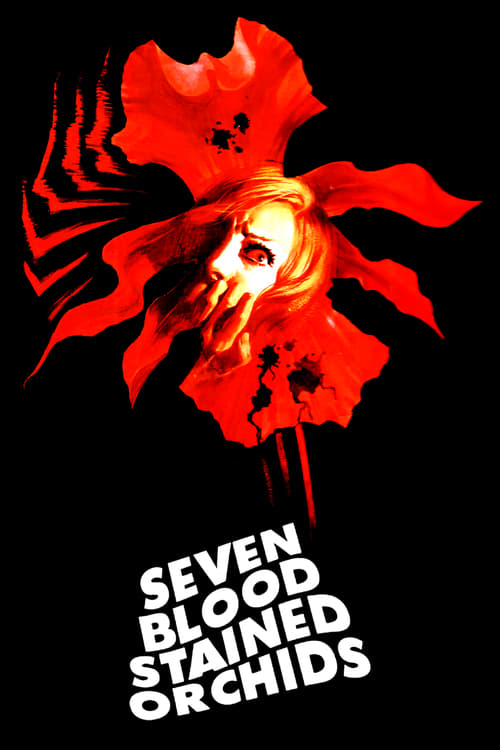
The streets of Rome are shaken by a terrible serial killer who only kills women and leaves a silver pendant in the shape of a crescent moon on their corpse. Giulia is also attacked by the killer in a train carriage, but the intervention of the conductor prevents the assassin from completing his work.
The streets of Rome are shaken by a terrible serial killer who only kills women and leaves a silver pendant in the shape of a crescent moon on their corpse. Giulia is also attacked by the killer in a train carriage, but the intervention of the conductor prevents the assassin from completing his work. Although the girl is safe, the police decide to spread the news that Giulia has lost her life as a result of the injuries sustained, in order to protect her from a possible new attack by the killer. Meanwhile, the victims continue and Mario, Giulia's husband, begins to investigate the case on his own.
When the harsh law of the box office made Italian producers commission a multitude of thrillers to capitalize on the success of Dario Argento's early films, Umberto Lenzi, a highly appreciated all-rounder of Italian cinema, also dedicated himself to the genre of serial killers and crimes. In reality, Lenzi, with "Orgasmo", "So Sweet... So Perverse" and "Paranoia" had already explored the territory of Italian thrillers, slightly anticipating Argento, with a greater attention for the erotic component.
"Sette orchidee macchiate di rosso" was made under the supervision of producer Lamberto Palmieri and the German company Rialto, who explicitly wanted a film imitating Argento's animal trilogy. Thus, starting from the suggestive title in line with the genre's rules (colors, animals, or numbers in the title to attract and wink at the public), Lenzi crafts a film that involves the viewer in a well-constructed giallo investigation with a discreet final twist, although unfortunately it is quite poor in terms of originality.
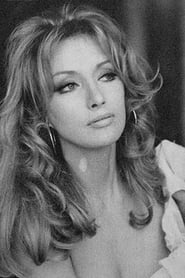
The screenplay is written by Roberto Gianviti (later involved with Fulci in "Sette note in nero" and "Murderock - Uccide a passo di danza") and exploits many of the clichés characteristic of the Italian giallo, including the killer dressed in black (often used in subjectives of evident Argento derivation), the investigation conducted in parallel by the police and a private individual destined to unravel the plot, the violence preferably carried out on women. The characteristic introduced by Lenzi is the notable explicit violence present in the film, not always present in the gialli of that period and anticipation of what will be the most interesting element of "Gatti rossi in un labirinto di vetro", another film signed by Lenzi and of similar construction. In this regard, the excellent choreography of the murders should be highlighted, among which the murder of the English girl (played by Marina Malfatti), that of the paranoid woman (Rossella Falk) and the killing with an electric drill of Marisa Mell.
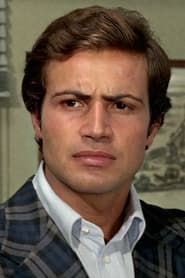
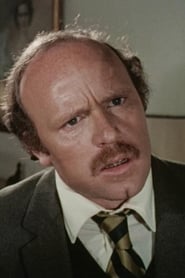
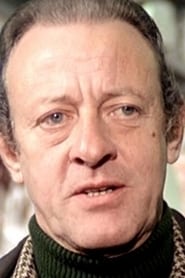
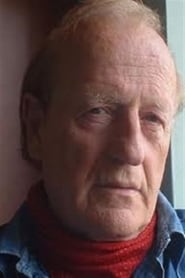
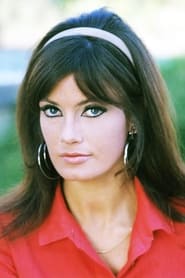
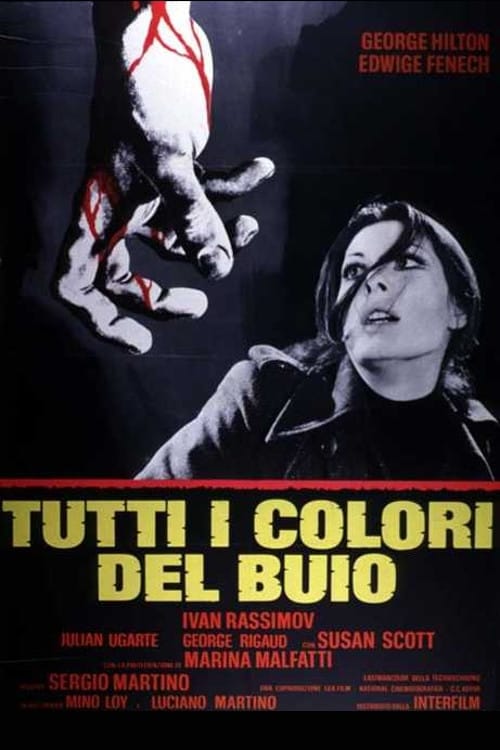
The cast of "Sette orchidee macchiate di rosso" is rich and composed of first-order stars, in addition to the already mentioned Malfatti ("La notte che Evelyn uscì dalla tomba"; "Tutti i colori del buio"), Falk ("La tarantola dal ventre nero"; "Nonhosonno") and Mell ("Diabolik"; "Una sull'altra"), Antonio Sabato ("A tutte le auto della polizia"; "Poliziotti violenti") appears in the role of the protagonist Mario, and Uschi Glas ("Alleluja e Sartana figli di...Dio"; "Black Beauty") in the role of the surviving victim Giulia.
The music by Riz Ortolani is well conducted but too little memorable.
Lenzi does not particularly like this film, just as he will not appreciate "Gatti rossi in un labirinto di vetro" later, due to a too invasive participation of the producers in the final making, although the director has always declared to be more than satisfied with the scene that sees the death of the character played by Rossella Falk, effectively realized with art and a great sense of suspense.
In conclusion, "Sette orchidee macchiate di rosso" is certainly not to be counted among the best Italian gialli of the glorious 70s, nor can it be considered among Lenzi's most successful works, but it is still a well-crafted film with many elements of interest for the genre enthusiast. Worth watching.
Comments
Comments (0)


Comments