







Le Verdict
Virginie, 1976. Norma et Arthur Lewis sont réveillés tôt le matin par la sonnette de leur domicile.
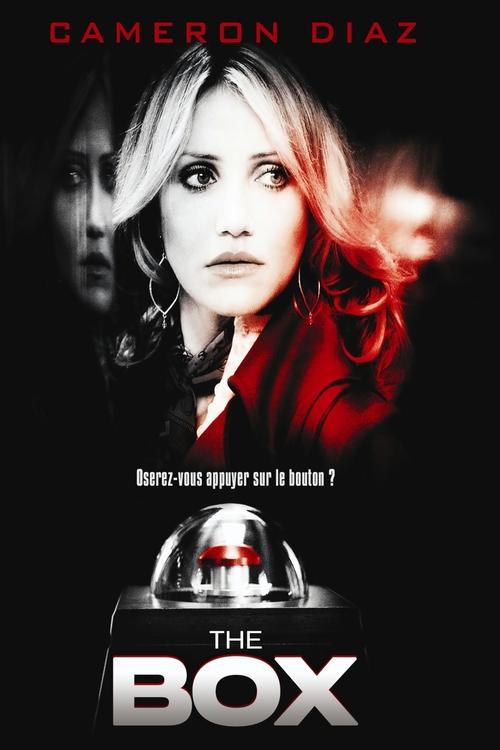
Virginie, 1976. Norma et Arthur Lewis sont réveillés tôt le matin par la sonnette de leur domicile. Norma ouvre la porte et trouve une boîte, à l'intérieur de laquelle se trouve un mécanisme à bouton et une lettre indiquant qu'à cinq heures de l'après-midi, un certain M. Steward passerait. Puntuellement à cinq heures du même jour arrive M. Steward, un homme vêtu de manière discrète, avec une mallette et la moitié du visage défiguré. L'homme fait une proposition à Norma : si elle appuie sur le bouton du mécanisme, une personne qu'elle ne connaît pas mourra et ils gagneront un million de dollars en espèces. Norma et son mari ont vingt-quatre heures pour décider.
Arrêtez Richard Kelly ! Ou mieux, ne donnez pas à cet homme assez d'argent pour donner vie à ses visions mégalomanes du fantastique.
Le réalisateur de "Donnie Darko" a un talent indéniable mais aussi une limite tout aussi indéniable, il a tendance à charger ses histoires de sous-intrigues et de significations jusqu'au point de perdre et de faire perdre le sens de l'orientation et, immanquablement, de perdre le contrôle de la narration. Avec "Donnie Darko", on pouvait déjà deviner la tendance au surpeuplement narratif, mais l'intelligence avec laquelle le projet a été mené et le charme de l'interprétation libre ont fait que le jeune réalisateur américain a réussi avec son premier film. Pour sa deuxième œuvre, "Southland Tales", Kelly a eu à sa disposition le quadruple du budget de son premier film et a donc pu donner corps à ses fantasmes, chargeant non seulement narrativement mais aussi visuellement son film et créant ainsi un gâchis peu digeste.
"The Box" représentait la preuve du neuf, un budget similaire à celui de "Southland Tales" et autant de grands noms au casting, mais en même temps une histoire de Richard Matheson qui faisait du minimalisme son point fort. Bien sûr, Kelly ne se contente pas non plus cette fois-ci et charge excessivement l'histoire de base jusqu'à la faire exploser.
Ce qui est plus frustrant, c'est que tant que Kelly reste fidèle à "Button, button", la nouvelle de Richard Matheson dont tout est tiré, "The Box" est un excellent film, chargé de tension, avec un sens constant du mystère et un rythme serré. Dès que l'auteur ajoute le sien, non seulement il bouleverse l'idée de base, mais il remplit tellement d'éléments l'histoire que puis il ne parvient plus à en sortir "intacte", au point que plus d'un détail reste en suspens, faisant ainsi apparaître certaines choix tout à fait inutiles et nuisibles à l'économie et à la cohérence narrative de l'ensemble.
"The Box" commence comme un thriller aux connotations fantastiques minimalistes qui fait de l'intimité de la situation un point crucial. Lui et elle sont en difficulté financière, ont un enfant à élever et en plus elle a une importante opération du pied à effectuer. La fortune potentielle qui se présente aux époux est la manne du ciel qui pourrait résoudre tous leurs problèmes : il suffit d'appuyer sur un bouton. Mais c'est là que s'insère le principe moral qui est à la base de la nature sociale de l'être humain : est-il bien de tuer quelqu'un que l'on ne connaît pas pour son bien-être personnel ?
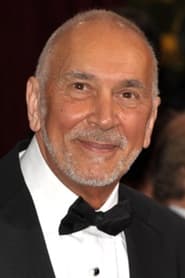
Kelly gère le matériel à sa disposition avec une extrême maîtrise, exploitant les psychologies de ses personnages à bon escient sans jamais banaliser le parcours qui mène à la "choix", au contraire en le chargeant de tension et de dramatisme. Cela est favorisé positivement également par le travail des acteurs, parmi lesquels se distingue un Frank Langella ("Superman Returns" ; "Frost/Nixon : le duel") intense et inquiétant, soutenu par une Cameron Diaz ("Tous fous pour Mary" ; "Charlie's Angels") dans l'un des meilleurs rôles de sa carrière.
Malheureusement, épuisé le matériel littéraire exigu mais intéressant, qui a inspiré également un épisode de "Au-delà du réel" daté de 1986 et intitulé "La pulsantiera" (et que vous pouvez visionner en entier en bas de la page), le film commence à se perdre dans des délires religieux-science-fiction qui franchement jurent beaucoup avec ce qui avait été construit jusqu'à ce moment-là. Le minimalisme et l'intimité vont se faire bénir et l'histoire prend une tournure trop ample. Kelly joue de manière évidente sur l'allégorie du péché originel biblique et se déchaîne avec des trouvailles science-fictionnelles non sense qui rompent drastiquement la compacité et la cohérence du film. Trouvailles abandonnées à elles-mêmes, évidemment difficiles à gérer avec connaissance de cause et sans lesquelles le film aurait certainement gagné. La volonté de dire et d'expliquer trop réussit également à rompre la magie de l'idée de base intrigante, avec le résultat que le charme du mystère et de l'interprétation libre qui a caractérisé l'œuvre première du réalisateur et à laquelle se prêtait parfaitement "Button, button" viennent ainsi à manquer.
La conclusion de "The Box" réussit heureusement à faire coïncider le cercle imparfait, revenant également à une bonne construction de la tension.
L'impression générale que Kelly a réussi à ruiner une idée aux potentialités immenses est pourtant envahissante et, à la fin, "The Box" déçoit.
L'exemple frappant d'une occasion manquée.
Visionnez l'épisode de Au-delà du réel LA PULSANTIERA
Commentaires
Commentaires (0)



Commentaires