







The Verdict
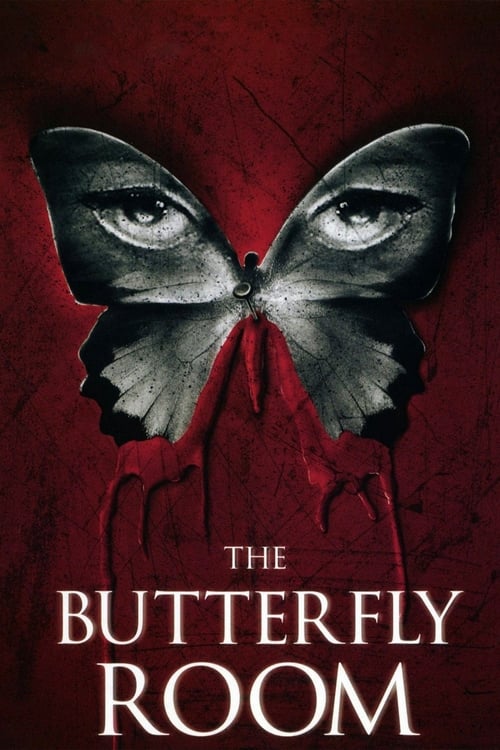
Ann is an old woman who spends her days devoted to her hobby, collecting butterflies, which she keeps jealously framed and displayed in a room where no one but her can enter. One day, Ann accidentally meets Alice, a lonely girl like her who needs a maternal figure.
Ann is an old woman who spends her days devoted to her hobby, collecting butterflies, which she keeps jealously framed and displayed in a room where no one but her can enter. One day, Ann accidentally meets Alice, a lonely girl like her who needs a maternal figure. Alice starts frequenting Ann’s apartment, initially for French tutoring, but then behaving like a daughter, under the woman’s generous compensation. The relationship between the two becomes increasingly morbid, and when Ann discovers that Alice behaves the same way with other women, a possessive jealousy takes over her, driving her to murder.
Horror is female. Someone might object by saying that this film genre has no gender, but if we think about it, horror is strongly anchored to the female universe. Traditionally, horror films have a predominantly male audience, so they are careful to delineate and bring to the stage female characters, often attractive and ready to show off their charms. Not surprisingly, there is a real tradition that elects as a characteristic of the genre the so-called "scream queens", a title born at the end of the 1970s and the beginning of the 1980s with the proliferation of American slasher movies but attributable to practically the entire history of horror cinema, thanks to the periodic presence of female icons who lend body and face to these films. Horror is therefore female, because, sometimes subliminally, it seeks to attract men, seduce them, and make them enjoy themselves for those canonical 90 minutes necessary to complete the "cinematic embrace".
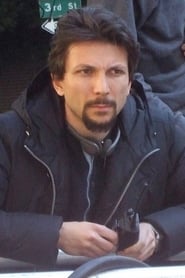
Italian director Jonathan Zarantonello, already known for "Medley: Brandelli di scuola" and "Uncut: Member only", becomes aware of this fact and realizes with "The Butterfly Room – La stanza delle farfalle" a film strongly anchored to the type of sexual genre. Strong above all of an all-star cast linked precisely to the international universe of scream queens, Zarantonello realizes what the advertising campaign defined as "feminist horror" or, even, "menstrual horror", focusing precisely on this central aspect of the exploration of the (complex) psyche of women and the attraction that it can have for a male audience.
Based on his novel titled "Alice dalle 4 alle 5", which in 1999 had already been a short film, Zarantonello thus ventures into the puzzle construction of the mind torn apart by the madness and loneliness of Ann, this elderly woman who has the iconic face of the legendary Barbara Steele, and just as the woman’s fragmented mind needs to be reorganized to clarify her past and behavior, the film is also constructed in pieces, between present and past, so that only progressively and at the end is it possible to have a clear picture of the story. Perhaps it is precisely the way of telling the story that is the greatest limitation of "The Butterfly Room", the disorder that it brings to the scene and that is structured with continuous flashbacks – sometimes distinguishable only by the presence or absence of the actress Julia Putnam who plays Alice – tends to place a wall between the film and the viewer, sometimes leaving aside the involvement of the audience. The subject is excellent and also original, but perhaps it is not developed in the screenplay – work of the same director – in the best way, resulting at times too diluted to adapt it to the feature film, when its short film nature seems more suitable.
Beyond this narrative/structural flaw, "The Butterfly Room" appears as an interesting and anomalous work in the panorama of Italian genre cinema. A complex film that constantly plays with the roles of the perpetrator and the victim, describing with the character of Ann an unprecedented murderer who only wants to be a mother, seeking redemption from a dormant madness that has prevented her.
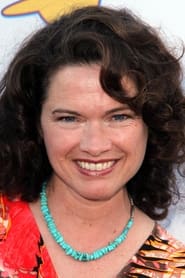
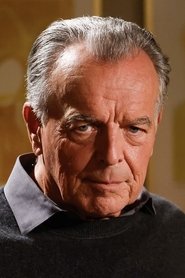
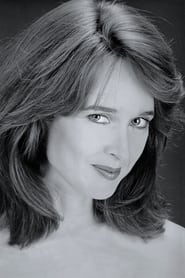
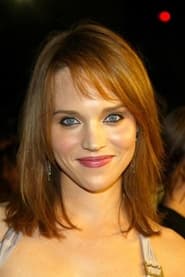
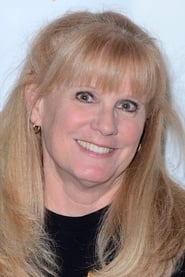
Excellent in its production, Zarantonello’s film is strong in this record cast that brings together at least 50 years of horror cinema: in addition to the welcome presence of a always brilliant Barbara Steele in the role of the protagonist, we also have Heather Langenkamp (the Nancy Thompson of "Nightmare"), Ray Wise (the father of Laura Palmer in "Twin Peaks" as well as a true icon of the genre), and Erica Leerhsen ("Non aprite quella porta", "Blair Witch 2: Il libro segreto delle streghe"; "Wrong Turn 2"). But in small roles and cameos, we also find Camille Keaton ("Non violentate Jennifer", "Cosa avete fatto a Solange?"), Adrienne King ("Venerdì 13"), P.J. Soles ("Halloween – La notte delle streghe", "Carrie – Lo sguardo di Satana"), and even Joe Dante, who plays a taxi driver.
In short, an absolutely imperfect film but definitely worth watching.
Rounded-up vote.
Comments
Comments (0)

Comments