

The Verdict
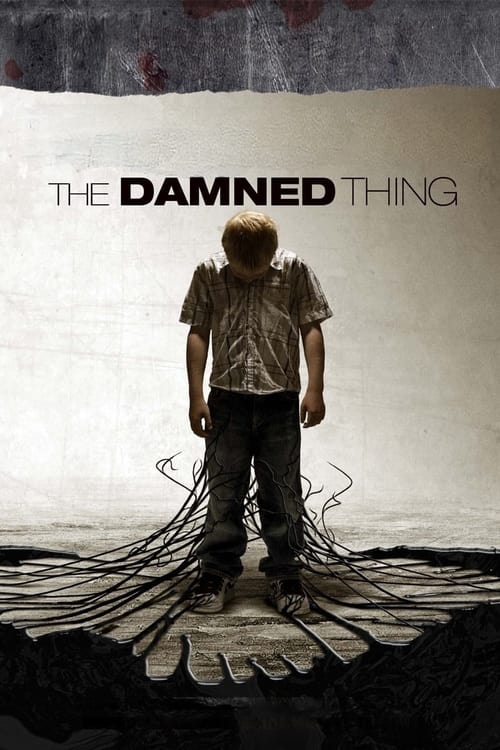
In the town of Cloverdeal, strange events begin to occur: a man hammers his face until he dies, a mother tries to kill her own son, a priest smashes a citizen's skull while he is confessing. The only one who seems to know the reason for these strange and sudden actions is Sheriff Reddle, protagonist, as a child, of a similar event that involved his parents.
In the town of Cloverdeal, strange events begin to occur: a man hammers his face until he dies, a mother tries to kill her own son, a priest smashes a citizen's skull while he is confessing. The only one who seems to know the reason for these strange and sudden actions is Sheriff Reddle, protagonist, as a child, of a similar event that involved his parents. While the man tries to dig into his past to find a solution, mass hysteria breaks out in the town and the murderous/suicidal fury of the people increases with each passing minute.
"Masters of Horror" is a singular project born from the mind of Mick Garris, a director known in the horror field mainly for the adaptations of Stephen King's novels. Garris thought of bringing together the most representative horror film directors in a project destined for cable TV Showtime and home video, the result is "Masters of Horror", a series of 13 short films of 60 minutes each, each directed by a great name in the genre; each episode has a budget of 1.8 million dollars, the location fixed in the Canadian city of Vancouver and total creative freedom was granted to each director. The names involved in the second season of this project are: Tobe Hooper, Dario Argento, Stuart Gordon, Joe Dante, John Carpenter, John Landis, Ernest Dickerson, Brand Anderson, Tom Holland, Peter Medak, Rob Schmidt, Norio Tsuruta and Mick Garris himself.
Tobe Hooper kicks off the second season of "Masters of Horror" and moves from Richard Matheson's "Dance of the Dead" to Ambrose Bierce for "The Damned Thing", keeping as a common denominator Richard Christian Matheson (son of the famous author of "I Am Legend") as screenwriter. In truth, after the dismal results achieved with "Dance of the Dead", an episode from the first season of this series, hearing the names of Hooper in the director's chair and Matheson Jr. in the screenplay again made me sweat cold, but all alarmism was excessive because "The Damned Thing" (retitled "Discordia" in Italy) is enjoyable to watch and ranks among the pleasant episodes of this second season of the masters of horror.
Dealing with Tobe Hooper in recent years is quite difficult, because the former prodigious director of "The Texas Chain Saw Massacre" and "The Funhouse" has had such an artistic decline that he has collected a series of films that judging them watchable is a compliment. If we exclude the collaboration with Stephen King for "The Mangler", it will be at least 20 years (if not more) that the Texas director has not directed a film that settles on the sufficiency, now with this "Discordia" a bit of redemption comes. The short film in question is nothing exceptional, to be clear, it is a mostly anonymous work and devoid of flashes of genius, but the story and the rhythm know how to entertain pleasantly and the high level of hemoglobin keeps the attention of the splatterophile spectator well awake.
The basic idea travels through territories that could be defined as dylandoghian, so much does this episode succeed in recreating atmospheres and situations often seen in the pages of the comic created by Tiziano Sclavi: a small provincial town where the madness of the inhabitants breaks out, the horror that comes from the past, lurks in the underground and acts as a catalyst for human hatred and violence, even taking the form of a viscous monster. Wanting to give shape to resentment and repressed violence is not an original idea but still appreciable, capable here of developing the theme of the inevitability of negative human instinctiveness in an effective and never gratuitous or complacent way. The human being is described as an individual with his face covered by a mask: everyday life and the rules of living in society indicate the right behavior to follow, but it is enough for a negative energy, here baptized "cursed energy", that crosses the consciences of men to make that mask fall and bring out the worst in everyone. Thus, the instinct of conservation, empathy, and every moral brake disappear, and the human being transforms into a creature without heart and without brain, capable of doing and inflicting harm as the only means of expression.
The use of the splatter effect to shake the spectator is a debatable choice, certainly of great impact ("Discordia" along with "Animal Instinct" is the most splatter episode of this second season) but in some cases also shamelessly gratuitous. Among insistent disembowelments and various amenities, all magnificently realized by the team of Berger and Nicotero, there is the sensation of wanting to distract the spectator's attention from the mediocre characterization of the characters and from some slightly superficial passages. The task is nevertheless performed excellently on all fronts and at the end of the viewing, although incapable of leaving a mark, "Discordia" can satisfy.
Comments
Comments (0)



Comments