
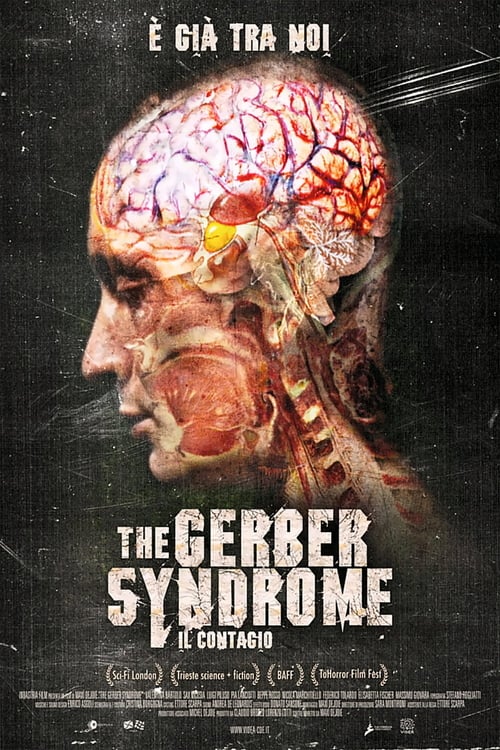





A virus is terrorizing the population, it's called Gerber's disease, named after the German patient in whom the symptoms were first observed. These symptoms include high fever, nausea, weakness that soon turns into strong aggression and loss of control. It takes very little to be infected, since the virus spreads through contact with bodily fluids, so even a simple kiss can be fatal. Moreover, the low mortality rate of the infected makes it easy for the contagion to spread.
A television crew decides to make a documentary about Gerber's disease and to do so they follow a doctor who is about to visit a patient with all the symptoms of the disease, and Luigi, a young virus containment worker, an employee of the CS (Central Security), the main body responsible for the safety of the healthy, by quarantining the infected.
After being presented with some success at some famous events related to fantasy and genre cinema (ToHorror, Trieste Science + Fiction, FantaFestival), "The Gerber Syndrome" arrives in the homes of every cinema lover thanks to the DVD release curated by Videa in association with Eagle Pictures. Equipped with an explanatory subtitle that immediately clarifies what is at the center of the story, namely "The Contagion", the feature film debut of young director and screenwriter Maxì Dejoie is a solid mockumentary that conveys with conviction and effectiveness the fear of a widespread viral infection.
The director recounts that the idea for "The Gerber Syndrome" came to him during the period when the news was all about the infamous swine flu, a virus that could potentially have affected anyone and in a rather direct way, a real hysteria that spread among the population in a few days due to the alarmism spread by the media, television in particular. As you may remember, the media terrorism turned into unnecessary alarmism, a sort of bluff that was reduced and died out within a few months. Starting from this event, Maxì Dejoie hypothesizes that "that" virus, "that" contagion actually occurred and led to extreme consequences that put every citizen at risk of life due to a virus with very easy transmissibility and that leads to a dramatic low mortality, which further amplifies its possibility of expansion.
If the idea started precisely from the alarmism generated by television, pertinently "The Gerber Syndrome" tells this infection through the images filmed by a television crew that is
producing a documentary, hence from the eye that builds and edits the news to its liking. But "The Gerber Syndrome" does not tell us a hypothesis but a reality, it puts the viewer in front of an event already in progress and with consequences evident to everyone in every catastrophic certainty. The goodness of this film lies in the fact that it seems real: "The Gerber Syndrome" simulates the reality of a contagion/quarantine situation very well, escaping almost from the canons of horror and fantasy cinema to describe a scenario that would not be at all exaggerated to consider realistic. Whether it is due to the clever but effective choice of telling the story with the technique of the false documentary or to the careful decision not to "overdo" it ever in the description of the events, the fact is that "The Gerber Syndrome" works and at the end of the viewing leaves the viewer with a sense of anguish and oppression that decrees its success.
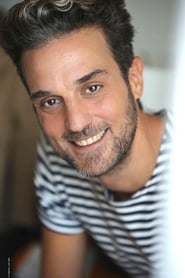
It must be said that the actors are also good and credible, starting with the debutant Luigi Piluso, who plays the CS employee followed by the documentarists, and Valentina Bartolo, who instead plays Melissa, the young new victim of Gerber's syndrome.
Definitely interesting is the choice to show us both sides of the coin in the contagion situation, that is, who is infected and who instead acts to
contain the disease. On the one hand, we therefore have a poor victim, who slowly "transforms", her doctor who informs the viewer of the progression of the disease, and the victim's parents who fight, hope and make important decisions about the fate of the dear infected. On the other hand, we have those who explore the streets, make raids on houses following reports and in fact risk their skin to make sure the virus does not spread, fighting even against those who believe that quarantine is inhuman, like the demonstrators who organize sit-ins in front of the CS headquarters. And in fact the images of the Aquarium, the CS containment structure, are similar to some sanatoriums from 1980s horror films, where the infected reduced to zombies are left to themselves, to graze as if waiting for some victim to be thrown to them as prey. By providing us with this dual point of view, the film places itself "super partes", thus offering a complete picture of what could be a hypothetical and realistic situation of extreme contagion.
A successful and unsettling work that stands out as an unusual and even original product in the panorama of contemporary fanta-horror mockumentaries.
Worthy of note is the excellent Videa/Eagle DVD of "The Gerber Syndrome: The Contagion", which, in addition to benefiting from a good audio/video department, also provides a wide range of extra content, including interviews with the director and producers (a total of about twenty minutes), alternative and cut scenes, a backstage, a special on the sound, the tour of the festivals and the short film "Resistanz".
If you want to read the exclusive interview with Maxì Dejoie, director of "The Gerber Syndrome" click here.
Comments
Comments (0)




Comments