






The Verdict
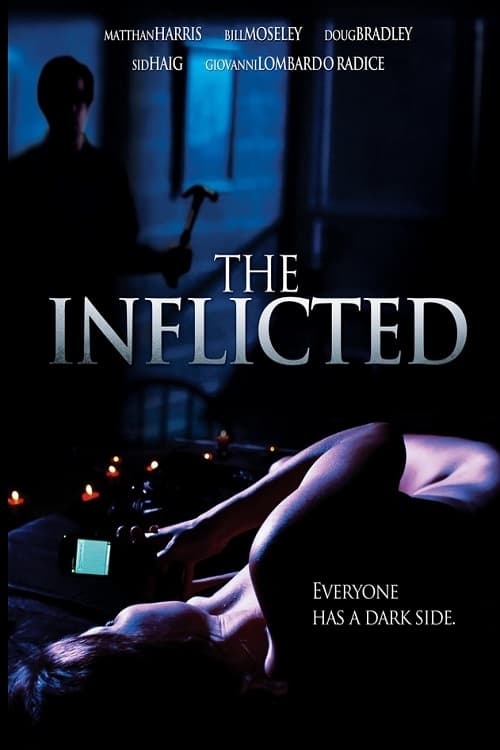
David O'Hara is a medical student with serious behavioral and relational problems due to a harsh childhood trauma caused by the loss of his family. As a consequence of the trauma, David has the "habit" of kidnapping, raping, and killing innocent young women, but when he abducts Melissa Daniels things change: he decides to get her pregnant to "recreate" the family he lost as a child.
David O'Hara is a medical student with serious behavioral and relational problems due to a harsh childhood trauma caused by the loss of his family. As a consequence of the trauma, David has the "habit" of kidnapping, raping, and killing innocent young women, but when he abducts Melissa Daniels things change: he decides to get her pregnant to "recreate" the family he lost as a child. But soon, the police will thwart the plan of the mad David – who will flee – by raiding his warehouse and freeing Melissa. Months have passed since the incident, Melissa has given birth to her daughter and, helped by the care of Dr. Gardner, is trying to forget the incident; but David O'Hara, who has not forgotten Melissa and her baby, soon sets out on the trail of the woman to reclaim his "family."
Matthan Harris must have really believed in this project since he wrote it, produced it, directed it, and starred in it as the lead. Strange, because the film – both on paper and in reality – really offers no reason to spark any interest.
The usual story about the usual life of the usual American serial killer with the usual childhood trauma behind him and who targets, as usual, attractive young women. It's the fair of the already seen, a subject already told millions of times – mainly in the vast circuit of low-budget (and low-quality) productions destined solely for the home video market – and almost always with poor results, so it's unclear what the real reason was that pushed young Harris to embark on an operation as useless as ugly as this "The Infliction."
Content-wise poor, Harris's film shows from the start to be poorly written due mainly to excessive narrative imbalance. After a little more than twenty minutes, the film has already fired all its shots – or to put it better – has nothing more to tell. It proceeds thus with a sluggish pace trying to tell situations and delve into characters that, unfortunately for young Harris, are not interesting. One quickly forgets that we are talking about a thriller, because from the middle of the film onwards, the director-screenwriter has preferred to lay it on thick on the dramatic component telling us with much pathos stories of family melodrama. The frustration of the psychotic David O'Hara who wants so much to have a family back, the difficult position of David's father who feels obliged to protect his son while knowing his misdeeds, the trauma of young Melissa who cannot forget what was done to her by O'Hara and seeks comfort in the smile of her newborn daughter… and so on.
A real snoozefest, also because the film absolutely lacks the strength to effectively tell situations and characters with "dramatic" depth, mainly due to the fact that most of the dialogues turn cheerfully into unintentional comedy.
But from time to time, the film also remembers that its main audience is those accustomed to watching certain genre films and so young Harris has inserted here and there some splashes of gore in the hope of making everyone happy. But the result is still pitiful, the quality of the special effects is bargain-basement and reaches its peak in the rigid plastic doll that is passed off as a real newborn.
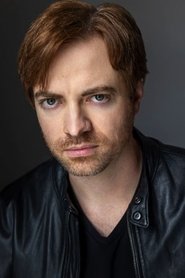
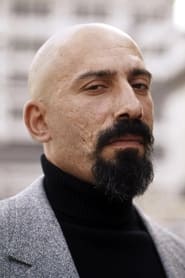
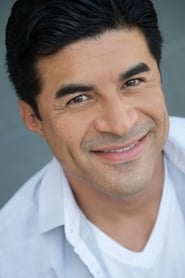
A separate discussion deserves the acting department. If in the leading roles we find the expressionless director Matthan Harris and the unconvincing Lindsay Hightower, among the supporting roles there is a real parade of guest stars: Bill Moseley ("House of 1000 Corpses," "House of the Devil") as David's father, Sid Haig ("House of 1000 Corpses," "House of the Devil") as Dr. Gardner, Doug Bradley ("Hellraiser") is Agent Wilson while Giovanni Lombardo Radice ("Cannibal Ferox," "Apocalypse Tomorrow," "That Lonely Villa in the Park") plays the daring policeman who hunts the killer. All familiar faces for us genre lovers, but unfortunately, they are certainly not a sign of quality, quite the opposite. Actors put on cinematic layoffs for several years and whom we now see appearing in small roles almost exclusively in home video products.
To do their best to save the situation, the music by the talented Italian composer Marco Werba ("Giallo," "Color from the Dark") manages to confer a touch of professionalism and elegance to a product that is halfway between a low television production and a semi-amateur film.
Comments
Comments (0)

Comments