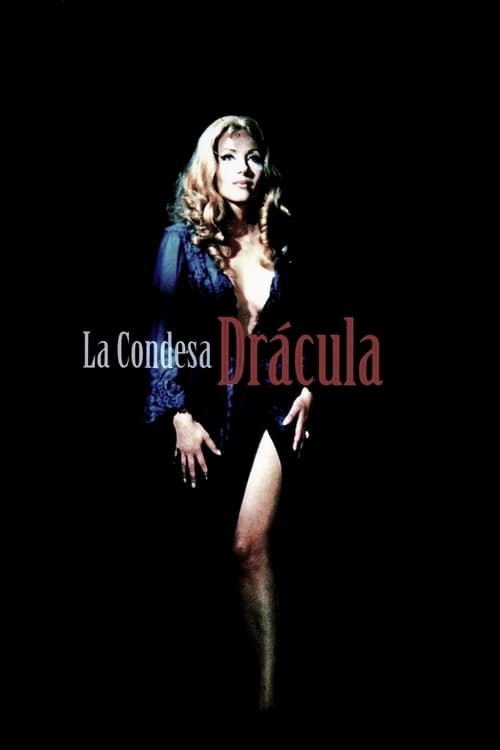

La condesa Drácula backdrop
La condesa Drácula poster

LA CONDESA DRÁCULA

Countess Dracula

1971 GB HMDB
enero 30, 1971

Hungría, siglo XVII. Después de enviudar, la anciana condesa Elizabeth Nádasdy, del linaje de los Báthory, descubre fortuitamente una forma de volver a ser joven; pero el precio a pagar por aquellos que la rodean será alto y sangriento.

Directores

Reparto

👍 👎 🔥 🧻 👑

Comentarios

Comentarios (0)

Equipo

Guion: Alexander Paal (Story)Peter Sasdy (Story)Jeremy Paul (Screenplay)
Musica: Harry Robertson (Original Music Composer)
Fotografia: Kenneth Talbot (Director of Photography)

RESEÑAS (1)

Roberto Giacomelli
Elizabeth Nodosheen es una anciana condesa húngara que acaba de heredar gran parte de los patrimonios de su marido recientemente fallecido. Entre los demás herederos está Ilona, la hija de veinte años del conde, e Imre, un joven oficial del que la condesa se enamora. Un día, Elizabeth, durante una pelea con una de sus sirvientas, es accidentalmente salpicada con la sangre de la chica y se rejuvenece mágicamente; el efecto, sin embargo, tiene una duración breve. La condesa decide entonces tomar baños periódicos en la sangre de jóvenes mujeres que rapta y mata con la complicidad de su ex amante y de su gobernanta. Mientras tanto, mantiene a su hija Ilona, recién llegada al pueblo, secuestrada y se hace pasar por ella, estableciendo una relación amorosa con el joven oficial heredero. A principios de los años 70, la famosa productora inglesa Hammer se encontraba en un período de incertidumbre que anticipaba la futura crisis que llevó a su cierre a finales de esa década. El mercado había cambiado profundamente, las antiguas sugerencias góticas que habían hecho la fortuna de la casa especializada en horror ya no eran suficientes para el público, ahora curtido por el gore y el canibalismo romeriano. La figura del vampiro también estaba cambiando profundamente y al arquetipo del chupasangre representado por el fascinante noble stokeriano, se estaba sustituyendo poco a poco la figura de la vampiresa lesbiana de Jean Rollin y de Jesus Franco, protagonista de una serie de películas que contaminaban el horror al género erótico. Captando la señal de cambio, también la Hammer declinó sobre lo que el gusto del público de la época premiaba y así se produjeron una serie de películas que unían la figura del vampiro a sugerencias eróticas. Uno de los personajes más explorados por el cine de género de la época fue la condesa húngara Erzsébeth Báthory, la famosa condesa sanguinaria que el mito describe como una asesina feroz que se sumerge en la sangre de jóvenes vírgenes para permanecer joven, protagonista de una serie increíble de películas que van desde "La vestal de Satán" a la italiana "El plenilunio de las vírgenes". "La muerte va de la mano con las vírgenes", título fantástico sustituido por la distribución italiana al engañoso "Countess Dracula", toma en consideración precisamente el mito de la Báthory y, al estar datado en 1971, se inserta precisamente en ese período de transición de la Hammer. En realidad, con esta película la Hammer no acertó plenamente sus intenciones porque, a pesar de la presencia de una actriz como Ingrid Pitt (gran protagonista el año anterior de "Vampiros Amantes", película siempre de la Hammer, mucho más exitosa), el elemento erótico está apenas esbozado y el elemento horrorífico tiende a faltar. Con "La muerte va de la mano con las vírgenes" tenemos que ver con el relato bastante fiel de las hazañas de la condesa sanguinaria y por lo tanto el elemento sobrenatural es casi abandonado, relegado solamente al rejuvenecimiento/envejecimiento repentino de la protagonista. Aunque el elemento central de la historia son los famosos baños de sangre, nunca asistimos realmente a esta práctica, por lo que el elemento hemoglobina también se oculta al ojo del espectador ansioso de emociones fuertes. ¿Qué queda entonces en esta película? Queda una puesta en escena dignísima, como siempre nos ha acostumbrado la Hammer, y un trabajo minucioso bajo todos los puntos de vista. Si la reconstrucción histórica de los decorados y los vestuarios es por lo tanto muy creíble, también la dirección y los intérpretes son de buen nivel. Peter Sasdy venía de "Una misa para Drácula", una película impregnada de crítica ideológica que en parte renovaba la figura del conde vampiro, por lo tanto era una buena carta que jugar para la Hammer, y de hecho se demostró decisivamente competente en el desempeño de su tarea. Los intérpretes también parecen todos bastante adecuados, empezando por la bella Ingrid Pitt, aquí a veces escondida por el pesado maquillaje. En resumen, "La muerte va de la mano con las vírgenes" es una película en conjunto un poco demasiado desigual: bien hecha pero carente de ese mordiente que la habría distinguido de la masa de las producciones dedicadas a la condesa Báthory. Vedible, pero en absoluto necesario.
👍 👎 🔥 🧻 👑

Comentarios

Comentarios (0)

Dónde Ver

Streaming

Cultpix Cultpix

RESEÑAS DE LA COMUNIDAD (3)

John Chard

John Chard

6 /10

Countess Bathory.

Countess Dracula is directed by Peter Sasdy and written by Jeremy Paul. It stars Ingrid Pitt, Nigel Green, Sandor Eles, Maurice Denham, Patience Collier and Lesley-Anne Down. Out of Hammer Film Productions, music is by Harry Robertson and Eastmancolor cinematography by Kenneth Talbot.

Why didn’t they just call it Countess Bathory? Or just Elizabeth Bathory? Film has nothing to do with Dracula or Vampires, and is basically an interpretation of Madame Bathory, who back in olde Hungary killed any number of girls for kicks and a vain belief that bathing in virginal blood would keep her young. It’s this last aspect that Hammer focus on, unfurling a story where the Countess strikes on the secret of eternal youth, and who then promptly has her daughter kidnapped and proceeds to impersonate her. Thus with that she gets to romance a young man, but of course as the bodies start to pile up, and the Countess’ suitor and confidant's begin to get their noses pushed out of joint, things quickly go downhill fast.

As a technical production it’s good Hammer fare. Costuming, colour photography, set design and acting performances are perfectly pleasing. Unfortunately it’s all very predictable, and worse still considering the plot points of interest, it’s pretty bloodless, playing out as some sort of period based drama with the odd bit of dastard behaviour thrown in for good measure. Nothing really happens to perk up the story, and sadly the finale is something of a damp squib. The red blooded amongst us can’t help but enjoy the twin lovelies of Pitt and Down, and the wonderful Nigel Green can’t believe his luck as he gets to canoodle with our Ingrid! But all told it’s not very sexy, not very horror and only works as a good period drama if you set expectation at that level. 6/10

Wuchak

Wuchak

7 /10

Hammer’s Gothic drama/horror based on the infamous Countess Bathory

RELEASED IN 1971-1972 and directed by Peter Sasdy, "Countess Dracula" chronicles events in medieval Hungary where the aging Countess Elisabeth (Ingrid Pitt) cruelly reigns with her Steward, Captain Dobi (Nigel Green). She discovers that washing in the blood of maidens makes her youthful and orders her servants to apprehend victims. Pretending to be her daughter, Ilona, the Countess seeks the affections of a young Lieutenant, Imre Toth (Sandor Elès). Maurice Denham plays the wise old scribe of the castle, Master Fabio, while Lesley-Anne Down appears as the real Ilona, held captive by a mute peasant.

The real Elizabeth Báthory lived in Čachtice Castle, which was surrounded by a village and crop lands (and still is), bordered by bluffs of the Little Carpathians in Hungary. Her chief servant was into witchcraft and encouraged Bathory in her diabolic endeavors. Patience Collier plays this role in the movie, but she’s not a witch.

More than 300 witnesses testified to Bathory’s atrocities with Priests, noblemen and commoners being questioned. Her crimes included cruel beatings, burning of hands, mutilation, biting the flesh off of faces, as wells as limbs and other body parts, freezing to death or starving. Her early targets were serving girls 10-14 years old, the kin of local peasants, who were usually lured to the castle as well-paid servants. She later was said to have apprehended daughters of the lesser nobility, which was the beginning of the end.

In those times Hungarian nobles were allowed to reprove their servants by whatever means they saw fit, even death, and were not reprimanded for it, which obviously facilitated Bathory’s offenses. Three of four of her closest servants were executed and she was under house arrest limited to one room the last four years of her life. She died at 54 in 1614. While some argue that she was politically set-up, and that’s always a possibility, there’s just too much documentation verifying her crimes to dismiss them. The incredible number of her victims (650) is probably exaggerated and the bathing-in-blood angle is likely just lore emerging well after her death.

The film’s cheesy title is figurative because there’s no vampirism; “Dracula” was a hot item at the time and producers simply hoped to capitalize on the name. Yet there is the supernatural element of becoming young & beautiful again. It’s an engaging theme because most aging women (and men) long to restore the beauty of their prime. Have you ever seen a woman in her late 50s or whatever acting like she’s a college girl on spring break? It’s pathetic.

In any case, this is a quasi-historical drama with gothic horror. I love the castle & sets, the costumes and torch-lit hallways. It brings to life the late/post Medieval Age. Some parts are predictable (e.g. the outcome of the closing wedding), but the story is compelling and gives you a good taste of feudal life in central Europe back then.

On a side note, Lesley-Anne Down was one of the most beautiful women to walk the earth in the 70s-90s and she was only around 16.5 years-old during shooting. While her screen time is scant in the first two acts, she comes to the fore in the final act and is definitely a highlight.

THE MOVIE RUNS 1 hour, 33 minutes and was shot in Iver Heath, Buckinghamshire, England. WRITERS: Jeremy Paul (screenplay) and Alexander Paal (story) inspired by Valentine Penrose’s book “The Bloody Countess: Atrocities of Erzsébet Báthory.”

GRADE: B+

CinemaSerf

CinemaSerf

6 /10

The elderly, and recently widowed “Countess Elizabeth” (Ingrid Pitt) is not quite ready to give up the ghost just yet, especially when she discovers a rather macabre method of regaining - for a time - her own youth. Of course, there’s no such thing as a free lunch, especially if you are one of the charming young girls who unwittingly end up on the menu. Initially, her devoted ex-beau “Dobi” (Nigel Green) helps her to purloin her victims but even he realises that it can’t go on for ever especially when she starts to turn her attentions to the dashing “Toth” (Sandor Elés) and really puts his nose out of joint. What can make this transformation permanent, though? Well, of course - what won’t the blood of a virgin do? It’s all your standard Hammer costumed fayre, this, but it steers clear of pantomime gore for the most part and just relies on the hard-working make-up team to convince us that Pitt can age or rejuvenate at the drop of a hat. There’s a lot of dialogue and a fair degree of repetition too, but you always know what you are getting with these films and though I doubt you’ll remember it for long, it does what it says on the tin/coffin.

Reseñas proporcionadas por TMDB