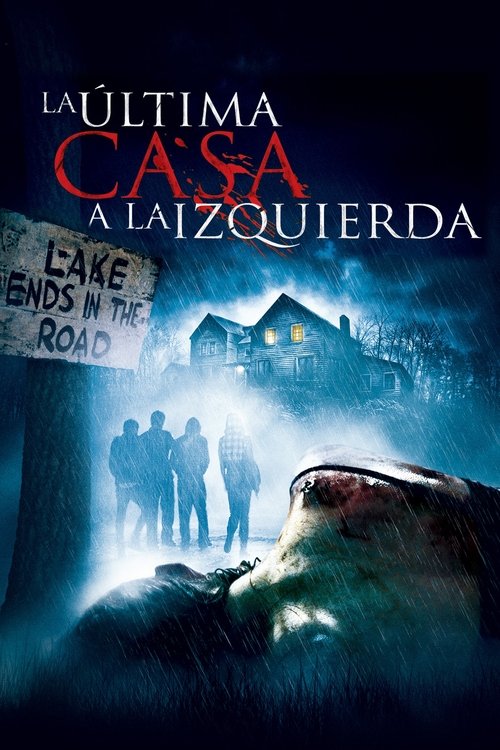


La última casa a la izquierda backdrop
La última casa a la izquierda poster

LA ÚLTIMA CASA A LA IZQUIERDA

The Last House on the Left

2009 US HMDB
marzo 13, 2009

Remake de la película "La última casa a la izquierda", dirigida por Wes Craven en 1972. Mari Collingwood llega con sus padres a la casa que tienen junto al lago para pasar unos días. Esa misma tarde, saliendo por la zona con su amiga Paige, ambas son secuestradas por Krug, un psicópata que ha escapado de la cárcel, y sus compañeros, su perturbada novia Sadie, su sádico hermano Francis, y su anulado hijo Justin.

Reparto

👍 1 👎 🔥 🧻 👑 (1)

Comentarios

Comentarios (0)
Equipo

Produccion: Sean S. Cunningham (Producer)Wes Craven (Producer)Marianne Maddalena (Producer)Ray Haboush (Executive Producer)
Guion: Adam Alleca (Screenplay)Carl Ellsworth (Screenplay)
Musica: John Murphy (Original Music Composer)
Fotografia: Sharone Meir (Director of Photography)

RESEÑAS (1)

Roberto Giacomelli
La familia Collingwood se muda a la casa cerca del lago para las vacaciones de verano. Mari, de diecisiete años, les pide el auto a sus padres para ir a la ciudad a visitar a su amiga Page y pasar la noche con ella. A pesar de muchas recomendaciones, sus padres aceptan. Las dos chicas conocen a Justin en el supermercado donde trabaja Page, quien las invita al motel donde se aloja con sus familiares para consumir drogas. Page acepta y arrastra con ella a la dudosa Mari; pero al llegar al lugar, las dos chicas se encuentran prisioneras de Krug y su familia, un asesino recién evadido que les roba el automóvil y las secuestra. Durante el viaje, sin embargo, Mari intenta escapar y hace que el auto salga de la carretera; entonces Krug, furioso, decide matar a las dos chicas después de violar a Mari. Con el auto accidentado y en medio de una tormenta, Krug y su familia deciden luego pedir hospedaje en la primera casa que encuentran en su camino, ignorando que la puerta a la que han llamado es justamente la de la casa Collingwood. Hay algunas películas que deberían permanecer únicas, que no necesitan ni remakes ni retoques de ninguna clase; son esas películas fuertemente ancladas a una época, a una corriente social y cinematográfica, que funcionan sobre todo en relación al contexto en el que fueron producidas. "La última casa a la izquierda", pequeña obra maestra de debut de Wes Craven, puede parecer, al ojo contemporáneo, como una película cruda, escasa e desigual pero de impacto visual y contenido aún hoy inmutable; estamos hablando de uno de los pilares del horror posmoderno, fundador de un subgénero – el rape & revenge – que rompió reglas y tabúes y que lanzó al olimpo de los maestros del horror al director de "Nightmare". Pensar en rehacer para las nuevas generaciones una película que habla un lenguaje fuertemente "seventies", que reflexiona sobre una generación – los hijos de las flores – perdida, que cita a la Familia Manson y se apoya en una puesta en escena que recuerda los reportajes de guerra – la del Vietnam – sin hacerse escrúpulos respecto al sadismo, la violencia explícita y las humillaciones sexuales es una batalla perdida desde el principio. "La última casa a la izquierda" es una película única y legendaria, por esta razón, para el resto de la reseña se evitará comparar las dos películas para una valoración más objetiva posible de la película de Dennis Iliadis. Empecemos por decir que "La última casa a la izquierda" es una buena película, pero tiene el defecto de funcionar perfectamente bajo ciertos aspectos y malamente bajo otros, creando un altibajo cualitativo que le da un fastidioso sentimiento de deshomogeneidad. Iliadis, director griego elegido por el mismo Craven después de ver su película de debut "Hardcore" – drama sobre la prostitución infantil – , tiene una mano segura y demuestra un buen oficio gracias a un estilo que alterna momentos frenéticos con otros más tranquilos, casi estáticos, de manera nunca banal, encontrando un justo compromiso entre estilo moderno y clásico. La elección de agregar escenas a la historia original a veces fue una buena idea, logrando alargar mucho la película (alrededor de 110 minutos, contra los 82 del prototipo) de manera funcional. Nada de largas, solo añadidos que dan profundidad a algunos personajes y aclaran algunos pasajes sin dejar demasiado al azar. Por lo tanto, la evasión de Krug se muestra (es justamente con ella que se abre la película), como para crear un halo de mayor mitificación alrededor del personaje, la familia Collingwood tiene un pasado y una dimensión externa al drama que se consume en la película, la banda de criminales termina cerca del lago por una razón bien precisa, y así sucesivamente. De todo esto, sin embargo, no siempre se logra acertar y la adición de un hermano muerto en el pasado de Mari sirve de poco si no es para justificar el colgante gracias al cual los esposos Collingwood comenzarán a sospechar, así como mostrarnos a Mari como una campeona de natación al inicio de la película es un pretexto que casi hace sonreír por lo obvio sabiendo para qué le servirá esta habilidad. Si, en bien y en mal, el guion de Adam Alleca y Carl Ellsworth ("Red Eye" ; "Disturbia") es, sin embargo, voluntarioso en el delineado de personajes y situaciones, extrañamente se descuidan las caracterizaciones de la banda de criminales, quienes no logran ir más allá de la etiqueta obvia de "malos de la situación". Excluyendo a Justin, el hijo adolescente de Krug, interpretado por Spencer Treat Clark ("Gladiador" ; "Unbreakable"), el resto de la banda es decididamente monocaracterística, una banda de malos que tiene su única particularidad en ser una familia. Incluso Krug, el líder interpretado por un insulso Garret Dillahunt ("No es un país para viejos"), nos es presentado como poco carismático y poco creíble asesino múltiple. Probablemente el problema mayor reside sobre todo en una discutible elección de casting, aceptable en el departamento de "buenos" pero ineficaz en el de "malos"; en práctica, faltan las caras correctas y solamente Riki Lindhome ("Pulse" ; "La chica de mi mejor amigo") parece tener las físicas del rol para el papel de Sadie. Estamos hablando de una producción media-grande y por lo tanto la película se presenta en un empaque impecable. Lo que sorprende, tratándose de una película en general consoladora y bonachona (discutible la elección de salvar a algunos personajes), es la brutalidad de algunas escenas y de algunas situaciones, a veces acentuada por el extremo realismo de las mismas, característica que le valió en Italia la prohibición a menores. Sin duda, se recordarán especialmente la violación de Mari y la muerte de Francis, aunque en un cierto punto este verve realista y perturbador deja inexplicablemente espacio a una escena final al límite del ridículo que arriesga, entre otras cosas, crear problemas lógicos y de continuidad narrativa: bastaba terminar la película un par de minutos antes y dejar en el cajón el inútil deseo de emular "Saw". En conjunto, sin embargo, "La última casa a la izquierda" es una película bien empaquetada que entretiene a pesar de la inusual longitud y se defiende bien en el actual panorama cinematográfico, siempre más hambriento de violencia. Probablemente gustará sobre todo a las nuevas generaciones, mientras que quienes crecieron conociendo – y amando – la película fundamental de Craven, podrían entrever, más allá de la impecable puesta en escena, solo esa inutilidad de fondo propia de una historia que ya no pertenece a nuestros tiempos.
👍 👎 🔥 🧻 👑

Comentarios

Comentarios (0)

Dónde Ver

Alquilar

Apple TV Apple TV
Amazon Video Amazon Video
Google Play Movies Google Play Movies
Chili Chili

Comprar

Apple TV Apple TV
Amazon Video Amazon Video
Google Play Movies Google Play Movies
Chili Chili

RESEÑAS DE LA COMUNIDAD (3)

John Chard

John Chard

7 /10

Lake Ends In The Road.

The Last House on the Left is directed by Dennis Iliadis and adapted to screenplay by Adam Alleca and Carl Ellsworth from the story by Wes Craven (co-producer here). A remake of Craven’s 1972 film of the same name (itself influenced by Ingmar Bergman’s The Virgin Spring), it stars Tony Goldwyn, Monica Potter, Garret Dillahunt, Sara Paxton, Spencer Treat Clark and Martha MacIsaac. Music is by John Murphy and cinematography by Sharone Meir.

During a family vacation, teenagers Mari (Paxton) and Paige (MacIsaac) are viciously set about by a gang led by recent prison escapee Krug (Dillahunt). When bad weather forces Krug’s car to career off the road, the gang, unbeknownst to them, seek refuge in the vacation home of Mari’s parents. When the parents realise what their new lodgers have done, they begin to enact bloody retribution.

It’s pointless going on about remakes of old horror films, they are here to stay and we continue to watch them in the hope that they will strike a chord with us. With The Last House on the Left, remaking it, to me at least, is understandable given the 72 film is not exactly a great classic itself. True enough to say it has that grainy grunginess that was so befitting the decade’s horror movies, marking it out as an unsettling experience without really living up to its “terrifying” reputation. In fact if you put both movies together they still wouldn’t have enough class in them to give Bergman’s movie a run for its money.

So the remake then, all glossy and big budgeted, with name actors in the principal roles, it is by definition routinely packaged for the modern day audience. However, that doesn’t take away from the fact that what unfolds on that screen is challenging us, it really does do its job. The pertinent question exists, are you capable of such violence having had violence inflicted on your loved ones previously? What would you do in the same situation that Mari’s parents find themselves in?

We have been privy to what was meted out to poor Mari and Paige, and the impact is most distressing. There is good cause to argue that Iliadis and his production team go too far in grabbing our attention in readiness for the “revenge” factor later on. Certainly I myself was uncomfortable watching it, as I was with the I Spit on Your Grave remake, but it’s about getting a prescribed response, however close to the knuckle it is.

It’s not a film anyone can feel comfortable about recommending, surely? But I know it put me through a gamut of emotions, even making me feel bad about myself the next day. That is quite often the power of cinema, and clearly the banner that Craven and Iliadis held aloft during the publicity tours for The Last House on the Left. Today I give the film an uneasy 7/10, it’s uncompromising and unapologetically violent, but also laced with flaws. On another day I may find myself rating it considerably lower…

JPV852

JPV852

8 /10

Pretty good suspense-thriller-horror with Sara Paxton, Aaron Paul, Garret Dillahunt and Tony Goldwyn giving fine performances. Can't say it was exactly 'entertaining' given the SA scene but seeing them get their comeuppance was. I've never seen Wes Craven's 1972 original so I don't know how it compares, but thought it was alright, just won't revisit outside of watching with the new commentary track on the Arrow Video release. 3.75/5

Wuchak

Wuchak

9 /10

Beauty and the Beast

I admit I originally had no interest in seeing this '09 remake of 1972's "Last House on the Left," which involved the rape/murder of two girls and the ensuing wrath the parents of one of the girls (loosely based on Ingmar Bergman's "The Virgin Spring" from 1960). Why not? Because the original movie was just so dumb. I know many hail it for being "disturbing" due to the vile, sadistic villains and the humiliation, rape and gory murders -- but I didn't find it disturbing at all. Why? Because the preposterous storyline accompanied by the goofy music and bumbling cops made it impossible to take serious. Consequently, just like I don't consider the violence in, say, a Road Runner cartoon disturbing -- because it's impossible to take seriously -- so I didn't find "Last House" disturbing. Dumb? Yes. An interesting early 70's curiosity? Yes. Disturbing? No.

Apparently director Dennis Iliadis and writers Adam Alleca & Carl Ellsworth understood the blatant flaws of the original because this remake overcomes them all and is a near masterpiece of filmmaking.

Without knowing what it was, I stumbled upon this remake last summer while channel-surfing in a motel in the heart of Nebraska; the opening caught my attention and I became engrossed. About 40 minutes into the story it dawned on me that this was the remake of "Last House on the Left." Although I couldn't finish the film, the first thing I did when I got home was secure a copy for viewing.

What makes this remake so good? For one thing, the filmmaking itself is top-of-the-line -- the cinematography, music, cast, acting, mood, suspense, etc. all work together to make a superior piece of cinematic art -- yes, even though it's "just a horror flick." I was particularly impressed with the way the film juxtaposes the beauty of nature & people or family with the hideousness of human evil. Take, for example, the opening scenes of the beautiful woods & music followed by the thug's murderous escape and the later sequence where a fleeing girl is shot while swimming through a lake. The film was incidentally shot in Helderberg Nature Preserve, Western Cape, South Africa, of all places. Gorgeous locations, to say the least, and a fine stand-in for somewhere-in-the-sticks, USA.

The character of Justin was another great element. Through no fault of his own he's the teenage son of the main scumbag. It's clear that Justin hates the perverseness and hypocrisy of his "family life" and craves normalcy and genuine love. He's in torment but is too afraid of his father to overtly act (and understandably so), but he does what he can, when he can. The message of Justin is that people are not cursed to follow the wicked/foolish ways of their bloodline. Simple wisdom and force of righteous will breaks the curse. Redemption is there, if you want it.

I also liked the way the film depicts the duplicity of the thug gang, particularly the leader Krug (Garret Dillahunt). He's the ultimate POS but watch him cover-up his intrinsic wickedness with his knack for social acclimation -- a fake smile, innocent smalltalk and a well-placed "Amen." The film successfully shows how some people aren't what they appear to be; they're the express opposite! Not to mention the flick is a good reminder to always be on your guard. Don't be naive; not everyone's like you or me. Some people will happily abuse, rape and kill without a second thought. They're scum, pure and simple (by their OWN foolish choices). If you have daughters make sure they view this, even though some parts are hard to watch.

Also, the numerous preposterous elements of the original story have been fixed. The family is vacationing in a wilderness area and there's only one town nearby. The daughter successfully steers the criminals close to her home, unbeknownst to them. The thugs aren't dressed-to-the-nines when they show up at the parent's doorstep, not to mention they have a legitimate reason ("There's been an accident").

The goofy elements of the original -- the silly music and bumbling cops -- have been eliminated altogether. The film has a serious, realistic vibe and therefore the horrific events are taken seriously.

There are a couple of clichéd horror aspects I could do without, specifically the scenes involving a garbage disposal and a microwave. They're a bit silly and needlessly stretch the believability. But then it struck me that they're types of universal/divine judgment & justice, which works for me.

Another aspect that improved upon the original involves one of the victimized girls, but I don't want to give it away.

At the end of the day, this '09 remake is vastly superior in every conceivable way and proves that remakes can and should be made when/if appropriate. In ways it's even a masterpiece, a brilliant showcase of beauty and the beast. Don't miss out just because you thought the original was a dubious.

The theatrical version runs 110 minutes and the unrated version four minutes longer; both versions are featured on the DVD (I haven't seen the unrated version since the theatrical was more than enough for me, if you know what I mean).

GRADE: A

Reseñas proporcionadas por TMDB