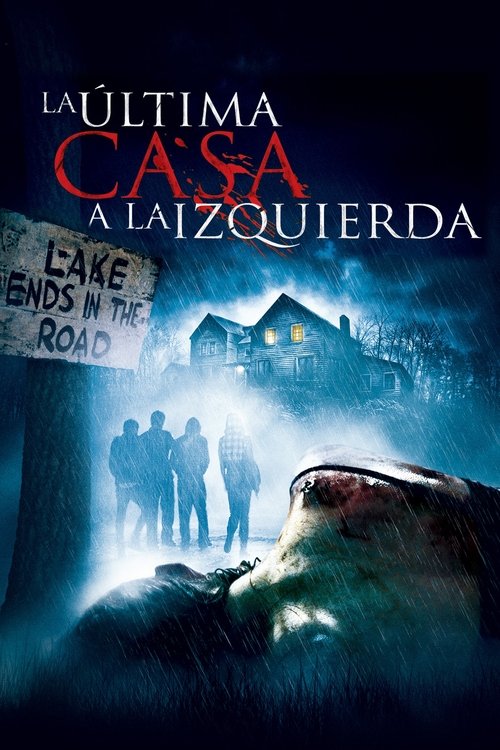


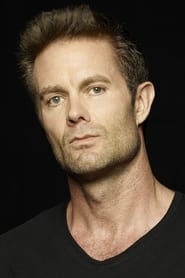
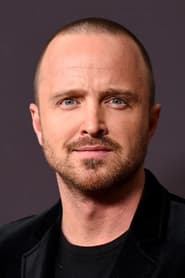
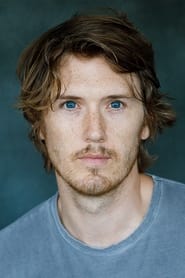
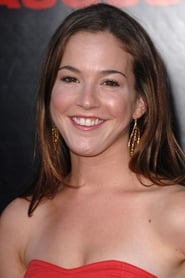
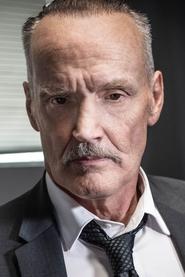
The Last House on the Left backdrop
The Last House on the Left poster

THE LAST HOUSE ON THE LEFT

2009 US HMDB
March 13, 2009

When athletic teen Mari Collingwood opts to hang out with her friend Paige in town rather than spend an evening in with her parents vacationing at the family's remote lake house, it marks the beginning of a night no one is going to forget.

Cast

👍 1 👎 🔥 🧻 👑 (1)

Comments

Comments (0)

Crew

Production: Sean S. Cunningham (Producer)Wes Craven (Producer)Marianne Maddalena (Producer)Ray Haboush (Executive Producer)
Screenplay: Adam Alleca (Screenplay)Carl Ellsworth (Screenplay)
Music: John Murphy (Original Music Composer)
Cinematography: Sharone Meir (Director of Photography)

REVIEWS (1)

Roberto Giacomelli
The Collingwood family moves into the house near the lake for the summer holidays. Seventeen-year-old Mari asks her parents for the car to go to the city to visit her friend Page and spend the evening with her. Despite many recommendations, her parents accept. The two girls meet Justin in the supermarket where Page works, who invites them to the motel where he is staying with his relatives to use drugs. Page accepts and drags the reluctant Mari with her; but upon arriving at the location, the two girls find themselves prisoners of Krug and his family, a recently escaped killer who steals their car and kidnaps them. During the journey, however, Mari tries to escape and makes the car go off the road; then Krug, furious, decides to kill the two girls after raping Mari. With the car damaged and in the middle of a storm, Krug and his family then decide to ask for hospitality in the first house they find on their way, ignoring that the door they knocked on is precisely that of the Collingwood house. There are some films that should remain unique, that do not need any kind of remake or restyling; these are films strongly anchored to an era, a social and cinematic current, that work especially in relation to the context in which they were produced. "The Last House on the Left", a small masterpiece of Wes Craven's debut, may appear, to the contemporary eye, as a raw, sparse, and uneven film but with an impact that is still unchanged today; we are talking about one of the pillars of postmodern horror, founder of a subgenre – rape & revenge – that broke rules and taboos and launched the director of "Nightmare" into the horror masters' olympus. Thinking of remaking for new generations a film that speaks a strongly "seventies" language, that reflects on a generation – the flower children – in disarray, that cites the Manson Family and makes strong use of a staging that recalls war reports – that of Vietnam – without any scruples regarding sadism, explicit violence, and sexual humiliations is a battle lost from the start. "The Last House on the Left" is a unique and legendary film, for this reason, for the rest of the review, we will avoid comparing the two films for a more objective evaluation possible of Dennis Iliadis' film. Let's start by saying that "The Last House on the Left" is a good film, but it has the flaw of functioning perfectly under certain aspects and poorly under others, creating a qualitative seesaw that gives it a bothersome sense of inhomogeneity. Iliadis, the Greek director chosen by Craven himself after seeing his debut film "Hardcore" – a drama about child prostitution – has a sure hand and demonstrates excellent craftsmanship thanks to a style that alternates frantic moments with quieter, almost static ones, in a never banal way, finding a good compromise between modern and classic style. The choice to add scenes to the original story was sometimes a good one, managing to lengthen the film considerably (about 110 minutes, against the 82 of the prototype) in a functional way. No lengthy parts, only additions that give depth to some characters and clarify some passages without leaving too much to chance. Thus, Krug's escape is shown (it is precisely with this that the film opens), as if to create a greater aura of myth around the character, the Collingwood family has a past and an external dimension to the drama that is consumed in the film, the gang of criminals ends up near the lake for a specific reason, and so on. However, not everything hits the mark, and the addition of a dead brother in Mari's past serves little purpose other than to justify the pendant thanks to which the Collingwoods will begin to suspect, just as showing Mari as a swimming champion at the beginning of the film is a pretext that almost makes you smile for its obviousness knowing what her ability will be used for. If, for better or worse, the screenplay by Adam Alleca and Carl Ellsworth ("Red Eye"; "Disturbia") is still willing to sketch out characters and situations, strangely the characterizations of the gang of criminals are neglected, who do not manage to go beyond the obvious labeling of "situation villains". Excluding Justin, Krug's teenage son, played by Spencer Treat Clark ("Gladiator"; "Unbreakable"), the rest of the gang is decidedly one-dimensional, a gang of villains whose only particularity is being a family. Even Krug, the leader played by a bland Garret Dillahunt ("No Country for Old Men"), is presented as uncharismatic and unconvincing as a multiple murderer. Probably the biggest problem lies in a questionable casting choice, acceptable in the "good" department but ineffective in the "bad" one; in practice, the right faces are missing, and only Riki Lindhome ("Pulse"; "My Best Friend's Girl") seems to have the right look for the role of Sadie. We are talking about a medium-large production and consequently the film presents itself in an impeccable package. What surprises, considering that it is a film that is ultimately comforting and good-natured (discutable the choice to save some characters), is the brutality of some scenes and situations, sometimes accentuated by the extreme realism of the same, a characteristic that earned it the ban for minors in Italy. Undoubtedly, the rape of Mari and the death of Francis will be remembered, although at a certain point this realistic and disturbing verve inexplicably gives way to a final scene bordering on the ridiculous that risks, among other things, creating logical and narrative continuity problems: it would have been enough to end the film a couple of minutes earlier and leave in the drawer the unnecessary desire to emulate "Saw". Overall, however, "The Last House on the Left" is a well-packaged film that entertains despite the unusual length and holds its own in the current cinematic landscape, always more hungry for violence. Probably, it will appeal especially to new generations, while those who grew up knowing – and loving – Craven's fundamental film, might glimpse, beyond the impeccable staging, only that underlying uselessness of a story that no longer belongs to our times.
👍 👎 🔥 🧻 👑

Comments

Comments (0)

Where to Watch

Rent

Apple TV Apple TV
Amazon Video Amazon Video
Google Play Movies Google Play Movies
Chili Chili

Buy

Apple TV Apple TV
Amazon Video Amazon Video
Google Play Movies Google Play Movies
Chili Chili

COMMUNITY REVIEWS (3)

John Chard

John Chard

7 /10

Lake Ends In The Road.

The Last House on the Left is directed by Dennis Iliadis and adapted to screenplay by Adam Alleca and Carl Ellsworth from the story by Wes Craven (co-producer here). A remake of Craven’s 1972 film of the same name (itself influenced by Ingmar Bergman’s The Virgin Spring), it stars Tony Goldwyn, Monica Potter, Garret Dillahunt, Sara Paxton, Spencer Treat Clark and Martha MacIsaac. Music is by John Murphy and cinematography by Sharone Meir.

During a family vacation, teenagers Mari (Paxton) and Paige (MacIsaac) are viciously set about by a gang led by recent prison escapee Krug (Dillahunt). When bad weather forces Krug’s car to career off the road, the gang, unbeknownst to them, seek refuge in the vacation home of Mari’s parents. When the parents realise what their new lodgers have done, they begin to enact bloody retribution.

It’s pointless going on about remakes of old horror films, they are here to stay and we continue to watch them in the hope that they will strike a chord with us. With The Last House on the Left, remaking it, to me at least, is understandable given the 72 film is not exactly a great classic itself. True enough to say it has that grainy grunginess that was so befitting the decade’s horror movies, marking it out as an unsettling experience without really living up to its “terrifying” reputation. In fact if you put both movies together they still wouldn’t have enough class in them to give Bergman’s movie a run for its money.

So the remake then, all glossy and big budgeted, with name actors in the principal roles, it is by definition routinely packaged for the modern day audience. However, that doesn’t take away from the fact that what unfolds on that screen is challenging us, it really does do its job. The pertinent question exists, are you capable of such violence having had violence inflicted on your loved ones previously? What would you do in the same situation that Mari’s parents find themselves in?

We have been privy to what was meted out to poor Mari and Paige, and the impact is most distressing. There is good cause to argue that Iliadis and his production team go too far in grabbing our attention in readiness for the “revenge” factor later on. Certainly I myself was uncomfortable watching it, as I was with the I Spit on Your Grave remake, but it’s about getting a prescribed response, however close to the knuckle it is.

It’s not a film anyone can feel comfortable about recommending, surely? But I know it put me through a gamut of emotions, even making me feel bad about myself the next day. That is quite often the power of cinema, and clearly the banner that Craven and Iliadis held aloft during the publicity tours for The Last House on the Left. Today I give the film an uneasy 7/10, it’s uncompromising and unapologetically violent, but also laced with flaws. On another day I may find myself rating it considerably lower…

JPV852

JPV852

8 /10

Pretty good suspense-thriller-horror with Sara Paxton, Aaron Paul, Garret Dillahunt and Tony Goldwyn giving fine performances. Can't say it was exactly 'entertaining' given the SA scene but seeing them get their comeuppance was. I've never seen Wes Craven's 1972 original so I don't know how it compares, but thought it was alright, just won't revisit outside of watching with the new commentary track on the Arrow Video release. 3.75/5

Wuchak

Wuchak

9 /10

Beauty and the Beast

I admit I originally had no interest in seeing this '09 remake of 1972's "Last House on the Left," which involved the rape/murder of two girls and the ensuing wrath the parents of one of the girls (loosely based on Ingmar Bergman's "The Virgin Spring" from 1960). Why not? Because the original movie was just so dumb. I know many hail it for being "disturbing" due to the vile, sadistic villains and the humiliation, rape and gory murders -- but I didn't find it disturbing at all. Why? Because the preposterous storyline accompanied by the goofy music and bumbling cops made it impossible to take serious. Consequently, just like I don't consider the violence in, say, a Road Runner cartoon disturbing -- because it's impossible to take seriously -- so I didn't find "Last House" disturbing. Dumb? Yes. An interesting early 70's curiosity? Yes. Disturbing? No.

Apparently director Dennis Iliadis and writers Adam Alleca & Carl Ellsworth understood the blatant flaws of the original because this remake overcomes them all and is a near masterpiece of filmmaking.

Without knowing what it was, I stumbled upon this remake last summer while channel-surfing in a motel in the heart of Nebraska; the opening caught my attention and I became engrossed. About 40 minutes into the story it dawned on me that this was the remake of "Last House on the Left." Although I couldn't finish the film, the first thing I did when I got home was secure a copy for viewing.

What makes this remake so good? For one thing, the filmmaking itself is top-of-the-line -- the cinematography, music, cast, acting, mood, suspense, etc. all work together to make a superior piece of cinematic art -- yes, even though it's "just a horror flick." I was particularly impressed with the way the film juxtaposes the beauty of nature & people or family with the hideousness of human evil. Take, for example, the opening scenes of the beautiful woods & music followed by the thug's murderous escape and the later sequence where a fleeing girl is shot while swimming through a lake. The film was incidentally shot in Helderberg Nature Preserve, Western Cape, South Africa, of all places. Gorgeous locations, to say the least, and a fine stand-in for somewhere-in-the-sticks, USA.

The character of Justin was another great element. Through no fault of his own he's the teenage son of the main scumbag. It's clear that Justin hates the perverseness and hypocrisy of his "family life" and craves normalcy and genuine love. He's in torment but is too afraid of his father to overtly act (and understandably so), but he does what he can, when he can. The message of Justin is that people are not cursed to follow the wicked/foolish ways of their bloodline. Simple wisdom and force of righteous will breaks the curse. Redemption is there, if you want it.

I also liked the way the film depicts the duplicity of the thug gang, particularly the leader Krug (Garret Dillahunt). He's the ultimate POS but watch him cover-up his intrinsic wickedness with his knack for social acclimation -- a fake smile, innocent smalltalk and a well-placed "Amen." The film successfully shows how some people aren't what they appear to be; they're the express opposite! Not to mention the flick is a good reminder to always be on your guard. Don't be naive; not everyone's like you or me. Some people will happily abuse, rape and kill without a second thought. They're scum, pure and simple (by their OWN foolish choices). If you have daughters make sure they view this, even though some parts are hard to watch.

Also, the numerous preposterous elements of the original story have been fixed. The family is vacationing in a wilderness area and there's only one town nearby. The daughter successfully steers the criminals close to her home, unbeknownst to them. The thugs aren't dressed-to-the-nines when they show up at the parent's doorstep, not to mention they have a legitimate reason ("There's been an accident").

The goofy elements of the original -- the silly music and bumbling cops -- have been eliminated altogether. The film has a serious, realistic vibe and therefore the horrific events are taken seriously.

There are a couple of clichéd horror aspects I could do without, specifically the scenes involving a garbage disposal and a microwave. They're a bit silly and needlessly stretch the believability. But then it struck me that they're types of universal/divine judgment & justice, which works for me.

Another aspect that improved upon the original involves one of the victimized girls, but I don't want to give it away.

At the end of the day, this '09 remake is vastly superior in every conceivable way and proves that remakes can and should be made when/if appropriate. In ways it's even a masterpiece, a brilliant showcase of beauty and the beast. Don't miss out just because you thought the original was a dubious.

The theatrical version runs 110 minutes and the unrated version four minutes longer; both versions are featured on the DVD (I haven't seen the unrated version since the theatrical was more than enough for me, if you know what I mean).

GRADE: A

Reviews provided by TMDB