
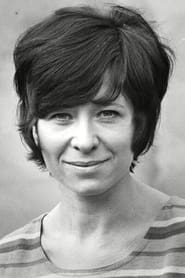
Comtesse Dracula backdrop
Comtesse Dracula poster

COMTESSE DRACULA

Countess Dracula

1971 GB HMDB
janvier 30, 1971

Hongrie, XVIIe siècle. Veuve, la vieille comtesse Elizabeth Nádasdy, de la lignée des Báthory, découvre heureusement un moyen de redevenir jeune ; mais le prix à payer par son entourage sera élevé et sanglant.

Réalisateurs

Distribution

👍 👎 🔥 🧻 👑

Commentaires

Commentaires (0)

Equipe

Scenario: Alexander Paal (Story)Peter Sasdy (Story)Jeremy Paul (Screenplay)
Musique: Harry Robertson (Original Music Composer)
Photographie: Kenneth Talbot (Director of Photography)

CRITIQUES (1)

Roberto Giacomelli
Elizabeth Nodosheen est une vieille comtesse hongroise qui vient d'hériter d'une grande partie des biens de son mari récemment décédé. Parmi les autres héritiers, il y a Ilona, la fille de vingt ans du comte, et Imre, un jeune officier dont la comtesse tombe amoureuse. Un jour, Elizabeth, lors d'une dispute avec une de ses servantes, est accidentellement aspergée de sang de la jeune fille et rajeunit magiquement ; l'effet a cependant une durée limitée. La comtesse décide alors de prendre des bains périodiques dans le sang de jeunes femmes qu'elle enlève et tue avec la complicité de son ancien amant et de sa gouvernante. Pendant ce temps, elle tient sa fille Ilona, récemment arrivée en ville, séquestrée et se fait passer pour elle, entamant une relation amoureuse avec le jeune officier héritier. Au début des années 1970, la célèbre maison de production anglaise Hammer traversait une période d'incertitude qui annonçait la future crise qui a conduit à sa fermeture à la fin de cette décennie. Le marché avait profondément changé, les anciennes suggestions gothiques qui avaient fait la fortune de la maison spécialisée dans l'horreur ne suffisaient plus au public, désormais blasé par le gore et le cannibalisme romerien. La figure du vampire changeait également profondément et à l'archétype du suceur de sang représenté par le noble fascinant de Stoker, se substituait peu à peu la figure de la vampire lesbienne de Jean Rollin et de Jesus Franco, protagoniste d'une série de films qui contaminait l'horreur au genre érotique. Ayant saisi le signal de changement, la Hammer a également décliné cela sur ce que le goût du public de l'époque récompensait et ainsi furent produits une série de films qui unissaient la figure du vampire à des suggestions érotiques. Un des personnages le plus explorés par le cinéma de genre de l'époque fut la comtesse hongroise Erzsébeth Báthory, la célèbre comtesse sanguinaire que le mythe décrit comme une meurtrière féroce qui s'immerge dans le sang de jeunes vierges pour rester jeune, protagoniste d'une série incroyable de films allant de "La vestale de Satan" à l'italien "Le plenilunio des vierges". "La mort va à bras avec les vierges", titre fantaisiste remplacé par la distribution italienne au trompeur "Countess Dracula", examine précisément le mythe de la Báthory et, étant daté de 1971, s'insère précisément dans cette période de transition de la Hammer. En réalité, avec ce film, la Hammer n'a pas tout à fait atteint ses objectifs car, malgré la présence d'une actrice comme Ingrid Pitt (grande protagoniste l'année précédente de "Vampiri Amanti", film toujours de la Hammer, beaucoup plus réussi), l'élément érotique est à peine esquissé et l'élément horrifique tend à faire défaut. Avec "La mort va à bras avec les vierges", nous avons affaire au récit plutôt fidèle des exploits de la comtesse sanguinaire et donc l'élément surnaturel est presque abandonné, relégué uniquement au rajeunissement/invieuxissement soudain de la protagoniste. Bien que l'élément central de l'histoire soit les fameux bains de sang, nous n'assistons jamais réellement à cette pratique, de sorte que l'élément hémoglobine est également caché à l'œil du spectateur avide d'émotions fortes. Alors, qu'est-ce qui reste dans ce film ? Il reste une mise en scène tout à fait digne, comme la Hammer nous a toujours habitués, et un travail minutieux sous tous les points de vue. Si la reconstruction historique des décors et des costumes est donc très crédible, la réalisation et les interprètes sont également de bon niveau. Peter Sasdy venait de "Une messe pour Dracula", un film imprégné de critique idéologique qui renouvelait en partie la figure du comte vampire, donc c'était une bonne carte à jouer pour la Hammer, et en effet, il s'est avéré décisivement compétent dans l'accomplissement de sa tâche. Les interprètes semblent également tous plutôt adaptés, à commencer par la belle Ingrid Pitt, ici parfois cachée par le maquillage lourd. En somme, "La mort va à bras avec les vierges" est un film dans l'ensemble un peu trop inégal : bien fait mais dépourvu de cette mordante qui l'aurait distingué de la masse des productions consacrées à la comtesse Báthory. Voir, mais nullement nécessaire.
👍 👎 🔥 🧻 👑

Commentaires

Commentaires (0)

Où Regarder

Streaming

Cultpix Cultpix

AVIS DE LA COMMUNAUTÉ (3)

John Chard

John Chard

6 /10

Countess Bathory.

Countess Dracula is directed by Peter Sasdy and written by Jeremy Paul. It stars Ingrid Pitt, Nigel Green, Sandor Eles, Maurice Denham, Patience Collier and Lesley-Anne Down. Out of Hammer Film Productions, music is by Harry Robertson and Eastmancolor cinematography by Kenneth Talbot.

Why didn’t they just call it Countess Bathory? Or just Elizabeth Bathory? Film has nothing to do with Dracula or Vampires, and is basically an interpretation of Madame Bathory, who back in olde Hungary killed any number of girls for kicks and a vain belief that bathing in virginal blood would keep her young. It’s this last aspect that Hammer focus on, unfurling a story where the Countess strikes on the secret of eternal youth, and who then promptly has her daughter kidnapped and proceeds to impersonate her. Thus with that she gets to romance a young man, but of course as the bodies start to pile up, and the Countess’ suitor and confidant's begin to get their noses pushed out of joint, things quickly go downhill fast.

As a technical production it’s good Hammer fare. Costuming, colour photography, set design and acting performances are perfectly pleasing. Unfortunately it’s all very predictable, and worse still considering the plot points of interest, it’s pretty bloodless, playing out as some sort of period based drama with the odd bit of dastard behaviour thrown in for good measure. Nothing really happens to perk up the story, and sadly the finale is something of a damp squib. The red blooded amongst us can’t help but enjoy the twin lovelies of Pitt and Down, and the wonderful Nigel Green can’t believe his luck as he gets to canoodle with our Ingrid! But all told it’s not very sexy, not very horror and only works as a good period drama if you set expectation at that level. 6/10

Wuchak

Wuchak

7 /10

Hammer’s Gothic drama/horror based on the infamous Countess Bathory

RELEASED IN 1971-1972 and directed by Peter Sasdy, "Countess Dracula" chronicles events in medieval Hungary where the aging Countess Elisabeth (Ingrid Pitt) cruelly reigns with her Steward, Captain Dobi (Nigel Green). She discovers that washing in the blood of maidens makes her youthful and orders her servants to apprehend victims. Pretending to be her daughter, Ilona, the Countess seeks the affections of a young Lieutenant, Imre Toth (Sandor Elès). Maurice Denham plays the wise old scribe of the castle, Master Fabio, while Lesley-Anne Down appears as the real Ilona, held captive by a mute peasant.

The real Elizabeth Báthory lived in Čachtice Castle, which was surrounded by a village and crop lands (and still is), bordered by bluffs of the Little Carpathians in Hungary. Her chief servant was into witchcraft and encouraged Bathory in her diabolic endeavors. Patience Collier plays this role in the movie, but she’s not a witch.

More than 300 witnesses testified to Bathory’s atrocities with Priests, noblemen and commoners being questioned. Her crimes included cruel beatings, burning of hands, mutilation, biting the flesh off of faces, as wells as limbs and other body parts, freezing to death or starving. Her early targets were serving girls 10-14 years old, the kin of local peasants, who were usually lured to the castle as well-paid servants. She later was said to have apprehended daughters of the lesser nobility, which was the beginning of the end.

In those times Hungarian nobles were allowed to reprove their servants by whatever means they saw fit, even death, and were not reprimanded for it, which obviously facilitated Bathory’s offenses. Three of four of her closest servants were executed and she was under house arrest limited to one room the last four years of her life. She died at 54 in 1614. While some argue that she was politically set-up, and that’s always a possibility, there’s just too much documentation verifying her crimes to dismiss them. The incredible number of her victims (650) is probably exaggerated and the bathing-in-blood angle is likely just lore emerging well after her death.

The film’s cheesy title is figurative because there’s no vampirism; “Dracula” was a hot item at the time and producers simply hoped to capitalize on the name. Yet there is the supernatural element of becoming young & beautiful again. It’s an engaging theme because most aging women (and men) long to restore the beauty of their prime. Have you ever seen a woman in her late 50s or whatever acting like she’s a college girl on spring break? It’s pathetic.

In any case, this is a quasi-historical drama with gothic horror. I love the castle & sets, the costumes and torch-lit hallways. It brings to life the late/post Medieval Age. Some parts are predictable (e.g. the outcome of the closing wedding), but the story is compelling and gives you a good taste of feudal life in central Europe back then.

On a side note, Lesley-Anne Down was one of the most beautiful women to walk the earth in the 70s-90s and she was only around 16.5 years-old during shooting. While her screen time is scant in the first two acts, she comes to the fore in the final act and is definitely a highlight.

THE MOVIE RUNS 1 hour, 33 minutes and was shot in Iver Heath, Buckinghamshire, England. WRITERS: Jeremy Paul (screenplay) and Alexander Paal (story) inspired by Valentine Penrose’s book “The Bloody Countess: Atrocities of Erzsébet Báthory.”

GRADE: B+

CinemaSerf

CinemaSerf

6 /10

The elderly, and recently widowed “Countess Elizabeth” (Ingrid Pitt) is not quite ready to give up the ghost just yet, especially when she discovers a rather macabre method of regaining - for a time - her own youth. Of course, there’s no such thing as a free lunch, especially if you are one of the charming young girls who unwittingly end up on the menu. Initially, her devoted ex-beau “Dobi” (Nigel Green) helps her to purloin her victims but even he realises that it can’t go on for ever especially when she starts to turn her attentions to the dashing “Toth” (Sandor Elés) and really puts his nose out of joint. What can make this transformation permanent, though? Well, of course - what won’t the blood of a virgin do? It’s all your standard Hammer costumed fayre, this, but it steers clear of pantomime gore for the most part and just relies on the hard-working make-up team to convince us that Pitt can age or rejuvenate at the drop of a hat. There’s a lot of dialogue and a fair degree of repetition too, but you always know what you are getting with these films and though I doubt you’ll remember it for long, it does what it says on the tin/coffin.

Avis fournis par TMDB