




The Verdict
A young drummer (Michael Brandon), who had been spied on for some time by a mysterious figure dressed in black, decides one evening, after rehearsals with his band, to follow the individual and shed light on his identity... Reaching the man inside a dilapidated theater, the two engage in a brawl in which the stranger accidentally becomes the victim of a knife wound.
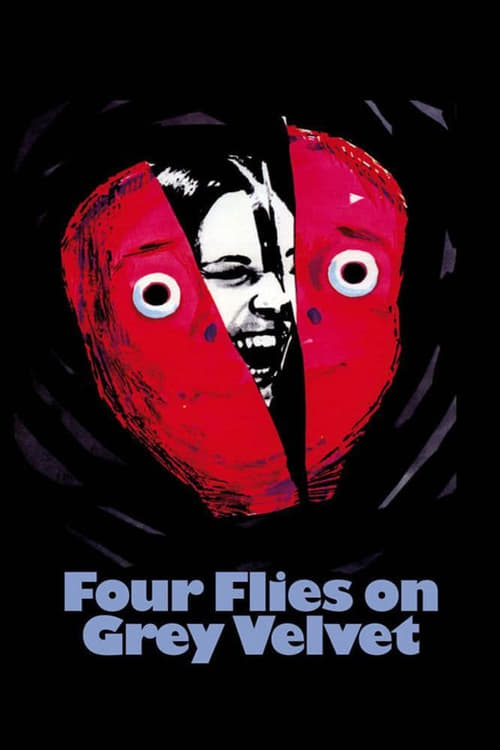
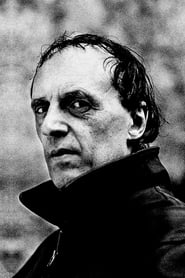
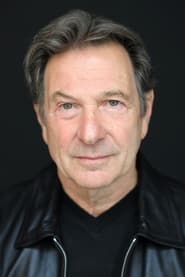
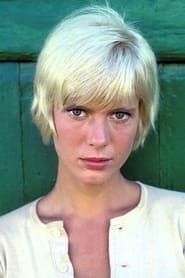
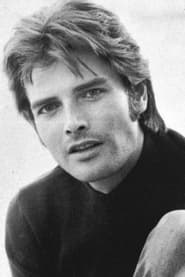
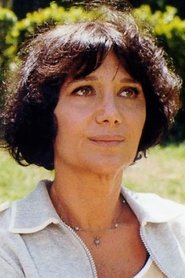
A young drummer (Michael Brandon), who had been spied on for some time by a mysterious figure dressed in black, decides one evening, after rehearsals with his band, to follow the individual and shed light on his identity... Reaching the man inside a dilapidated theater, the two engage in a brawl in which the stranger accidentally becomes the victim of a knife wound. But someone from the top of a balcony takes very eloquent photos and begins to blackmail the musician, who, between the incredulity of his wife (Mimsy Farmer) and the advice of his faithful friend Diomede (Bud Spencer), not being able to tell the police anything, decides to investigate on his own, enlisting the help of a bizarre private investigator (Jean-Pierre Marielle)... Loud and crashing hard rock alternated with an unsettling heartbeat, some bold shots, a couple of long zooms to discover a black figure with a hat and sunglasses, a nighttime chase, a beautiful subjective shot that makes its way through the drapes and the revelation of the final scenario in which (perhaps) the truth will be known: an Italian-style theater, a trope of many other subsequent Argentinian settings, from "Deep Red" to "Opera". A tracking shot with zoom shows us the encounter between the protagonist and the pursuer/pursued, and in a few moments the viewer is caught off guard for the first time (the mysterious individual dies accidentally by the boy's hand) and then a second time (an unwanted third party blinds and immortalizes the crime scene and the "killer" with the shining knife in hand several times). An opening without a doubt excellent (built with good choices of spaces and times, and with refined visual solutions) seems to recall the dreamlike, subtly unsettling atmosphere of the art gallery in "The Bird with the Crystal Plumage", and introduce a compact atmosphere thriller as was the aforementioned. Unfortunately, it will not be so, or at least in part. The story unfolds following the inner evolution of the young protagonist, in a long psychodrama imbued with a sense of persecution and impotence, both at a real and dreamlike level: the recurring dream of decapitation, skillfully represented with an overexposed photograph and accompanied by sharp and piercing sounds, and its progressive reconstruction during the events, once again refers to the debut film. The typical structure of the giallo is more or less effectively enhanced: Argento is now skilled at playing with the viewer and his certainties, only to disorient him at will with a surprising plot twist. To do this, he uses some elements of his own horror poetics, already successfully used in previous works: for example, photography, which in "The Cat o' Nine Tails" was conceived as an enhancement of visual faculties and an instrument of truth, here, on the contrary, is used as a vehicle of deception. Precisely, it is discovered that the mysterious individual dressed in black had not died by the hand of the protagonist, but had acted (with a fake knife) in a setup orchestrated by the real persecutor. He will subsequently die by the hand of the same. However, the dramatic and "thrilling" dimension to which the director had accustomed us, especially in the first film of the trilogy, here is partially compromised by the exaggerated insertion of caricatures, already proposed previously, as entertaining as clumsy and demented, and comedy sketches that lengthen the times of the narration, affecting the economy of the screenplay: the scene of the dialogue between the protagonist and the two homeless friends in a coffin exhibition, or the encounter with the homosexual and decidedly bizarre private investigator (never before had gigantic homosexuality found so much space in an Argentinian story, although it had always been hinted at) are worth mentioning. Furthermore, the parascientific premise (the possibility of tracing back to the last image seen by a person before dying through retinal analysis) on which both the resolution of the story and the title itself (although it is not clear what the "velluto grigio" has to do with it) is much weaker than the one on which the plot of "The Cat o' Nine Tails" was based, resembling rather a sort of expedient to make up for a lack of unity and completeness of the story. A mention of merit, however, must be made to the final sequence in the protagonist's house, when the killer, completely mad, begins a long (for the times of narration) monologue on the origin of his illness, unleashing acts of violence (shots towards the musician) in a totally unpredictable and unusual way for the times of suspense. The slow-motion finale of the car accident (filmed with a Pentazet at 36,000 frames per second) is, finally, of undeniable visual force, although it is a technical marvel somewhat finished in itself. Between lights (many) and shadows (some) Dario Argento concludes his "animal trilogy" having now matured a very personal, original and innovative poetics and aesthetics of the shiver, and preparing to exalt them to the nth power in that which will be considered by many, among critics and simple enthusiasts, the definitive and unmatched work of the director: "Deep Red" (1975). Curiosity: "Quattro mosche di velluto grigio" is a very autobiographical film: Dario Argento in fact chose for the role of the protagonist an actor who physically resembled him and then an actress who resembled his wife. When Marisa Casale, at the time his companion, saw the film she said: "Do you really want to hurt me that much?" The two separated shortly afterwards.
Comments
Comments (0)


Comments