














The Verdict
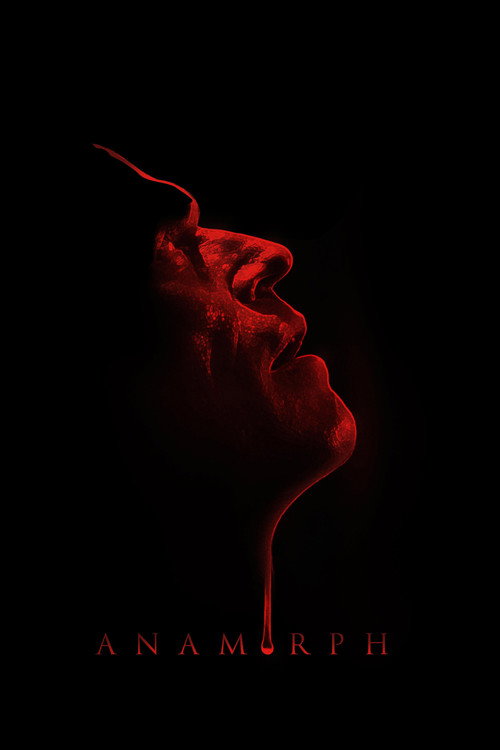
Detective Stan Aubray is called to investigate the case of a killer who leaves corpses behind, decorating the crime scene as if it were a painting, and using the technique of anamorphosis. The FBI is certain that this is a copycat, as a few years earlier another serial killer, dubbed by the press Uncle Eddie, left the same signature on his victims.
Detective Stan Aubray is called to investigate the case of a killer who leaves corpses behind, decorating the crime scene as if it were a painting, and using the technique of anamorphosis. The FBI is certain that this is a copycat, as a few years earlier another serial killer, dubbed by the press Uncle Eddie, left the same signature on his victims. It was Aubrey himself who captured Uncle Eddie, but now the detective begins to fear that Uncle Eddie was not dead and is now claiming his revenge.
Anamorphosis is an optical illusion effect in which a figure projected onto a plane in a distorted manner is only revealed in its original aspect if viewed from a particular angle. This is a technique often used in painting, especially to communicate a message not immediately readable to the viewer's eye, and one of the most famous examples is "The Ambassadors" by Hans Holbein, a painting that presents a strange figure at the feet of the two subjects portrayed, which, when viewed from the side and slightly tilted, reveals itself to be a skull, a harbinger of death for the two subjects.
Since cinema has "stolen" the technique of anamorphosis for purely technical reasons (anamorphic lenses, which compress and decompress the image from capture to projection), it does not surprise us that it has also used this originally pictorial device for narrative purposes. Thus, "Anamorph" is born, an urban thriller with a serial killer chase that uses the technique of the title as the killer's modus operandi.
The starting idea is really interesting; the idea of anamorphosis applied to crime scenes is original and manages to have a macabre charm that turns the corpses and the environment around them into singular works of art. However, the charm of "Anamorph" essentially ends here. The director and screenwriter Henry Miller does nothing more than apply this good idea to the typical template of the modern thriller, without any visual or narrative imagination, instead following the path of accumulation/subtraction in a rather ineffective and sometimes tedious manner.
The film suffers almost embarrassingly from the weight of the Fincherian example of "Seven", a true cornerstone of the genre, as since its appearance, the thriller has not been the same.
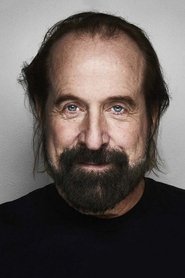
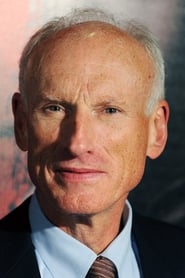
However, frankly, almost fifteen years after the film with Brad Pitt, the same repetition of mechanics and atmospheres begins to smell a bit musty, and "Anamorph" is just one of the most recent examples. So: pairing of young cop and old cop, dark towers, and preferably desaturated photography, imaginative serial killer who follows his own logic and "decorates" crime scenes communicating thus with the police, cosmic pessimism and so on… the same ingredients of "Seven" return in "Anamorph". However, unlike its predecessor, Miller's film presents a sometimes uninvolving development, penalized by a slow and mechanical pace and especially by a series of uninteresting characters. If the older detective (a Willem Dafoe below par) who has "an axe to grind" with the killer is the most worn-out cliché one can imagine, even worse are the supporting characters represented by the young colleague (a lost Scott Speedman) and the troubled girl to save (a Clea Duvall out of her element), barely sketched and inserted into the story exclusively to trigger individual scenes. Only Peter Stormare – to whom Hollywood should learn to give more substantial roles – saves himself with a charismatic and ambiguous character to whom, however, only a few scenes are entrusted.
Even the ending is unconvincing, too rushed and guilty of an annoying irresolution that one cannot understand if it stems from deliberate narrative choices or from duration needs where the result is given by the editor's scissors.
If you are content with the usual technically well-made thriller and an interesting starting idea, punctually not exploited to the fullest, feel free to watch it; but if the clones of "Seven" have tired you, then perhaps it is better to look elsewhere, "Anamorph" is not even of particular entertainment.
Comments
Comments (0)







Comments