









The Verdict
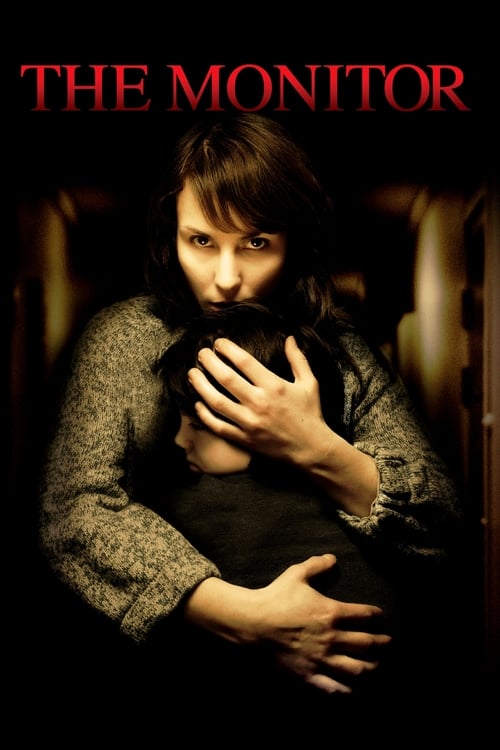
Anna moves with her son Andres to a building on the outskirts of Oslo. Both have been victims of the fury of a violent husband and father who tried to kill Anders.
Anna moves with her son Andres to a building on the outskirts of Oslo. Both have been victims of the fury of a violent husband and father who tried to kill Anders. Now Anna lives in terror that her ex-husband might find them and has become hyper-protective towards her son, to the point of not wanting to send him to school and makes him sleep in her bed to keep him constantly under control. After the insistence of social workers, the woman decides to enroll Anders in the nearest school and gives him his own room, but, out of scruple, buys a baby monitor to control the son during the night. Until one night Anna hears infant cries coming from her receiver. Having ascertained that it was not Anders who was complaining, the woman begins to investigate in the building, convinced that her baby monitor has intercepted another transmission channel. But the disturbances with disturbing infant complaints continue...
Very successful in the Nordic film market with the trilogy "Millennium" and recently adopted with force also by the American one with blockbusters such as "Sherlock Holmes: A Game of Shadows" and "Prometheus", Noomi Rapace is also the protagonist of this interesting Norwegian thriller that focuses on the theme of paranoia and domestic violence.
Seen at the 2011 edition of the Rome Film Festival, where Rapace also won the award for best actress, "Babycall" presents itself as a psychological thriller with dramatic aspects, centered on the relationship between Anna and her son, with an excellent work of psychological construction of the characters. The underlying theme is certainly not new and the use of the "haunted" baby monitor as a decoy to tell something else is a means already seen recently in the successful "Signs", "Insidious" and "The Boy" (from the Spanish series "Películas para no dormir"). "Babycall" manages however to carve out a place for itself in the genre, not only because it does not insist too much on the sinister noises coming from the walkie-talkie, using it only as an expedient to start the story, but because it puts a lot of emphasis on the inner turmoil of the protagonist.
The former Lisbeth Salander Noomi Rapace —excellent as usual— portrays in a very intense and credible way a woman with evident problems of anxiety and paranoia, who lives the entire day in terror of a retaliation, of an incursion by a past that she is trying to leave behind. Reality and fiction blend in her mind and she is aware of it, transforming her experience in an even more dramatic way. The lake in which she sees a child drowning appears, in the presence of others, an anonymous parking lot, but becomes a lake again when she is alone. Could the cries coming from the baby monitor also be the product of her imagination? And the man who lives in the building who has loaded into his van what looks like a corpse? There are many questions that the film written and directed by Pal Sletaune poses in the first part of the story, which make "Babycall" a fascinating and interesting work despite a not really tight rhythm. Then, as often happens to films that weave such a complex and rich plot, not everything is resolved without some uncertainty and if the final twist is not very original but served with the right sense of surprise, in the end something does not add up and you have the impression that there was a hole in the script during the way.
As mentioned, excellent is the work done on the construction of the characters and in particular on Anna, who shows a protective, almost morbid relationship towards her son Anders, whom she fears for his safety at every moment of the day and night, even going so far as to seek physical contact with him during nighttime moments. Anders is 8 years old, so he is no longer so small as to require the presence of a baby monitor and his extreme loneliness is presented to us as a direct reflection of this excessive behavior on the part of the mother. At the same time, there is also the character of Helge, played by Kristoffer Joner, the clerk of an appliance store that Anna meets on the bus, a man who has a similar story to Anders', with an overprotective mother now elderly and on her deathbed. Inevitably Helge will emotionally bond with Anna, as in a pseudo-incestuous temporal continuum in which children tend to seek a love as similar as possible to the maternal one and vice versa.
Pal Sletaune, who in 2005 directed another intimate thriller titled "Naboer" and still unreleased in Italy, directs with great attention to the environments (interiors and exteriors), undoubtedly helped by the excellent work done by the performers.
"Babycall" is certainly an imperfect film, especially at the level of the plot, but it manages to capture the attention and knows how to entertain thanks to a good atmosphere and a skillful construction of the characters.
Comments
Comments (0)



Comments