












The Verdict
New Zealand. Henry Oldfield returns to the family farm to sell his share of the property to his older brother Angus.
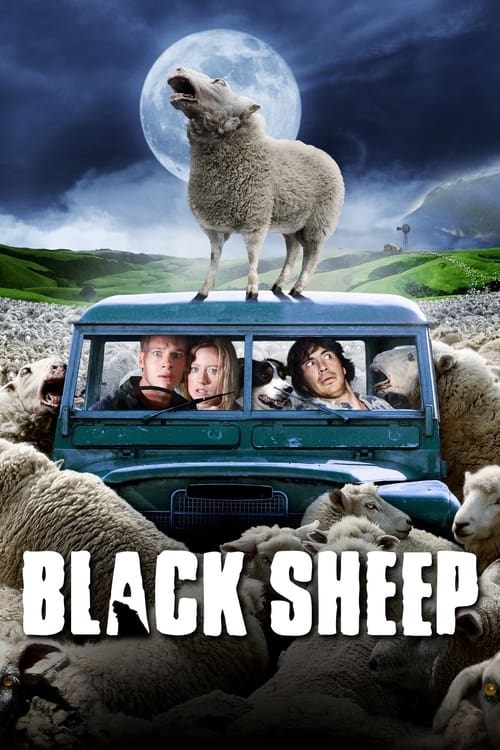
New Zealand. Henry Oldfield returns to the family farm to sell his share of the property to his older brother Angus. Henry has lived in the city for many years because he suffers from ovine phobia, a fear of sheep, while Angus runs a genetics lab in the old family farm where he conducts experiments on sheep. Two environmentalists break into Angus's labs and release a strange lamb kept under formaldehyde, not knowing that this animal represents one of the failed experiments. The lamb bites one of the thousands of sheep grazing in the plain and from that moment, a dangerous contagion spreads that turns the most harmless animals on earth into bloodthirsty carnivores. Despite his innate fear, it will be up to Henry to face the problem of the killer sheep.
If they managed to turn rabbits ("Night of the Long Fear"), hamsters ("Attack of the Killer Shrews") and even slugs ("Slugs") into killers, we should not be surprised if the meek sheep have also ended up in the long list of unlikely predators from beast movies. The singular idea was conceived and realized in New Zealand, a sleepy land full of green where sheep represent one of the major sources of income for the local economy. Meat, wool, milk: about 40 million specimens that daily graze undisturbed the grass of the numerous pastures. But if what is for New Zealand farmers the most familiar animal were to turn into the main threat to fear?
Jonathan King starts from this simplistic assumption to give life to a quirky but fun beast movie that deftly handles splatter and irony.
The source of inspiration for the director of "Black Sheep" is openly the cinema of the beginnings of his compatriot Peter Jackson, the demented splatter of "Bad Taste" and "Splatters - The Brain Splatterers", but King tries to reduce the demented component of his "master's" works to venture into the path of light comedy, which plays on witty dialogues rather than visual excesses, while allowing for some "sheepish" parentheses (it is the case to say!) made of farts and "bestial" copulations. The greatest merit of this film is precisely the balance with which comedy and horror manage to coexist without one prevailing too much over the other, thus representing one of the best examples seen in recent years in which the two genres manage to coexist naturally.
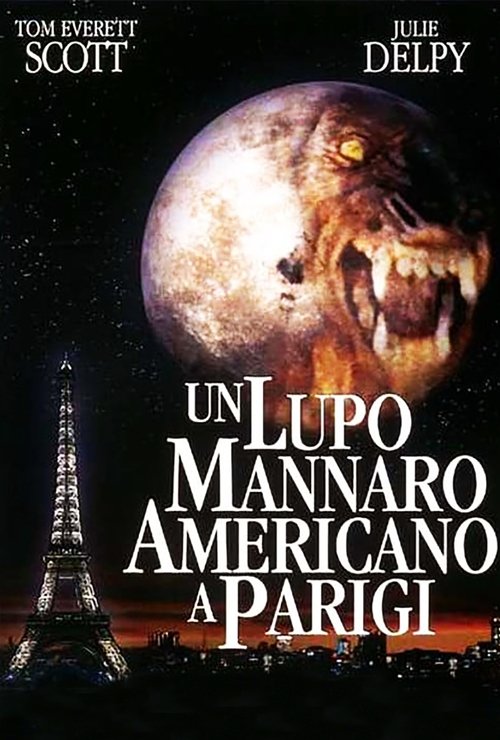
Another great point in favor of "Black Sheep" are the magnificent special effects made with the collaboration of WETA, the sfx house behind the creatures seen in the "Lord of the Rings" trilogy. The numerous special effects of this film are 99% handmade (1% digital is used to increase the number of sheep that populate a large flock that heads furiously towards the protagonists), prosthetics and mechanical effects made in the old style that give life to first-rate splatter effects and to gruesome transformations that recall (intentionally) the famous man-to-wolf metamorphosis seen in "An American Werewolf in London". Yes, because if in Landis's film one could talk about werewolves, in "Black Sheep" surprisingly some were-sheep burst in, protagonists of some of the best scenes in the film.
But as often happens, even in "Black Sheep" not everything can be considered a miracle and then here is a series of flaws that are noticeable with good evidence. The screenplay is a simple pretext to be able to bring the killer sheep on stage, and here the entire film rests on clichés that go from the failed genetic experiment to the protagonist's childhood trauma, from the trouble-causing environmentalists to the final siege similar to Romero. Choices that in a certain sense could even be justified by the ironic and almost parodic intent of the operation, but that then turn out to be real signs of narrative weakness when the characters are known, lacking any psychological relevance that goes beyond the clumsy heroine, the ruthless villain and the comic relief. The same actors involved in the project will certainly not be remembered for their acting abilities and even King's direction, which comes from advertising and music videos and here in his debut with a feature film, is less careful than one might expect.
"Black Sheep" entertains and has many chances of carving out a little place among the many cult films that populate the universe of genre cinema. With more care, especially in terms of writing and casting, the result could have been far superior, but nevertheless, the result is definitely worth the price of the ticket.
Comments
Comments (0)















Comments