
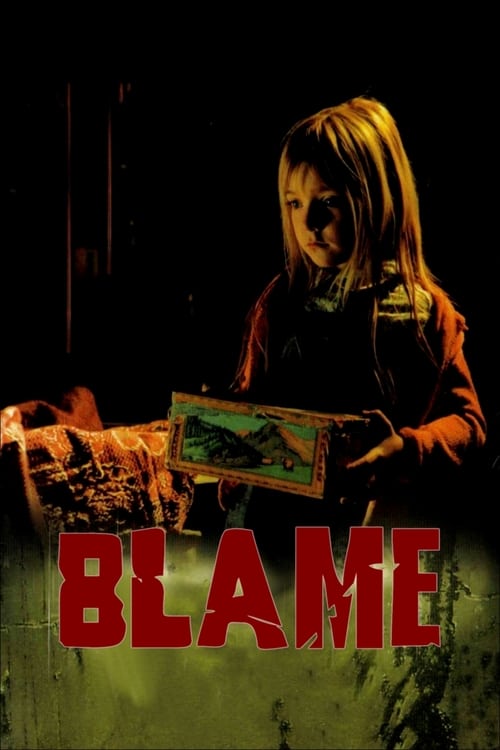








The Verdict
Gloria leaves a failed marriage and finds in Ana a reason to distract herself from a moment of crisis. In fact, the woman, along with her daughter Vicky, finds lodging and work at Ana's, a gynecologist who has a small private clinic at home and in need of a new nurse.
Gloria leaves a failed marriage and finds in Ana a reason to distract herself from a moment of crisis. In fact, the woman, along with her daughter Vicky, finds lodging and work at Ana's, a gynecologist who has a small private clinic at home and in need of a new nurse. Initially everything goes well, Ana and Gloria become great friends and Vicky seems to have settled in well, then Ana reveals to her tenant that she illegally performs abortions and asks her for help. Gloria does not seem to have any problems, but when she herself becomes pregnant she begins to have doubts about the practice undertaken.
“Peliculas para no dormir” is a series of six TV movies produced by the Spanish Telecinco in association with Julio Fernandez's Filmax.
The six films, with an average duration of just over an hour each, can be considered the Spanish response to the American “Masters of Horror”, since they bring to the screen a handful of short horror stories directed by well-known directors active in the genre.
The six directors involved are: Alex De La Iglesia, Jaume Balaguerò, Enrique Urbizu, Paco Plaza, Chicho Ibanez Serrador and Mateo Gil.
The title of this series can be considered a reference to a Spanish TV series that aired sporadically from 1964 to 1982 with a total of 31 episodes: “Historias para no dormir”.
Exactly thirty years after the small masterpiece “Ma come si può uccidere un bambino?” we find Narciso Ibànez Serrador again dealing with the world of children and the specific, personal request for satisfaction from said world towards the cruelty and obtuseness of adults. If in 1976 Serrador used the war pretext to unleash murderous impulses in the infants towards their parents, this time it is abortion that provides a key to interpreting the violence of the youngest towards adults.
The theme is one of those burning and always current, which had recently been approached even by John Carpenter with his episode for the second season of “Masters of Horror” (“Pro-Life: Il seme del male”), but if Carpenter had used a grotesque tone and leaned towards splatter excess, Serrador focuses instead on a story with psychological implications and decidedly serious tones. The result, unfortunately, leaves a bit of a bitter taste in the mouth, especially for a series of continuous promises that are never kept.
“La Culpa” right from the start wants to underline its transversal hold on the horror genre: essentially it is a drama, with psychological thriller implications and Serrador – also screenwriter - makes it clear by building a “camera” film that is based entirely on the construction of the characters. On this “La Culpa” is exemplary: the atmosphere is charged with mystery and narrative intensity and the characters are interesting, ambiguous and well-drawn. What, however, does not convince much is the horror component inserted somewhat forcibly perhaps only to justify the inclusion of this film in the sextet of “Peliculas para no dormir”. The horror tones that “La Culpa” acquires over time do not seem particularly functional to the story and the same revelation of the mystery that has meanwhile been created appears rather disappointing and banal. A realistic ending for a story that had gradually acquired supernatural tones is a somewhat incorrect evolution for a story that would have gained originality and metaphorical strength in a more courageously over-the-top conclusion. But so be it and so we keep it.
The continuous misdirection of the viewer towards realities that are denied to lead the story into different waters is also a good narrative device, capable of making a story that is already too relaxed exciting and continuously stimulating the interest of the viewer, but the continuous lack of a foothold and a somewhat “so-so” conclusion give a general sense of dissatisfaction, as if at some point the script had run out of ideas to develop.
Very good the two leading actresses, Montse Mostaza (“Black Symphony”; “Crimen Perfecto”), who plays Gloria, and Nieve de Medina, who plays Ana.
Good intentions, therefore, but fluctuating and inhomogeneous result. From Serrador's return to the “genre” one could frankly expect more.
Curiosity. Narciso Ibànez Serrador directed twelve episodes of “Historias para no dormir”, the TV series that “Peliculas para no dormir” is inspired by.
Deserves half a pumpkin more.
Comments
Comments (0)



Comments