



The Verdict
Agnes is trying to escape a difficult past marked by the mysterious disappearance of a son and the violence of her husband, now in prison. One evening, the woman meets Peter, a Gulf War veteran, with whom she starts a relationship.
Agnes is trying to escape a difficult past marked by the mysterious disappearance of a son and the violence of her husband, now in prison. One evening, the woman meets Peter, a Gulf War veteran, with whom she starts a relationship. Meanwhile, Agnes' husband has been released from prison, but the real problem is Peter, obsessed with invisible insects and government conspiracies.
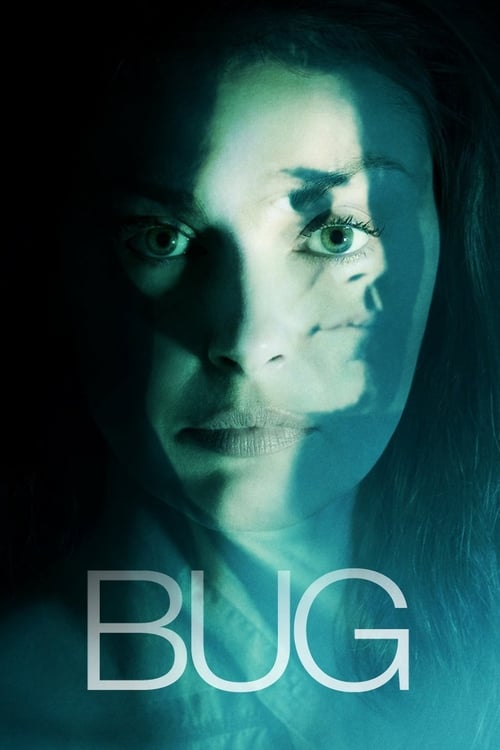
William Friedkin is famous for what is still considered one of the most terrifying horror films in cinema history, "The Exorcist," and yet Friedkin has only explored the universe of cinematic horror once more in his career with the unsettling "The Devil's Advocate," dedicating himself more to the language of the police procedural and the myriad facets of the thriller. Now, with a very limited distribution (in our country the film has only been released on home video), comes "Bug," which, although not being a horror film at all, comes closer to the genre than any other, given the elusiveness with which a product as strange and complex as this can be labeled.
We need to make a premise: "Bug" is not a film for everyone, it has a high chance of not being liked, since it does not follow the standard iteration of cinematic storytelling. "Bug" is static, it proceeds by accumulation but in fact never moves; "Bug" has characters with whom it is impossible to identify (unless you are completely crazy) and does everything to make them unbelievable; "Bug" revolves around the practical nothing and the all metaphorical, leading the viewer to an exclusively cerebral involvement...
These are characteristics that certainly do not lend themselves to the plebiscite of appreciation. Yet "Bug" has peaks of genius and analytical intelligence that make it a film that should absolutely be seen by everyone, even if it should end up in a hypothetical personal blacklist.
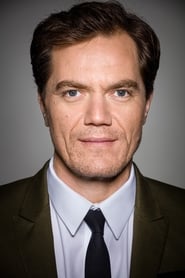
We start by justifying the static action of Friedkin's film in the fact that it is the cinematic adaptation of the eponymous play by Tracy Letts, who in the film holds the role of screenwriter. The action is almost entirely consumed within the four walls of a hotel room, Agnes' home, which goes from simply squalid to repellent (flypaper everywhere), then aseptic (aluminum foil covering everything). In this sense, the work done by the production designer Franco Carbone is exemplary and explanatory of the maximum and functional enhancement of a single, restricted set. Beyond the location and the evolution of the story that focuses exclusively on the exacerbation of a single event, the narrative becomes dynamic thanks to the successful characterization of the two main characters, two "aliens" who carry within them a great variety of facets of mental degeneration. Paranoid, schizophrenic, sociopathic, depressed, masochistic... Agnes and Peter, magnificently portrayed by Ashley Judd ("The Burning Girl"; "High Crimes – Crimes of State") and Michael Shannon ("Honor Thy Father and Mother"; "Revolutionary Road") appear as the extreme de-evolution of the American citizen devoted to the American dream. He is a Gulf War veteran and, as tradition dictates, serving the State has cost him dearly, Peter indeed has his mind completely shattered by fanta-political theories that would have him at the center of a conspiracy aimed at controlling citizens: millions of tiny insects, aphids that move under people's skin and have the power to signal every movement. But Peter has discovered everything and therefore must be eliminated, Peter is a "bug" in the system that must be deleted to avoid general collapse. Michael Shannon gives a very valid acting performance that perhaps was facilitated by the fact that he has played this character multiple times on stage. But the real star of the film is Ashley Judd, here probably at her best acting performance ever, who gives the disheveled face and the extremely sexy body to the suffering Agnes, a former mother and a former wife enslaved by alcohol and cocaine who shows a perfectly receptive mind for Peter's paranoid theories.
The final premise in which the two become aware of their renewed function within the "System" is a perfect example of genius and madness.
The excesses of violence that characterize the second part of the film and see the two protagonists engaged in modifying their own body and annihilating that of others have a very Cronenbergian flavor, nevertheless hovering over the work several times even at a more purely content level.
The only flaw that, in the end, could be attributed to "Bug" is the too much time dedicated to the introduction of the situation that takes the subject too broadly, leading the viewer not to immediately understand in what territories the author wants to play. For the rest, a "Bravo" to Friedkin who has given us one of the craziest and most delirious works of recent years.
The rating has been rounded down.
Comments
Comments (0)








Comments