










The Verdict
A woman finds herself locked in a room shaped like a cube, surrounded by dozens of other rooms of the same shape but which can contain deadly traps; the woman does not know who trapped her there, nor for what reason, her only memory is a flight in the forest and the kidnapping of her daughter.
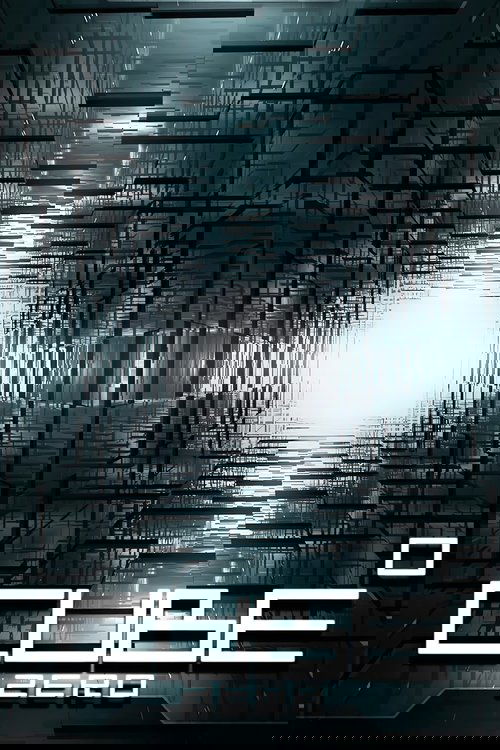
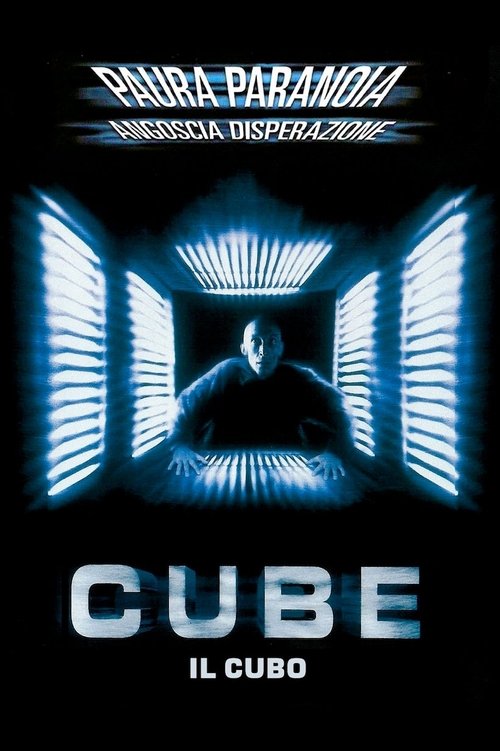
A woman finds herself locked in a room shaped like a cube, surrounded by dozens of other rooms of the same shape but which can contain deadly traps; the woman does not know who trapped her there, nor for what reason, her only memory is a flight in the forest and the kidnapping of her daughter. Two men, employees of a not-so-clear para-military company, also unaware of the identity of their employers, observe the woman locked in a room full of monitors and record every one of her movements. It will soon be discovered that the cube-shaped structure houses other people, destined to meet and attempt an escape plan with the help of one of the two employees tired of participating in this sadistic and cruel game. We have reached the third chapter of the fascinating and mysterious Cube saga, started in 1998 by Canadian Vincenzo Natali with the beautiful "Cube" and continued with the disappointing "Hypercube" by Andreij Sekula in 2002. "Cube Zero", which should be a prequel to Natali's film even though there are no chronological references, attempts to raise the quality of the saga that suddenly sank to almost minimal levels with the confusing second chapter and succeeds quite diligently in its mission. The viewer fascinated by the sense of mystery and the philosophical-mathematical metaphors of the first film, might not appreciate the intention of the producers to give a concrete explanation to what is behind the Cube, but fortunately "Cube Zero" hints, adds a few small pieces but never explains clearly, continuing to lead, with the necessary and inevitable qualitative differences, that game of mirrors already brought to the screen in 1998. Furthermore, in this film too, as in the first, innocence and purity are a synonym for salvation and continuity, although an unexpected final twist will put into question much of what the first two episodes had shown us. This prequel certainly has a more pronounced horror vein compared to the two previous films, thanks to a series of ingenious traps hidden in the cube structure that will have semi-splatter consequences on the unlucky ones who will come into contact with them: there are those who are completely liquefied by a strange substance, staging a disgusting but well-made body melt sequence; there are those who are infected by a lethal virus that devours the flesh; there are those who are made into pieces by a razor-sharp blade and those who are made to explode by sound waves. A notable step forward compared to the insipid abstract traps of "Hypercube"! The direction has been entrusted to Ernie Barbarash, in his debut behind the camera and also author of the screenplay (the script of the second chapter was also his); already known in the fanta-horror field as a producer of both "American Psycho". Naturally, the film in question has the characteristics of direct-to-video films, in addition to the anonymous direction and the unprofessional performances (among the actors Zachary Bennet in the role of the protagonist and Stephanie Moore in that of the woman whose daughter has been kidnapped), the photography and sets fail to replicate the low-budget charm of the first film. However, the result is certainly superior to the average home video product. In conclusion, "Cube Zero", although very far from the originality and quality of its prototype, convinces and involves, especially thanks to a series of delicious spectacular deaths.
Comments
Comments (0)








Comments