


The Verdict
1968. An isolated hospital is the setting for a horrible contagion caused by a mysterious gas contained in military-owned test tubes.
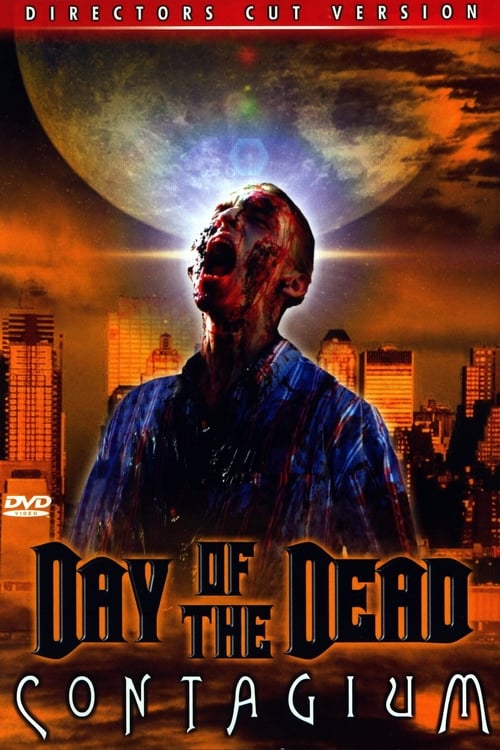
1968. An isolated hospital is the setting for a horrible contagion caused by a mysterious gas contained in military-owned test tubes. Whoever inhales the venomous gas undergoes a mutation that kills the body but keeps the individual alive and gives them a hunger for human flesh. The army's intervention allows the contagion to be contained, but a test tube is taken out of the hospital and abandoned in the forest. Today. Near the hospital where the contagion occurred is a rehabilitation community for sociopaths and outcasts; during a hike in the forest, one of the community's patients finds a thermos containing the test tube lost in 1968 and brings it with him into the building. From the moment the test tube is opened, the contagion will spread again, transforming most of the patients into living dead. Every horror movie enthusiast, reading the title of this film, might be pushed without any doubt to venture curiously into the viewing, certain of knowing that behind the camera there is not Romero, but a complete unknown, who could yet prove capable of bringing a good zombie movie to life. The curious enthusiast, however, in this case, would find themselves facing a film that not only has no connection to the beautiful film that Romero directed in 1985, but also turns out to be one of the worst films about the living dead (if not the worst) produced in recent years, that is, since the putrid figure of the zombie has regained success at the box office. "Day of the dead 2" opens with a prologue set in 1968, a date that clearly wants to evoke the release of the film that started the genre, "Night of the Living Dead," introducing (if we want to interpret thus, forcibly inserting the film in question into the Romero universe) a possible explanation for the deadly epidemic that for more than thirty years has resurrected the cadavers of half the world: a military-origin gas designed by the Russian army for wartime use. A rather unoriginal explanation (monsters created in a lab to be used in military actions? It's been seen and re-seen countless times in the fantasy imagination) and capable of completely nullifying the fascinating aura of mystery that hovered over Romero's films. Anyway, setting aside the underlying idea, the action-packed prologue with splashes of blood everywhere could have also promised well, but then the story takes a completely insufficient turn due to a narrative slowness unsuited to a film of this genre, a host of ridiculous characters, and a series of poorly thought-out screenplay choices that descend into unintentional comedy. Excluding the introductory five minutes, for about an hour in the film nothing happens, we only witness the squabbles of the ridiculous characters with mental disorders (ranging from the improbable violent guy who wants to pick a fight with everyone, to the unbearable, foul-mouthed, and hysterical lesbian patient) and a fake love story between two patients. Then, a series of solutions were adopted that, in the screenwriter's intentions, could have been innovative and fun, but in fact, only result in being comical; in this regard, it is necessary to cite the choice to establish a telepathic contact between the gas-directed infected, a choice that gives rise to irresistibly unintentionally comical skits (a zombie bangs his head against the wall and all the others scream in pain!), or the "brilliant" idea of giving some of the living dead the gift of speech (already seen in "Return of the Living Dead," but in that saga there is a voluntary parodic intent). Then, needless to say, from a technical/artistic point of view, we find total incompetence: anonymous direction; laughable actors; poor makeup. The only positive note is the good splatter effects, which in the last twenty minutes prevail over the general flatness of the film. In conclusion, "Day of the dead 2" has nothing to do with the Romero prototype from which it cunningly steals the title; rather, it is a poorly conceived and even worse executed commercial operation, impossible to save despite the good splatter effects.
Comments
Comments (0)







Comments