





The Verdict
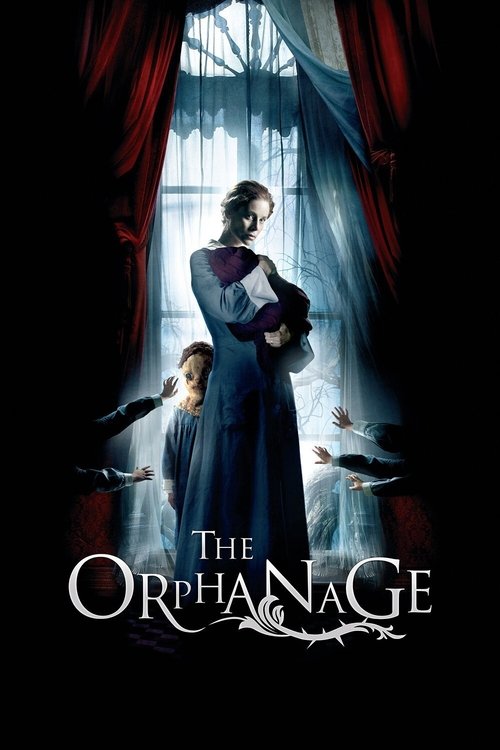
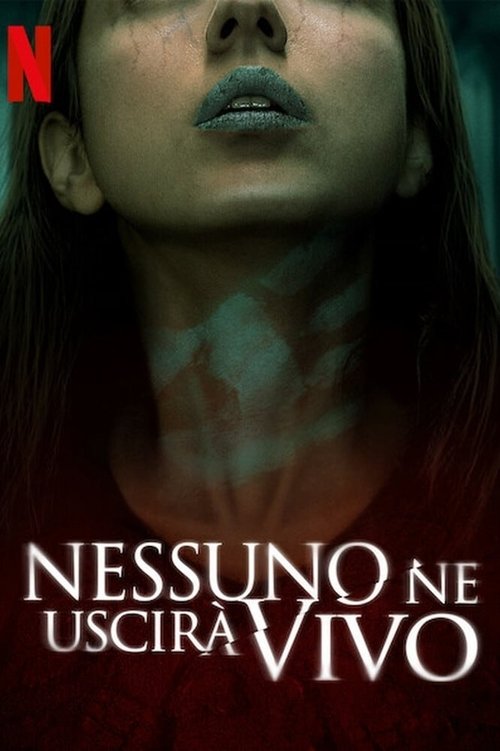
Laura bought the orphanage where she grew up as a child, and now, together with her husband Carlos and her adopted son Simon, she intends to transform the building into a foster home to care for disabled children. On the day of the inauguration, little Simon, after an argument with his mother, disappears without a trace.
Laura bought the orphanage where she grew up as a child, and now, together with her husband Carlos and her adopted son Simon, she intends to transform the building into a foster home to care for disabled children. On the day of the inauguration, little Simon, after an argument with his mother, disappears without a trace. From that moment on, Laura and Carlos's life takes a sharp turn, their dreams are shattered, and, moreover, the woman perceives strange presences inside the house, perhaps the same ones that Simon also talked about without being believed by his parents. Nine months after the child's disappearance, the two parents have not yet stopped looking for him, and as a last resort, they turn to a team of parapsychologists to have them analyze the house, convinced that the presences that probably live there may know where the child has ended up.
In one of his most famous films, "The Devil's Backbone," director Guillermo del Toro attempted to reflect on the very nature of the "ghost," defined in the film as a "terrible event doomed to repeat itself forever." The debutant Juan Antonio Bayona surely learned something from his mentor Del Toro, who here appears as a producer, but does not seem to fully agree with the definition given by the character played by Ferdinando Luppi in the already mentioned film by Del Toro. Already, because in "The Orphanage" the ghosts are not terrible events, or rather, what makes them such is (death, almost always occurred in violent circumstances), but the condition of being a ghost itself is a liberation or an affirmation of one's ego. Bayona, based on a screenplay by Sergio Sanchez, has the good idea of addressing the ghost story topic by introducing an original idea, namely contaminating it with the fairy tale of "Peter Pan": the ghost children are a bit like the lost children, the afterlife is Neverland, a limbo where one never grows up and can play all day every day. It's even Peter Pan! Only instead of having the appearance of an athletic and alert flying boy, here it is a disturbing freak who hides his horrible features under a mask made from a yute sack. Therefore, death is a "terrible event" for the living, those children who returned from Neverland and are now grown-ups, but the ghosts, those lost children who never returned, are here "doomed" to play "forever" to 1, 2, 3, star and even capable of overcoming the differences that in life made them strangers to each other.
Bayona is therefore a "good" one, one of those who, in an era of torture and blood flowing in horror, prefers a calm tone and a positive message, who uses Disney symbolism to reach a conciliatory and moving ending... Disney-like, after all. And yet, in an atmosphere imbued with good feelings, he still manages to place occasional stilettos to the liver that remind us that when talking about dead children in a horror film, it's good to be a bit cynical and mean. So we willingly accept a semi-splatter scene, some cremated little cadavers, and a twist ending once again not telegraphed.
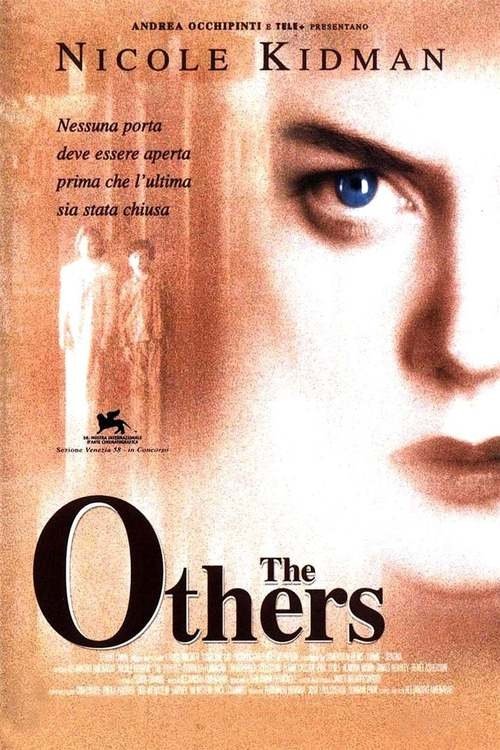
On the one hand, we have some elements of pleasant novelty in "The Orphanage," on the other, a shameless re-proposal of all the topoi and clichés of modern European ghost cinema: gothicized mansions lost in the countryside, sinister creaks, imaginary friends who are not so imaginary, the past that returns, and much more. "The Devil's Backbone" and "Saint Ange," "Fragile" and "The Others," a bit of all the films (mostly Spanish) that have made the fortune of the genre in recent years and have now decreed that children, especially if orphans, are excellent ghosts or prey of ghosts.
When then analyzing the film from a purely technical point of view, there is reason to be fully satisfied. The set designs by Josep Rossell are simple but unsettling, capable of immersing the story in a timeless time (in what period is the story set? In our present, but it doesn't seem so), the photography by Oscar Faura is composed of perpetual penumbras suitable for the story, and the direction by Juan Antonio Bayona appears very fluid and orderly, without renouncing to virtuoso and sought-after camera movements. To all this, we add a Belén Rueda ("Mare Dentro," "Savage Grace"), in the role of the protagonist, perfectly cast in the part and capable, at some moments, of giving us a truly intense performance that earned her many nominations and several victories in film festivals scattered everywhere.
If Bayona had managed to give a little more personality to his work and add some moments of tension, unfortunately completely absent, "The Orphanage" could have competed for the best representation of the now substantial genre to which it belongs (European ghost story). It remains, however, one of the highest peaks reached so far.
Add half a pumpkin to the final vote.
Comments
Comments (0)






Comments