












The Verdict
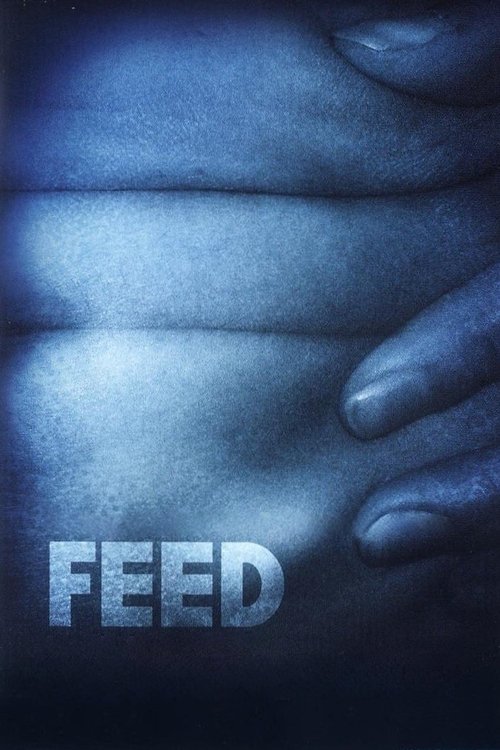
Detective Philip Jackson, specialized in tracking down internet criminals and illegal sites, stumbles upon an extreme voyeurism site featuring photos of obese women. Jackson begins investigating the world of "feeders," a category of "fat" enthusiasts who exchange photos and comments on women who voluntarily allow themselves to be fed to excess.
Detective Philip Jackson, specialized in tracking down internet criminals and illegal sites, stumbles upon an extreme voyeurism site featuring photos of obese women. Jackson begins investigating the world of "feeders," a category of "fat" enthusiasts who exchange photos and comments on women who voluntarily allow themselves to be fed to excess. The detective then discovers a particular site, whose manager opens bets on the ability to "endure" the feeding of the bodies of the women he is feeding; obviously, the ability to endure coincides with the death of the women. Despite many difficulties and a morbid involvement, Jackson tries to track down the feeder killer and stop him.
How far can the human body endure and be violated? And how far can the human gaze linger on the staging of disgust and perversion? Probably, these are two of the questions to which director Brett Leonard wanted to find an answer and "Feed" is the result.
Dated 2005 and distributed in Italy in a limited number of copies only during the summer of 2007, "Feed" presents itself as a classic-structured thriller, which stages a hunt for the killer carried out by a law enforcer. If the skeleton can be considered classic, the material treated and the staging are not at all, and the director's main intention seems to be the search for visual and emotional shock, as well as a certain pleasure in excess.
The theme of sexual perversion and extreme voyeurism are treated with originality and competence, also allowing a small parenthesis for social criticism and the proper psychological construction of the characters. The underworld of perversion that hides on the web is here dedicated to the phenomenon of "feederism," an extreme sadomasochistic practice in which the "master" is called "feeder" and has the task of feeding until complete physical transformation a "slave," here called "gainer." Between the feeder and the gainer, a relationship of mutual dependence and psychic and sexual satisfaction is established, which, in the case narrated by Leonard, ends with the death of the gainer. The one analyzed in "Feed" is naturally an extreme episode that leads to murder, but one can still notice, on the part of the victim, a sick pleasure and complete submission to the situation, making the viewer suffer and feel empathy towards the plant-woman, but at the same time emotionally distancing themselves.
The figure of the feeder, played by a good Alex O'Loughlin ("Man-Thing"; "Invisible"), also the author of the subject, is drawn with an explicit sense of spectacularization: the viewer is morbidly attracted by the ambiguous figure of the feeder and the screenwriter (Kieran Galvin) knows it, endowing Michael Carter of O'Loughlin with a strongly charismatic personality, with a double life and a traumatic past. The hunter cop, played by a not very convincing Patrick Thompson ("Man-Thing"), also the author of the subject, has been endowed with an equally ambiguous personality: morbidly involved in the case he is working on, Detective Jackson reveals himself to be a violent person with anomalous sexual habits, not differing much from Carter. In fact, the relationship between Carter and Deidre, his gainer, is described as more loving and "delicate" in comparison with the sadistic relationship that Jackson has with his woman. The two victim-women are also deeply different, because Deidre (Gabby Millgate) is faithful (she could not be otherwise!) and completely devoted to her man, trusting him so much that she lets herself be killed; Abbey (Rose Ashton), Jackson's woman, is, on the other hand, cold, apathetic, unhappy, and unfaithful, and proud of her sexual habits that involve promiscuous and violent relationships. Leonard, in short, has fun mixing the cards, so much so that the boundary that separates good from evil is decidedly labile.
One can read in "Feed" a barely veiled criticism of consumerism, because the proclaimed "consumption is evolution," inserted in a context where consuming (food) equates to transforming into a mass of flaccid and almost formless flesh, forced to live among its own excrement and destined for cardiac collapse, cannot but assume sarcastic as well as critical connotations towards a society that makes hypercaloric food consumption a true routine.
The Australian Leonard has carved out a small space in fanta-horror cinema, making good genre films with alternating success (among the most famous "The Lawnmower Man"; "Premonitions"; "Man-Thing"), but probably makes his most successful film precisely with this "Feed," an anomalous thriller that knows how to make itself hated because of a series of decidedly "heavy" scenes that bet everything on the most explicit disgust, made of liposuctions, cannibalism, vomit, feces, and deviant sex. We are not facing a must-see film, on the contrary, one can notice a fluctuating screenplay and a direction that, to cause shock, even falls into the grotesque and the cloying, but the originality and the taste for excess still make "Feed" a film to see at least once.
Not suitable for viewers under 18.
Comments
Comments (0)







Comments