











The Verdict
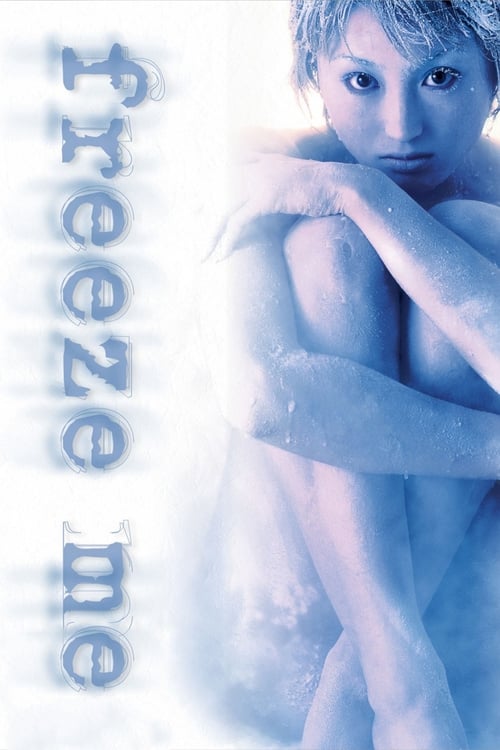
Chihiro is a happy girl: she has a good job, a very intense social life, and is about to marry her coworker Nogami. One day, Hirokawa, an ex-classmate from high school, bursts into her home and rapes her along with two other men.
Chihiro is a happy girl: she has a good job, a very intense social life, and is about to marry her coworker Nogami. One day, Hirokawa, an ex-classmate from high school, bursts into her home and rapes her along with two other men. Chihiro has never told anyone about the violence she suffered; instead, she tried to forget the incident. Now, the man begins to subject her to all kinds of torture again and announces that his two friends are about to arrive to have fun with her body once more. A moment of panic and difficulty will be followed by Chihiro’s cold and slow revenge…
The icy cold of the freezers that gradually decorate Chihiro’s home, the snow that in flashbacks crosses the beam of light generated by the streetlights, the "freezing" that the title alludes to, are all synonyms for the coldness that lurks in the protagonist’s heart. A fragile and strong girl at the same time, capable of facing a traumatic event like a rape and rebuilding her life as if nothing had happened. But at the same time, she is a girl who has internalized the violence and is ready to expel it and use it when the moment calls for it, in a cold, even icy revenge. "Freeze me" is this, a film of violence and loneliness, of revenge and compassion; it is an ante litteram rape & revenge, out of time and outside the usual geographical boundaries.
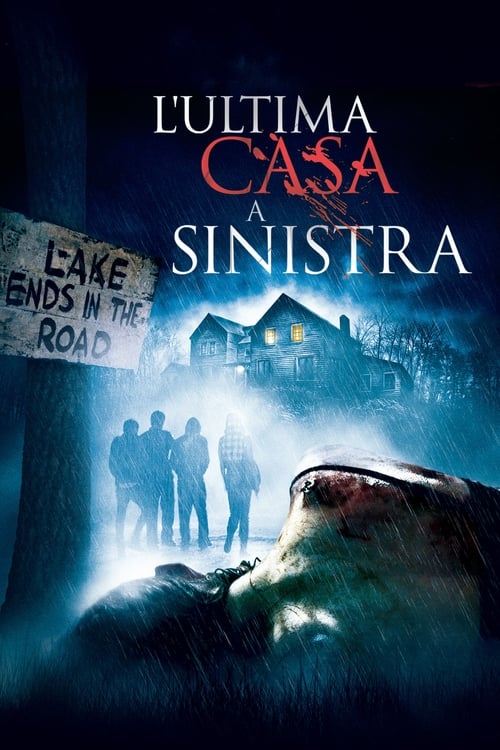
The rape & revenge genre, which tradition establishes as initiated by "The Last House on the Left" by Craven, has very precise rules and should essentially draw from the world of exploitation, the sexualization of sex and violence. "Freeze me", although classifiable in this genre, tends to distance itself to appear more "high", more artistic, and less exploitative than its predecessors. In the Eastern cinematic tradition, the use of rape and revenge goes beyond the simple visceral intent, often used by true authors to convey metaphorical messages not entirely in sync with the base instincts that exploitative films want to satisfy; and "Freeze me" often places itself in this current, although, in the end, it is a full-fledged rape & revenge.
The intention of Takashi Ishii, the film’s director, is to stage the rot of today’s Japanese society and the loneliness it often generates in the individual. The big city where the story unfolds is not more horrendous than the provincial town where the first rape occurred, just as the provincials are not worse people than the inhabitants of the metropolis. The three rapists are described as the bad wolves ready to attack their prey, but the character of Nogami, Chihiro’s boyfriend, is not described in a very positive way either: he is an egotist, incapable of relating to his girlfriend in moments of real difficulty; he is not much different from the three rapists, because it seems that his affection for Chihiro is linked almost exclusively to sexual performance, and it is no coincidence that the rare moments in which we see him in the company of the girl are during a sexual encounter.
The character of Chihiro is very well sketched and also well portrayed by Harumi Inoue (impietously ruined, however, by the Italian dubbing), capable of giving her Chihiro a coldness and emotional detachment from events that is masterful. What perhaps works a little less well on a narrative level is the too sudden change of the protagonist from victim to executioner, certainly justifiable on a conceptual level, but not very effective on a figurative level.
Not particularly successful are the three rapists, perhaps trapped in the stereotype. The first to appear, Hirokawa, represents the good-looking, boastful, and overly self-confident young man; the second, Baba, is the exact opposite: frustrated, insecure, and complex. Finally, Kojima arrives, the group’s leader, a full-fledged criminal just released from prison; this character is perhaps the most approximate and caricatured, at times even ridiculous in his passion for video games.
Ishii’s direction is really very valid and elegant, capable of giving poetry to the most gruesome scenes, supported also by good photography that prefers an alternation of warm and cold tones to underscore the summer heat that is felt in the protagonist’s apartment (to keep the freezers active, she must unplug the air conditioner to avoid an overload) and the cold that is felt in the moments where the freezers are the protagonists.
Although it is a rape & revenge, "Freeze me" prefers to suggest and never show too much, so the rape around which the entire story revolves is only seen through fleeting flashbacks, and the sexual violence to which Chihiro is subjected always shows the "before" and the "after" and never the "during". The blood scenes also remain almost always off-screen, but are still effective and sufficiently disturbing.
"Freeze me" is a really very valid film, probably more oriented towards the "drama" genre rather than the "thriller-horror", capable of moving and involving despite the repetitiveness of the story. In an ideal "brief history of rape & revenge" Ishii’s film should absolutely be mentioned.
Comments
Comments (0)

Comments