


















The Verdict
For centuries, a war has been waged between the forces of Light and the forces of Darkness, destined to clash for control over humanity. But, following a bloody battle, the Lord of Light and the General of Darkness realized that the two powers are equally strong and that if they continued to fight, there would be no winners, only losers, leading to the extinction of both humans and supernatural beings.
For centuries, a war has been waged between the forces of Light and the forces of Darkness, destined to clash for control over humanity. But, following a bloody battle, the Lord of Light and the General of Darkness realized that the two powers are equally strong and that if they continued to fight, there would be no winners, only losers, leading to the extinction of both humans and supernatural beings. From this, the idea arose to establish a non-aggression pact between the two factions, regulated by two orders of guardians: the Night Watch, aligned with the light, tasked with controlling the forces of darkness, and the Day Watch, beings of darkness tasked with monitoring the forces of Light. However, the prophecy states that one day an Elected One will rise, who will have to choose a side and whose choice will break the balance, unleashing the supremacy of one faction over the other. That day now seems not to be too far off...
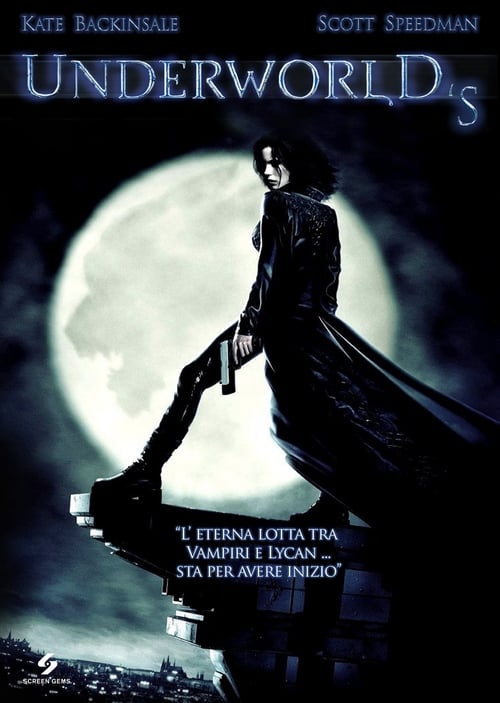
"The Night Watch," or how to make an action-fantasy-horror film in Russia by heavily borrowing from the American action-fantasy-horror cinematic imagination of the last five years. Costing just 4 million dollars (but box office earnings in the homeland that made "The Lord of the Rings" pale in comparison) and therefore the first Russian genre blockbuster, "The Night Watch" can comfortably blend in, in terms of spectacular success, with American films of the same genre that use a budget three times higher; unfortunately, this hyper-trophic and ultra-kinetic Russian film ends up falling into the unforgivable mistake of wanting to replicate the American style, now a sure public success (a bit like the new gurus of French genre cinema have already done in recent years), blending an indigestible stew of vampiric action, millennial prophecies, curses, and bloody clashes between Good and Evil, seasoning it all with a music video aesthetic and a frenetic editing that does no justice to the viewer's optic nerves. Despite the film in question being inspired by the first book in the literary trilogy of Russian writer Sergei Luk'yanenko, the film appears as a somewhat unoriginal hodgepodge of plagiarisms from "Blade" (it's a hybrid being that fights against vampires skilled in martial arts), "Underworld" (the two factions in a state of truce, but subject to mutual control carried out by "guardians"), "Constantine" (here too there is the truce between the forces of Good and Evil and an ambiguous anti-hero with supernatural powers), and then an infinite number of references to "The Matrix" (the Elected One) and "Star Wars" (there is someone who turns to the dark side of the force). In short, in terms of originality, we are touching historic lows; although a couple of good ideas must be recognized, which are often overlooked: it would certainly have been more interesting if the responsibility of free will that weighs on the characters and the subtle differences that barely allow the differentiation of Good from Evil (everyone is guilty and innocent at the same time) had been explored more deeply; rather than numbing the viewer with improbable clashes with vampires equipped with tweezers or incomprehensible (and uneconomical) digressions on mythical virgins of Byzantium. "The Night Watch" then boasts at least four cult ideas, to be distributed equally in two well-aimed and two to be ridiculed without mercy: we have respectively a disturbing doll equipped with spider legs (who has seen "Toy Story"?) and a sword extracted from the spine, on the one hand; on the other, an embarrassing take on "Star Wars" in which the protagonist wields a neon lamp as a lightsaber, and a van that performs a 360-degree flip to avoid an obstacle.
From a technical standpoint, there is nothing to say, the director Timur Bekmambetov (who comes from music videos and advertising) manages to create a visually appealing pastiche with good CGI special effects (perhaps the most substantial part of the budget) and a sense of rhythm, but the excessively fast editing, making Michael Bay envious, makes some passages difficult to follow. In addition, there is a screenplay that attempts to condense a story based on material that would not be enough for three hours of filming to be explanatory in 114 minutes, falling into passages that are too fast and rushed, making it difficult for the viewer who has not read the novel to understand, and completely skipping any minimum psychological exploration of the characters.
As it is presented to the viewer, "The Night Watch" is nothing more than a toy made with the sequels in mind (already in an advanced state of production), which unfortunately fails to arouse interest in the material that still needs to be developed in the two subsequent chapters. It would have been nice to find in the first Russian fantasy blockbuster a touch of more personality and a lesser attempt to appear "cool" at all costs.
Comments
Comments (0)








Comments