




The Verdict
Dr. Flamand suffered an attack by a disappointed patient, during which his sister Ingrid was horribly disfigured.
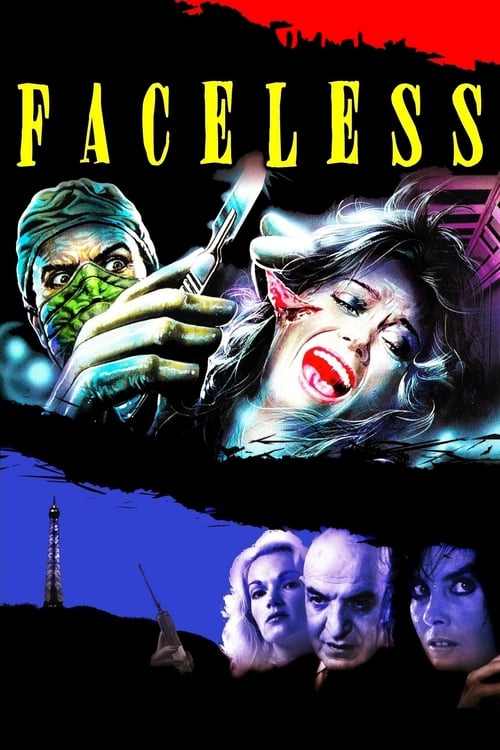
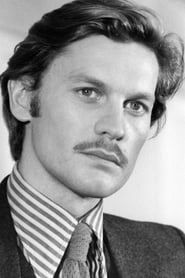
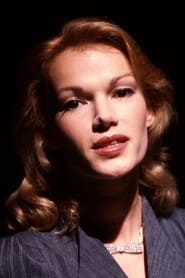
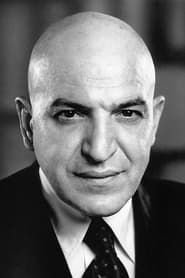
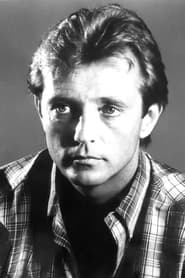
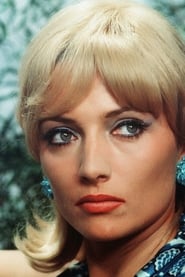
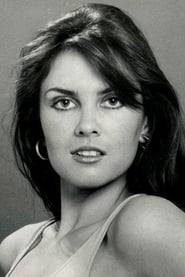
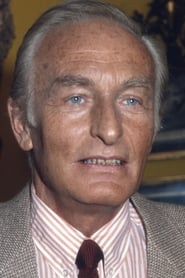
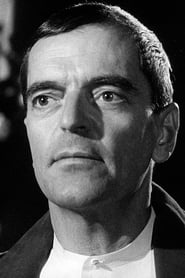
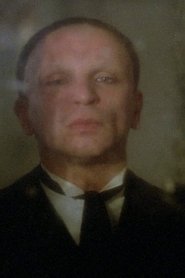
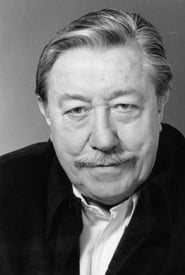
Dr. Flamand suffered an attack by a disappointed patient, during which his sister Ingrid was horribly disfigured. Now, the doctor, owner of a private clinic in France, kidnaps, with the help of his assistant and lover Nathalie, young women whom he uses to perform face transplants for his sister. Among Flamand's victims is also an American model, but her father, when he learns of the girl's disappearance, sends a private investigator to look for her. In Jess Franco's cinema, the figure of the mad doctor, the mad scientist, involved in horrible plans of surgical manipulation on beautiful and naked young women and helped by deformed and retarded beings, seems particularly recurrent. In short, characters from Gothic cinema represented with the typical language of 1970s exploitation. Franco debuted in horror with a story that told of a mad scientist engaged in removing faces from young women to reconstruct that of his companion; it was 1963 and the film was titled "The Diabolical Dr. Satan", a crude but effective horrific pamphlet that borrowed ideas from the beautiful "Eyes Without a Face" by Franju, released only three years earlier. With "Faceless", Franco performs a self-hommage operation, returns to a story very similar to the one told in his first horror film and updates it to the 1980s, increasing the violence and the erotic charge. In the long career of the director, composed of films of every genre and with the most disparate results, "Faceless" stands out as an uneven work, lacking the very personal directorial touch of the author but at the same time recognizable for the themes and the way in which these have been treated. The choice to use an invasive pop song (probably imposed by the producers in post-production) and the squalor of some sets and photography do not benefit the film, but fortunately a professional like Franco knows how to make the film interesting in other aspects. First of all, the choice of actors seems more than spot on and if in the role of the protagonist, Dr. Flamand, we have Helmut Berger and in the role of the positive hero we find Christopher Mitchum, even more spot on seem some supporting roles entrusted to character actors like Telly Savalas, in the role of the father of the missing model, Howard Vernon in the role of the Nazi doctor and Florence Guérin in the role of herself. Although the most prominent presence is that of Brigitte Lahaie, famous for her fruitful career in hardcore cinema at the end of the 1970s and the beginning of the 1980s, here still in great shape. In "Faceless", Lahaie plays the lover and assistant of the doctor, a seductive and wicked woman, absolutely apathetic towards the scientific interest and only interested in satisfying her avarice and her lust. What makes the film definitely winning is the strong exploitative charge explicitated by the massive dose of violence that leads to tasty splatter effects, whose protagonists are drills, chainsaws and scissors used in an unorthodox manner. Naturally, scenes of disgusting surgery are not missing, as well as an unusual necrophilic interlude. The erotic aspect is also strongly present, although this time more contained compared to the standards to which Franco had accustomed us. The insertion of some comic interludes, whose protagonist is a gay photographer, is the apotheosis of trash and, although really comic, seem decidedly intrusive in this film. Even the thus open ending could make someone grimace, resulting almost annoying for its irresolution, but in a certain sense it seems almost original. "Faceless" is the title used for English-speaking countries to replace the original "Les prédateurs de la nuit"; in Italy, the film was initially distributed with a nearly faithful translation of the original, "The Night Violators", lightened of some violent scenes and later recovered in its integral version with the title "Faceless". This film does not represent the pinnacle of the director's career, on the contrary, if compared to his best films, it seems even ugly, but among the titles produced at the end of the 1980s, it stands out as one of the most successful. In fact, that was a somewhat difficult period for Spanish genre cinema: although the Francoist regime had just fallen, the new Miró law caused new problems by destining all films that had even erotic elements to the red-light circuits, thus condemning many genre films to failure and invisibility. For these reasons, Jess Franco, after a small "feeding" parenthesis in porn cinema, was forced to go to work abroad (in this case in France) to continue frequenting his favorite genre. Rounded-up score.
Comments
Comments (0)

Comments