







The Verdict
Dorian Gray is a handsome and successful young man who lives in London and frequents the circles of artists and wealthy industrialists. One day, Dorian decides to have his portrait painted by his friend Basil and becomes fascinated by his image in the painting, even wishing that his beauty would remain the same, perhaps at the expense of his portrait.
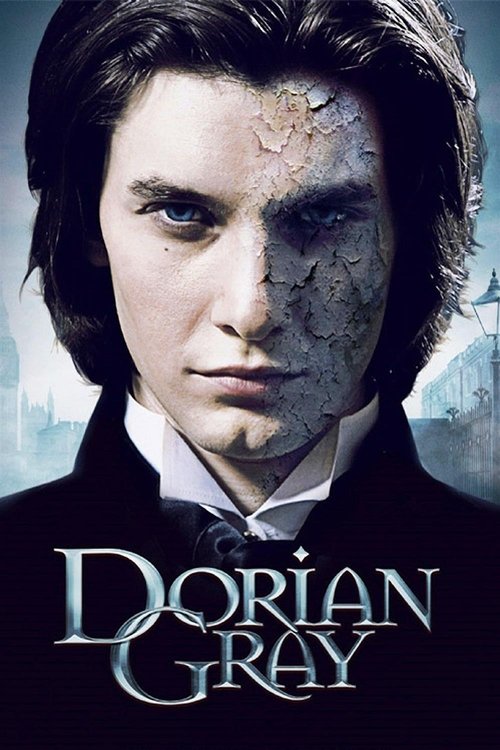
Dorian Gray is a handsome and successful young man who lives in London and frequents the circles of artists and wealthy industrialists. One day, Dorian decides to have his portrait painted by his friend Basil and becomes fascinated by his image in the painting, even wishing that his beauty would remain the same, perhaps at the expense of his portrait. And that's exactly what happens: everything around Dorian ages and decays while he remains the same, with the signs of aging reflected in the portrait that the man jealously keeps in his house.
From the imaginative, brave, and multigenre 1970s comes an Italian version of "The Picture of Dorian Gray," an unusual and well-crafted film that addresses, adapting it to modern times, the famous novel by Oscar Wilde.
At the helm of this free adaptation/actualization is Massimo Dallamano, an eclectic genre director dear to the horror audience for gems like "What Have You Done to Solange?" and "The Bloody Medallion," who manages to handle the "awkward" material with professionalism and exploitative effectiveness. "The Picture of Dorian Gray" is undoubtedly a difficult work to adapt, both for its typically literary content and its lack of suitability for film narration, and for the dangerous handover: from a literary classic used in schools to cinematographic material from an essay film library (the Oscar-winning film directed in 1945 by Albert Lewin), to the shameless irruption into the more genuinely "genre" landscape of our cinema. But Dallamano's film is a strange and ambiguous object, much like its protagonist; it undoubtedly belongs to what some call "B-movie cinema," using faces and a taste for excess typical of cinema from that era and type, yet it remains decidedly distant from the purely exploitative taste, from the easy wink to the spectator eager for the "forbidden" who, then as now, did not disdain the celluloid company of blood, violence, and naked bodies.
"The God Called Dorian" manages to find a fair compromise between the two cinematic faces of the same coin repeatedly put into play in the Italian seventies. There is the exploitative soul, but there is also an explicit nobility of intentions and material treated that could ensure appreciation even from those who did not digest blood and nudity in general. Despite, in fact, a considerable concession to eroticism, quite bold for the time, especially if one thinks about the explicit way in which homosexual relationships (both between women and men) are shown, and despite a wink to the thriller (the magnificent subjective view of the initial assassin), "The God Called Dorian" is always the transposition of "The Picture of Dorian Gray," respectful although not devoid of creative freedom, and magnificently brought to the stage by artistic and technical care from a mainstream film.
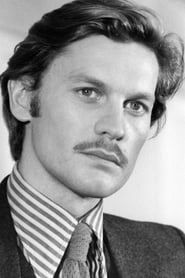
Dallamano's direction is attentive and elegant as usual for the director, enhanced by a beautiful photography, cared for by Otello Spila, which prefers the accentuation of saturated and bright colors, wanting to underline the psychedelic atmosphere of swinging London. In the role of the protagonist, we find Helmut Berger, an Austrian actor launched by Visconti in "The Damned" and later become a symbol of a certain Italian genre cinema of the 1970s (we remember "The Butterfly with Blood-Stained Wings" and "The Beast with the Machine Gun") up to appearing in "The Godfather Part III" by Coppola. Berger is a perfect practitioner for the role, the Dorian Gray that anyone would imagine, ambiguous and fascinating as per the Wildean description.
The scene is completed by the beautiful music of Peppino De Luca and Carlos Pes.
On the other hand, "The God Called Dorian" has a rhythm not too engaging, entrusted more to the images than to the narrative developments, developments that, however, do not represent any surprise for the spectator given the notoriety of the story.
It is, however, a film of value that is worth recovering and watching at least once in a lifetime.
Comments
Comments (0)






Comments