







The Verdict
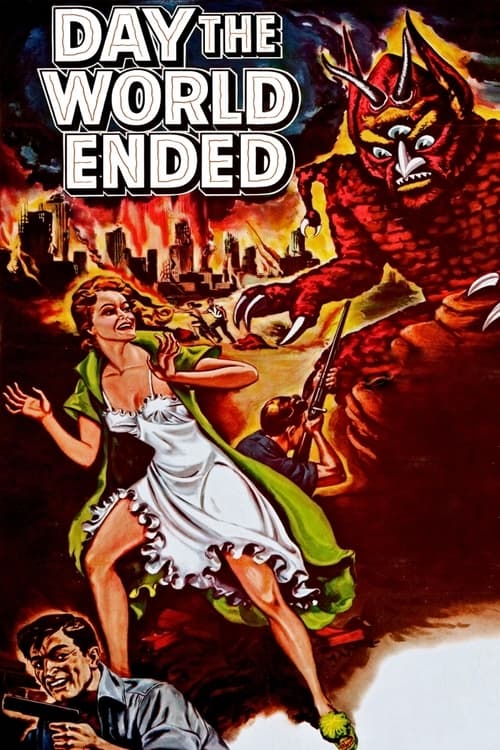
Following a nuclear explosion, the Earth is reduced to an arid desert infested with mounds of noxious gas. Some survivors have taken refuge in a bunker house, and factions and inevitable quarrels for leadership arise among them immediately.
Following a nuclear explosion, the Earth is reduced to an arid desert infested with mounds of noxious gas. Some survivors have taken refuge in a bunker house, and factions and inevitable quarrels for leadership arise among them immediately. Meanwhile, men and animals exposed to radiation have mutated, and outside the dwelling roams a monster with anything but peaceful intentions.
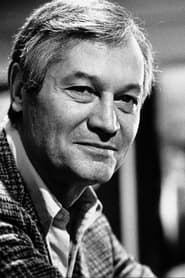
Every independent director aspiring to make a fantasy/horror film with a tiny budget should watch "The Monster from the Lost Planet" and learn from Roger Corman. He, the undisputed king of low budget for this first foray into the fantastic, had only $96,000 at his disposal, a pittance if we consider that the film would have to tell of an Earth destroyed by the atom and mutant killer monsters. And yet, skillfully playing with the see/don't see and betting everything on the dynamics between characters, Corman managed to craft a fine film that is today rightly celebrated as a classic of fantastic cinema.
"The Monster from the Lost Planet", which is more pertinently titled "Day the World Ended" in the original, was filmed in 1955, a time when in the United States, as in other parts of the world, people were still mourning the H-bomb of ten years earlier and feared an imminent nuclear war. It goes without saying that a film dealing with the consequences of an atomic explosion and the monsters it could literally generate was highly topical and could stimulate the curiosity of viewers. After all, cinema has always been at the forefront of its time and can be considered one of the most effective means of exorcising society's fears. And indeed, in Corman's film, it is not so much the monster that lurks around the house that represents the crux of the story, but the tensions that arise within the group.
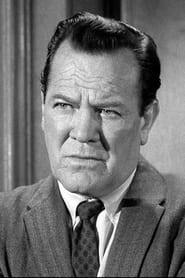
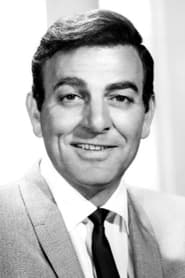
Man is responsible for evil in every way, both for the collapse of the Planet and for the death of the few survivors. The director's particularly negative vision is pertinent to the historical period and is realized through images of a humanity in disarray where the strongest wants to win at all costs by destroying innocence and violating nature. Corman relies on a good cast to stage a conflictual microcosm that in some aspects recalls and anticipates "Night of the Living Dead". The hero Rick (played by Richard Denning) is as obtuse as the wicked Tony (Mike Connors), but his actions are salvific, unlike those of his nemesis. The role of the damsel in distress is played by Lori Nelson, who in the crucial moment will be carried unconscious by the monster, as tradition dictates. Here, the monster is the weak point of the film. If Corman had managed to circumvent the lack of budget by having the film take place almost entirely inside the bunker and focusing on the characters, leaving a few scenes to the landscape devastated by the bomb, he cannot refrain from showing the monster. The same director has stated in an interview that, in his opinion, the monster should not be seen and that if it had depended only on him, it would never have been shown, but the market demanded the visual approach with the mutant threat and consequently the last ten minutes of the film, when the monster previously seen only in shadow can indeed be seen, the credibility of the threat falls. The look is ugly and uninspired, and the realization through costume is less than mediocre, making the masked actor appear more awkward than threatening.
Overlooking this small flaw that for some has made the film age faster than expected, we are faced with a fine fantasy/horror rich in tension and rhythm given by the intelligent management of the characters' traits.
Curiosity. In 2001, Stan Winston and Samuel Z. Arkoff produced a series of films called Creature Features, which called to mind some classics of 1950s science fiction by their titles. "The Monster from the Lost Planet" ended up in the mix, and in Italy the pseudo-remake (which, however, has nothing to do with the plot of the original) is faithfully titled "The Day the World Ended", with Nastassja Kinski as the protagonist and Terence Gross in the director's chair.
Comments
Comments (0)








Comments