


The Verdict
Viola and Nicola, a young newlywed couple, decide to spend a carefree weekend in a quiet country house, left free by his relatives. In their intentions, this weekend should allow them to overcome a crisis caused by a terrible event that had shaken them a few months earlier, namely the premature death of their son.
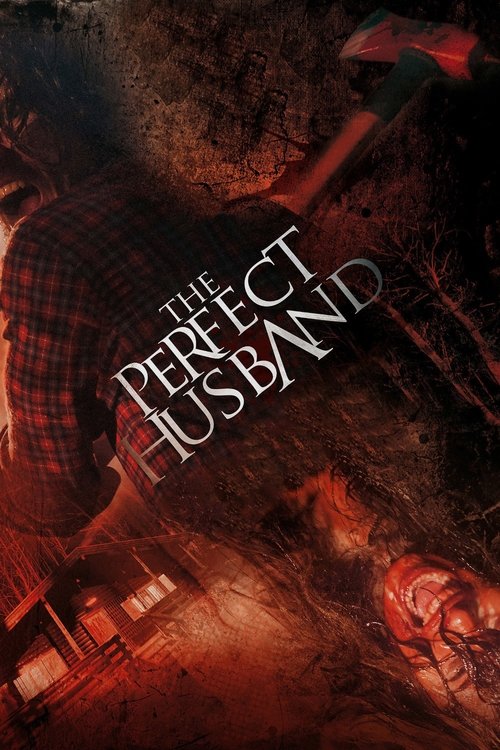
Viola and Nicola, a young newlywed couple, decide to spend a carefree weekend in a quiet country house, left free by his relatives. In their intentions, this weekend should allow them to overcome a crisis caused by a terrible event that had shaken them a few months earlier, namely the premature death of their son. A tragic mishap that had especially shaken the woman, who finds it difficult to relate to her partner not only verbally but also sexually. However, the good premises are swept away when jealousy takes over and the stay turns into a spiral of blood and violence whose cause escapes any logic and prediction.
In recent years, news broadcasts and daily newspapers have been increasingly invaded by news about family massacres, authentic massacres that occurred within domestic walls that, from a nest of affection and protection, turn into ominous and macabre places. All this can be read as the direct consequence of a frenetic daily reality, dominated by collective hysteria in which even the most deeply rooted values are called into question, above all the marital relationship and the institution of the family. A vision of the world to which cinema has not remained insensitive since the Seventies, if one thinks of directors like Tobe Hooper and, more specifically, Wes Craven who have based much of their filmography on the idea of the family nucleus as the origin of death and repression. These were the sources of inspiration for Lucas Pavetto, a young Argentine director by birth but Italian by adoption, when in 2011 he made a brilliant short film titled "The Perfect Husband," awarded numerous prizes even internationally. A discreet success that pushed him, three years later, to make a remake in the form of a feature film with an Americanized title, "The Perfect Husband." The work, winner of the "Mario Bava" award as best debut at the last edition of the Fantafestival, represents a positive debut in feature film directing for the young author who demonstrates a raw and direct style but at the same time capable of technical virtuosity of great depth, making the product accessible to a more varied audience and not just the restricted circle of genre enthusiasts.
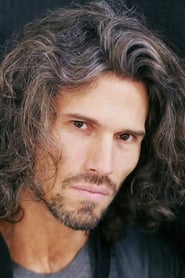
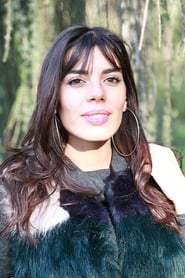
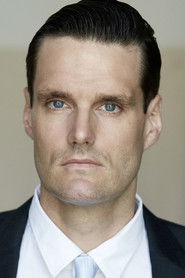
Pavetto shows that he does not love preambles and immediately presents us with a couple in crisis and with great difficulty in dialogue. The two control each other and hide objects, almost to testify to a lack of trust that will represent the red thread of the plot. These are only the premises of a latent tension that, like a Rossinian crescendo, increases in tone minute by minute and is felt palpable in the air from the surreal and nervous car journey, mirror of a discomfort now evident between the two. Discomfort that soon turns into violence shown without filters, in the manner of contemporary torture porn, also thanks to the help of the special effects from Mauro Fabriczky's Special Makeup Studio, made with care and capable of transmitting a realism bordering on disturbing. On the scene, in fact, alternate gory splatter effects, including torn-out eyes and amputated arms, that recall the bloody and merciless horror films of the Eighties. But Pavetto's skill is not to condense the tension exclusively in the last half hour of the film and avoid the first part turning into a set of dead times and useless and banal dialogues. The most significant sequences, in this direction, are those that see the woman wandering frightened among the ruins of an abandoned village and in the woods, where a strong influence of Argento can be noticed in the fake subjective of a presumed supernatural entity and the extreme close-ups of insects. The technical department also proves to be up to the task with a soundtrack perfect in keeping with the rhythms of the story and the excellent photography of Davide Manca that alternates the warm and reassuring tones of the house with those more cold and disturbing of the exteriors. The choice of the cast proves to be fully appropriate with Gabriella Wright and Bret Roberts well cast in their roles and excellent in embodying the role of hunter and designated victim. The only flaw lies in the figure of the Ranger (played by Carl Wharton) whose insertion affects the intimate character of the plot and seems to be a simple pretext to give life to an additional death sequence.
To sum up, "The Perfect Husband" is a work that reveals the director's ability to combine two different souls of horror: the one tending towards splatter and the more authorial one.
The Perfect Husband
Comments
Comments (0)


Comments