




The Verdict
A small unmanned vessel arrives at the port of New York. The boat belonged to the father of a girl named Ann Bowles (Tisa Farrow), who decides to travel to the island of Matul in the Antilles in search of her missing parent.
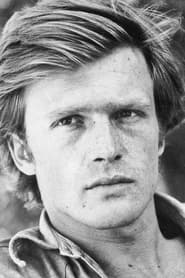
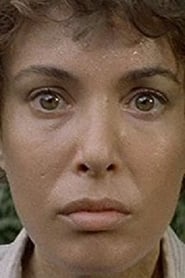
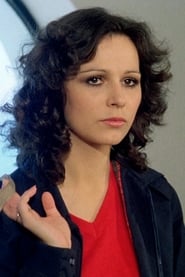
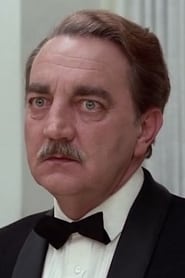
A small unmanned vessel arrives at the port of New York. The boat belonged to the father of a girl named Ann Bowles (Tisa Farrow), who decides to travel to the island of Matul in the Antilles in search of her missing parent. She is joined by journalist Peter West (Ian McCulloch) and a pair of oceanographers, Brian Hull (Al Cliver) and Susan Barret (Auretta Gay). On the same island, where Dr. Menard (Richard Johnson) and his wife Paola (Olga Karlatos) are staying, the corpses rise from the dead and attack the living.
With "Zombi 2," Lucio Fulci ventures into the realm of horror for the first time—the genre he would become most closely associated with and to which he owes his fame. Thanks to this turn (admittedly reductive, given all the themes he explored across over 50 films), he would earn prestigious titles like "godfather of gore" and "poète du macabre."
Fulci's entry into the genre that would make him famous was actually quite accidental. "Zombi 2," on paper just a quick cash-grab sequel to Romero's "Zombi," was first offered to Joe D'Amato and Enzo G. Castellari. When both declined, Fulci's name came up—a director who had fallen into obscurity and was recycling himself directing TV programs starring a washed-up Franco Franchi.
Thanks to Fulci, what should have been another forgettable exploitation film riding the coattails of a famous movie became one of the most successful zombie films in cinema history, as well as a massive commercial success: made for just 410 million lire, it earned 30 million dollars worldwide, and according to many sources, in certain countries it actually outgrossed Romero's film!
Between "Zombi" and "Zombi 2," it must be said, the similarities exist only in the title and the presence of the undead. One of Fulci's strengths was certainly his ability to create original, personal works despite operating within commercial constraints and treading paths already marked by others before him. This admirable quality accompanied him from his earliest days in cinema—whether directing a western, he would try to make it differently from Leone's, or if making a thriller, he would do everything possible not to be compared to his rival Argento. Regarding "Zombi 2," the Roman director liked to say that his was a true zombie film and not a sociological one like Romero's, where the undead symbolized the new society devouring the old. Another original aspect of the film was bringing the zombie figure back to its original roots: classic voodoo.
Beyond being a straightforward adventure film devoid of political-social metaphors, another distinction of Fulci's work lies in the characterization of the true protagonists: the zombies. While Romero's zombies look quite similar to the living in physical appearance and clothing, Fulci's zombies are made up to look like corpses already in decay, their clothes reduced to rags, thereby emphasizing the difference from the living. Their realization, entrusted to the great Giannetto De Rossi, is one of the film's best elements and proves even more striking than the more prestigious American counterpart. De Rossi also handles the extraordinary gore effects, which have greater impact than those, however notable, of the overseas competition.
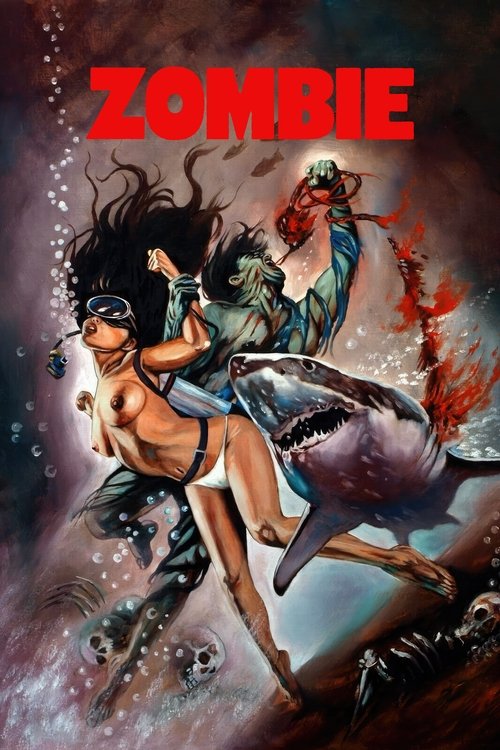
Among the splatter scenes, it's impossible not to mention the famous one, a true anthology piece of horror—Olga Karlatos's pierced eye: a scene masterfully executed both in special effects and direction, with considerable fluidity. Another famous, though debatable, scene is the shark-versus-zombie fight in the ocean depths. The sequence is certainly effective and deserves credit for presenting the zombie in an unprecedented aquatic setting (an intuition that director Ken Wiederhorn would later fully exploit in his "Zombie Island Massacre"). However, this wasn't shot by Fulci but inserted later at the producer's insistence to capitalize on the success of Spielberg's "Jaws"—it was Giannetto De Rossi who directed it.
As for the cast, while not exactly world-class, their performances are perfectly functional to the story, especially since the zombies are ultimately the true stars, and the psychological characterization of the humans is minimal. The few characters with any depth are entrusted to the better actors: Olga Karlatos, cast as the unfortunate wife of Dr. Menard, and Richard Johnson as David Menard, a man incapable of surrender to the inconceivable and enslaved to rigid, preconceived rationality that never comprehends the dead resurrect not through science but through voodoo—a "stubborn rationalist" typical of Fulcian films.
An interesting anecdote concerns the scene shot near the Brooklyn Bridge: filming permission hadn't actually been granted (or rather, wasn't even requested). Fulci's ingenuity devised a stratagem worthy of his reputation: he had extras dressed in rags with improvised makeup pass in front of the camera at dawn to avoid detection by authorities. Immediately after, the extras were hastily loaded onto a van so no one would notice they'd been there.
"Zombi 2" is ultimately a modest film, but it's very well made and possesses tremendous personality. Proof of its quality lies simply in the problems it caused poor Romero, who had to delay the release of his "Day of the Dead" precisely because of this Italian film.
It's a film with characteristics that strongly recall Fulci's qualities: a humble craftsman who, when inspiration struck, would raise his head and prove capable of matching even the great masters.
Comments
Comments (0)














Comments