













The Verdict
Sonia works as a cleaning lady in a hotel in Turin. Abandoned by her father and lacking a social life, the woman goes to a speed dating event where she meets Guido.
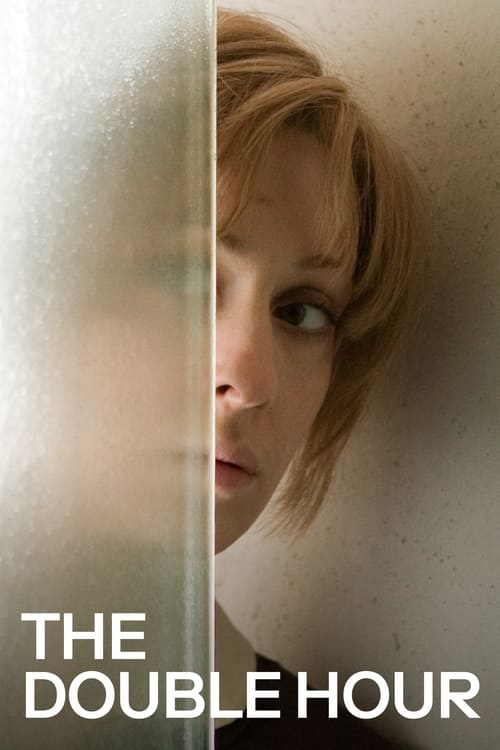
Sonia works as a cleaning lady in a hotel in Turin. Abandoned by her father and lacking a social life, the woman goes to a speed dating event where she meets Guido. A relationship of complicity immediately forms between the two, which soon turns into a stronger feeling. Guido, a former police officer who now works as a security guard in a large villa, takes Sonia to his workplace. However, during a walk in the immense park of the residence, a group of armed strangers with covered faces attacks the two. Guido and Sonia find themselves tied up while the criminals ransack the mansion. One of them attempts to rape Sonia, and Guido reacts. A shot is fired. Guido dies, and Sonia is injured in the head. But the woman's daily life is constantly disrupted by strange and disturbing events from that day on, including the constant presence of Guido, who seems to want to make contact with her. Presented in competition at the 66th Venice International Film Festival and the Toronto International Film Festival, "La doppia ora" is the directorial debut of Giuseppe Capotondi, a professional in music videos who, for his feature film debut, decides to tackle genre cinema. The genre is hard to fully comprehend, as "La doppia ora" skillfully navigates between drama, noir, police thriller, and horror with a hypnotic and unsettling originality, embracing clichés and stereotypes in a way that stitches them together into a story where everything seems functional. Capotondi's film has a complex structure that, in some ways, can be compared to the famous Möbius strip: every moment in the film has a double face, each of which seems to proceed in independent blocks, only to later find a flaw through which it can insinuate itself into the opposite facade. Everything in this film has a double, as metaphorically suggested by the "doppia ora" (the minutes have the same digit as the hours) that appears prophetically at key points in the story. According to Guido's words, when you find yourself looking at the clock and realize there is a double hour, you should make a wish, but it is all in vain, as it will never come true. "La doppia ora" follows this ideological and structural path, where the presence of the repeated digit brings about a change of facade, a sudden exit from the Möbius strip that drags the vision into a desire, additional information that changes the perspective of the story. Indeed, the merit of this film is primarily the unpredictability of the plot, which, although it does not say anything really new, using situations and twists widely utilized in contemporary thriller cinema, manages to effectively turn the tables at least three times in ninety-five minutes. The screenplay - written by Alessandro Fabbri, Ludovica Rampoldi, and Stefano Sardo - presents a characterization of the characters that one would like to see more often in this type of film. The entire film rests on the shoulders of Sonia and Guido (especially Sonia), two lonely and sad people who seem to have completely lost touch with reality. On one hand, there is a woman from Eastern Europe, already a foreigner in a land that does not belong to her, constantly confronted with the desolation and incomprehensibility of the human soul (and indeed the film opens with a suicide that Sonia witnesses), abandoned by her father who disowns her and considers her "dead," and forced to seek support from the first stranger she meets at a speed dating event. On the other hand, there is a disillusioned and cynical former police officer, a widower now enslaved by occasional encounters without feeling, which end with a bit of sex and a lot of desire to vent. The two characters appear very close, so it seems natural the empathy that arises between them, but of course the other side of the coin is always ready to emerge and overturn the situation and the film genre in which it is inscribed. If initially the film appears as an intimate drama tinged with romance, it suddenly turns into a thriller that touches the chords of horror, complete with guaranteed jump-on-the-sofa scenes (the scene of Guido's appearance in Sonia's dark home is very suggestive). What "La doppia ora" convinces a bit less is in the description of some secondary characters, too caricatured, starting with the policeman, Guido's former colleague, and ending with the hotel guest who showers Sonia with attention. It must be recognized, however, that the plot takes a while to get going, initially leaving the viewer disoriented due to the evident lack of real narrative hooks capable of creating expectation about the story. The two lead actors of the film, Ksenia Rappoport ("The Unknown Woman"; "Italians"), winner in Venice of the Volpi Cup for this role, and Filippo Timi ("As God Commands"; "Vincere") are undoubtedly an important contribution to the success of "La doppia ora," two capable and expressive actors, certainly among the best that Italian cinema has available today.
Comments
Comments (0)



Comments