








The Verdict
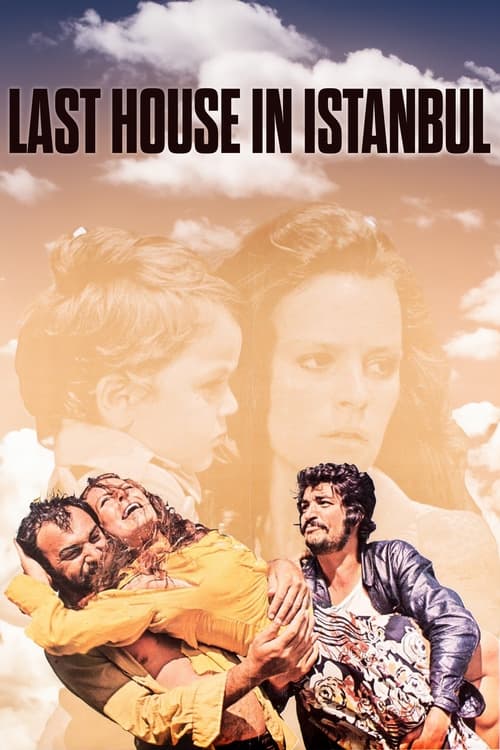
Istanbul. After attacking a couple in the park, three criminals knock on the door of a surgeon who lives with his wife Selma and his young son Murad.
Istanbul. After attacking a couple in the park, three criminals knock on the door of a surgeon who lives with his wife Selma and his young son Murad. The three settle into the house under the pretext of seeking help for an accident they had and take the family hostage trying to extort money from them. The situation quickly heats up and although the homeowner agrees to pay, the three continue to harass his wife and son.
The Italian distributors are brilliant! In 1971, "A Clockwork Orange", a huge international success by Stanley Kubrick, is released, and in 1975, they distribute in Italy under the title "The Gang of A Clockwork Orange" the Turkish film "Cirkin dunya", which in reality should be called "bad world". Incorrect operation, you will say, since the film in question has nothing to do with Kubrick's masterpiece, but perfect marketing operation, I say, since the distributors caught an aspect of the film and rightly inflated/exaggerated it to their advantage. If we make comparisons, we will notice that "A Clockwork Orange" had a long scene in which Alex and his drughs burst into a house and commit massacres... but it is a scene! The film then went in a completely different direction. "The Gang of A Clockwork Orange", on the other hand, captures that moment and stretches it for about 80 minutes, presenting itself, therefore, as a film of a completely different genre, as well as depth.
We could say that "The Gang of A Clockwork Orange" is one of the first examples of home invasion movie declined in the optics of the B-movie, almost a foundational film, therefore, that lays the groundwork for what will then be "The House Lost in the Park", "Funny Games" and everything that derives from it. It must be said, however, that "The Gang of A Clockwork Orange" is a rather modest film, with some intuitions of great effectiveness smoothed by others frankly avoidable. On the one hand, it is remarkable the underlying meanness that drives the film's mechanics, on the other hand, it is surprising the too sparse gallery of horrors to which "The Gang of A Clockwork Orange" submits the viewer. The director Osman F. Seden (or Rowland Kramer, as his anglophone pseudonym) shows a certain complacency typical of the 1970s films in putting into images the barbarities of the trio of criminals, especially regarding open-handed slaps to Stefania Basile, who plays the surgeon's wife, and various mistreatments to the child, incredibly transformed into a living punching ball! However, despite so much semi-implicit violence, the film is very timid in showing shocking scenes, practically not a drop of blood runs and against the fashion of the time, scenes of sex and female nudity are completely excluded.
Very convincing the performance of some main actors, especially the already mentioned Stefania Basile and the leader of the bad guys, Savas Basar alias The Scorpion. Little credible, however, the characterization of the two criminals who accompany the Scorpion, too caricatural in their hysteria and in the unnecessarily accentuated childish behavior.
A word should be spent on the film's ending. Without spoilers, it can be said that if "The Gang of A Clockwork Orange" had ended a few seconds earlier, it would have been a jewel of cynicism and would have had a completely different interpretive key, but they decided to add a scene "too much" that softens – if one can say – the impact of an otherwise too bitter ending.
"The Gang of A Clockwork Orange" is therefore a discreet home invasion movie that perhaps drags on too long the supporting situation of the story. Some "meannesses" really leave a mark, but one has the impression that an unmotivated mechanism of self-censorship has been applied to some narrative choices that tends to smooth the impact on the viewer.
On DVD from Mosaico Video.
Watch a clip of THE GANG OF A CLOCKWORK ORANGE
Comments
Comments (0)
Comments