


The Verdict
Newlyweds Alex and Mascha are traveling through the Austrian forests in a carriage for their honeymoon, but an accident forces them to seek shelter for the night in the castle of Dr. Nijinski.
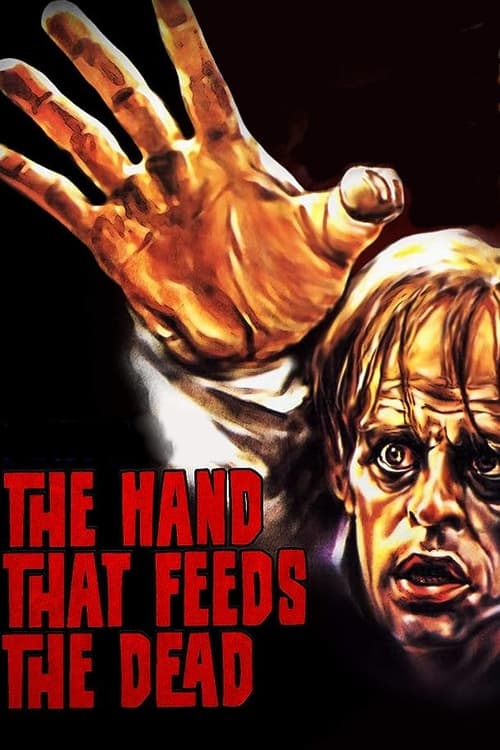
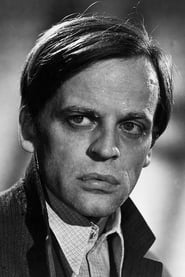
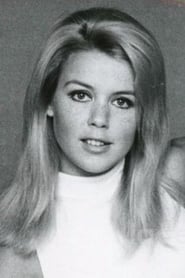
Newlyweds Alex and Mascha are traveling through the Austrian forests in a carriage for their honeymoon, but an accident forces them to seek shelter for the night in the castle of Dr. Nijinski. Here, an air of unsettling mystery is immediately felt, due to the tragedy that struck the doctor's family; indeed, a fire destroyed a wing of the castle, disfiguring Tania, the doctor's wife, and killing Professor Rassimov, Tania's father and Nijinski's mentor. In the castle, in addition to Alex and Mascha, other people are also guests, but little by little the guests begin to mysteriously disappear. Belonging to the late Italian Gothic vein, "La mano che nutre la morte" is a little-known horror film directed by the equally little-known Sergio Garrone. More suited to the Western genre ("Django the Bastard" and "A Long Row of Crosses", to name the most famous), Garrone writes and directs the film based on the premise that to tell stories of blood and horror, originality is not necessary; thus, the film appropriates a visual language already widely used in the Italian tradition of the 1960s and English Hammer cinema, bringing to the stage gloomy castles, mad scientists and deformed assistants, naturally seasoning everything with that touch of healthy exploitation that characterized many productions of the 1970s. The story also has no pretensions of originality since the source of inspiration is clearly the small masterpiece by Georges Franju "Eyes Without a Face", itself already exaggerated in pulp key by Jesus Franco in "The Diabolical Dr. Satan" (and later in "Faceless - The Night Violators"). In this case, Garrone retells the story of the mad scientist who performs skin grafts to give beauty to his disfigured wife, pressing the pedal on splatter and erotica. The frequent surgical scenes are long and detailed, made sufficiently repulsive by rather effective special effects, although not "perfect" (which were handled by a Carlo Rambaldi not yet international), showing flayed faces (and other body parts) and bloody incisions. As often happened with genre films of the 1970s, the erotic component is quite accentuated and any pretext is good to show off shapely young women as their mother made them, engaged in passionate embraces, which in this film reach their peak in the sapphic scene between Katia Christine and Stella Calderoni. Among the various characters that populate the scene, the most interesting ones appear to be undoubtedly the "villains," led by the mad Dr. Nijinski, played by a Klaus Kinski perfectly cast in the role, here dealing with a tormented character who kills in the name of love but is not reciprocated. Rather well-chosen is also the figure of Tania, played by Katia Christine ("The Designated Victim"; "The Trucido Gang") in a dual role, an unsettling faceless presence in black that wanders through the castle corridors, arousing the curiosity of the guests and the sexual desire of the deformed servant, played in a very caricatured manner by Osiride Peverello. Among the positive characters, Marzia Damon ("The Leech Leads the Dance"; "The Witch's Sex") is remembered, especially for her generous propensity for nudity, while the other actors are tasked with portraying unremarkable characters who mostly serve as mere cannon fodder. Very beautiful is the soundtrack composed by Stefano Liberati and Elio Maestosi. "La mano che nutre la morte" is a must-see film for lovers of Italian genre cinema, thanks to a tried-and-true formula and a series of pulp finds that make it the classic "cult to rediscover," unfortunately difficult to find. Negligible, however, for everyone else. Curiosity. The late father of Tania is named Ivan Rassimov, and his tomb is the protagonist of several scenes in the film. But Ivan Rassimov is also the name of an actor very active in Italian cinema of the same period... a strange coincidence!
Comments
Comments (0)


Comments