
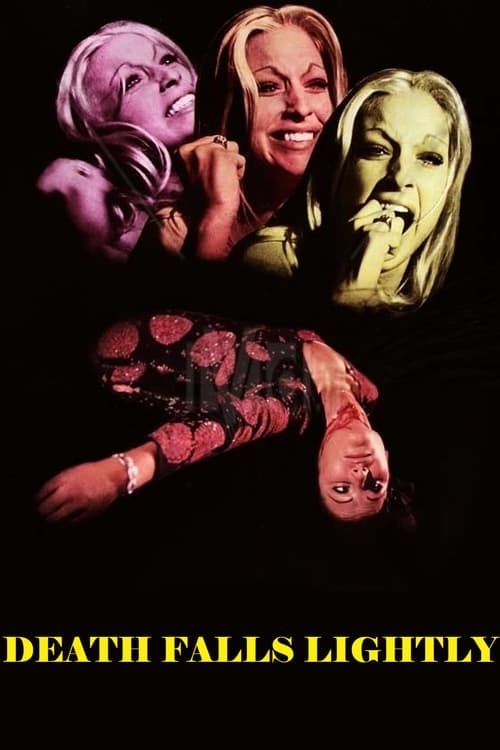



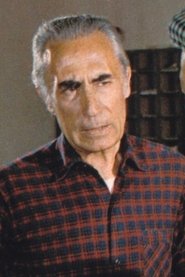
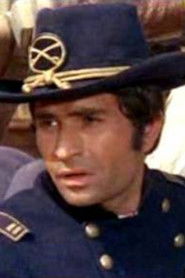
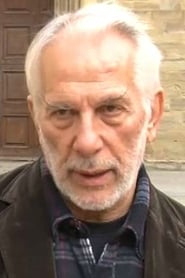

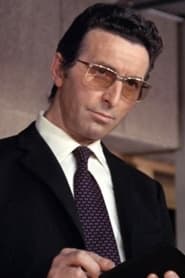
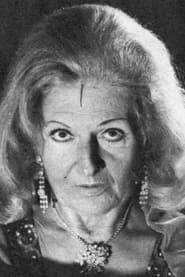
Criminal George Darica, returning from the United States, discovers that his wife has been murdered in their home. Intimidated by the fact that he could be the prime suspect, he flees the crime scene and asks for help from a friend, an Honorable with very influential connections. George is then taken to an abandoned hotel with his mistress, to let things cool down. But the place seems populated by strange characters and murders begin to occur, apparently without any logic.
Perhaps it was 1972 the most inflated year for the production of "modern" thrillers in Italian cinema. Driven by the success of Dario Argento's early films and the thrillers of Umberto Lenzi and Sergio Martino, many producers embarked on operations that copied these styles, wisely betting on improbable stories, more or less intense violence, and inevitable prurient scenes. It is in such a scenario that Leopoldo Savona writes – together with Luigi Russo – and directs "La morte scende leggera", a suggestive title that designates a thriller that surprisingly stands out emblematically from the current landscape in which it is inserted. Savona, previously mainly linked to the western genre, is in his first and only foray into the Italian thriller and, to leave a mark in this genre, stages a show that is as original as it is limping.
"La morte scende leggera" begins as a crime film siding with the criminals and continues as a gothic film of those that were fashionable in the previous decade. In the middle of this mix of genres typical of the Italian film industry, the thriller plot is inserted, with the mystery of who committed the murder that opens the film. For Savona, however, this aspect is the one that evidently interests him the least and leaves space mainly for the almost surreal adventures of George Darica in the old hotel. And here we have one of the most interesting aspects of this anomalous thriller. In its central section, "La morte scende leggera" tends to resemble in a somewhat unsettling way "Shining", or rather, it is "Shining" that resembles Savona's film, considering that King's novel was first published in 1977. Obviously, I don't even think that King had seen "La morte scende leggera", but undoubtedly Savona and Russo's intuition was of a certain caliber. An intuition that, if we want to be meticulous, probably derives from Margheriti's "Danza macabra". George's almost hypnotic wandering through the hotel corridors and rooms and his encounter with ghostly characters who involve him in surreal events reminds both the night of terror that the protagonist of Antonio Margheriti's gothic film experiences and the path that leads to the madness of Jack Torrance in "Shining".
To the merits of this anomalous thriller, one can add a curious attempt to denounce Italian politics and institutions, here depicted as mafia-like with a corrupt police and politicians in brotherly relations with criminals of all kinds.
Let's say that "La morte scende leggera" exhausts its best shots here because for the rest, a feeling of approximation that is sometimes annoying prevails. Scenography and photography are at their lowest, probably completely absent with improvised sets and particularly ugly lighting. To this, one must add the mediocrity of the actors that undermines the credibility of the characters, with a particularly inexpressive Stelio Candelli ("Nuda per satana"; "Italia a mano armata") in the role of the protagonist and a Patrizia Viotti ("La notte dei dannati"; "Beffe, licenze et amori del Decamerone proibito") willing but poorly used.
The narrative plot reaches heights of absurdity in a final twist that is as fanciful as improbable. The good thing is that it is also unexpected – although it must be said that the identity of the murderer is widely predictable – but not for particular writing merits, but because no one would ever think of something like that in reality.
"La morte scende leggera", in the end, is a curious film, definitely worth recovering for fans of the Italian thriller genre, but at the same time, it is a film that exudes the art of making do (in every aspect) in every frame.
Comments
Comments (0)



Comments