











The Verdict
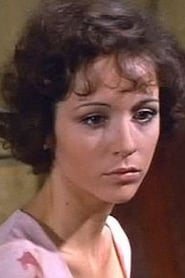
Elizabeth Nodosheen is an elderly Hungarian countess who has just inherited most of her recently deceased husband's wealth. Among the other heirs are Ilona, the count's twenty-year-old daughter, and Imre, a young officer with whom the countess falls in love.
Elizabeth Nodosheen is an elderly Hungarian countess who has just inherited most of her recently deceased husband's wealth. Among the other heirs are Ilona, the count's twenty-year-old daughter, and Imre, a young officer with whom the countess falls in love. One day, Elizabeth, during an argument with one of her maids, is accidentally splashed with the girl's blood and magically rejuvenates; however, the effect is short-lived. The countess then decides to take periodic baths in the blood of young women she kidnaps and kills with the complicity of her former lover and her governess. Meanwhile, she keeps her daughter Ilona, who has just arrived in town, segregated and passes herself off as her, establishing a romantic relationship with the young officer heir.
In the early 1970s, the famous English production company Hammer was going through a period of uncertainty that anticipated the future crisis that led to its closure at the end of that decade. The market had profoundly changed, the old gothic suggestions that had made the fortune of the company specializing in horror were no longer sufficient for the public, now jaded by gore and romerian cannibalism. The figure of the vampire was also changing profoundly, and the archetype of the bloodsucker represented by Stoker's fascinating nobleman was gradually being replaced by the figure of the lesbian vampire of Jean Rollin and Jesus Franco, protagonist of a series of films that contaminated horror with the erotic genre. Having caught the signal of change, Hammer also declined on what the taste of the public of the time rewarded, and thus a series of films were produced that combined the figure of the vampire with erotic suggestions.
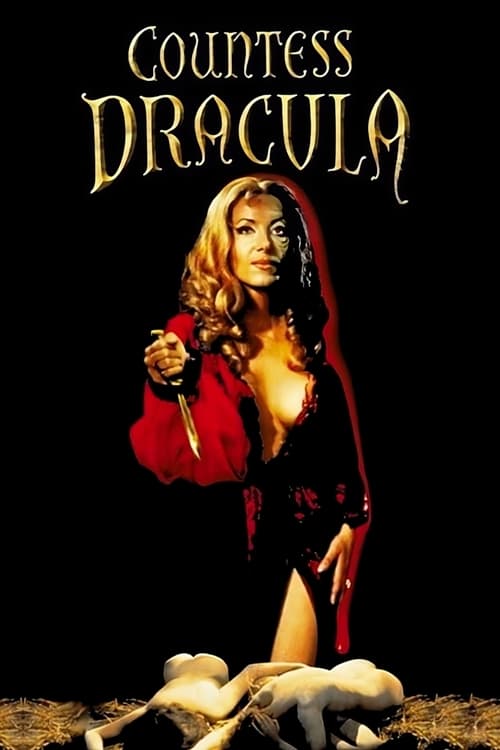
One of the most explored characters by genre cinema of the period was the Hungarian countess Erzsébeth Báthory, the famous blood countess whom myth describes as a fierce murderer who immerses herself in the blood of young virgins to stay young, protagonist of an incredible series of films ranging from "The Vestal of Satan" to the Italian "The Full Moon of the Virgins". "Death Walks Hand in Hand with the Virgins", a fanciful title replaced by the Italian distribution with the misleading "Countess Dracula", examines precisely the myth of Báthory and, being dated 1971, fits precisely into that transitional period of Hammer.
In reality, with this film Hammer did not fully achieve its intentions because, despite the presence of an actress like Ingrid Pitt (great protagonist the previous year of "Vampiri Amanti", a film always by Hammer, much more successful), the erotic element is only hinted at and the horrific element tends to be lacking. With "Death Walks Hand in Hand with the Virgins", we have a rather faithful account of the deeds of the blood countess, and thus the supernatural element is almost abandoned, relegated only to the sudden rejuvenation/aging of the protagonist. Although the central element of the story is the infamous blood baths, we never actually witness this practice, so the hemoglobin element is also hidden from the eye of the spectator eager for strong emotions.
So what remains in this film? There remains a dignified staging, as Hammer has always accustomed us, and a meticulous work from all points of view. If the historical reconstruction of the sets and costumes is therefore very credible, the direction and the actors are also of good level. Peter Sasdy
came from "A Taste of Dracula", a film steeped in ideological criticism that in part renewed the figure of the vampire count, so it was a good card to play for Hammer, and indeed he proved decisively competent in carrying out his task. The actors all appear rather suitable, starting with the beautiful Ingrid Pitt, here sometimes hidden by the heavy makeup.
In short, "Death Walks Hand in Hand with the Virgins" is a film that is overall a bit too uneven: well made but lacking the bite that would have distinguished it from the mass of productions dedicated to Countess Báthory.
Worth watching, but by no means necessary.
Comments
Comments (0)






Comments