





The Blood on Satan's Claw backdrop
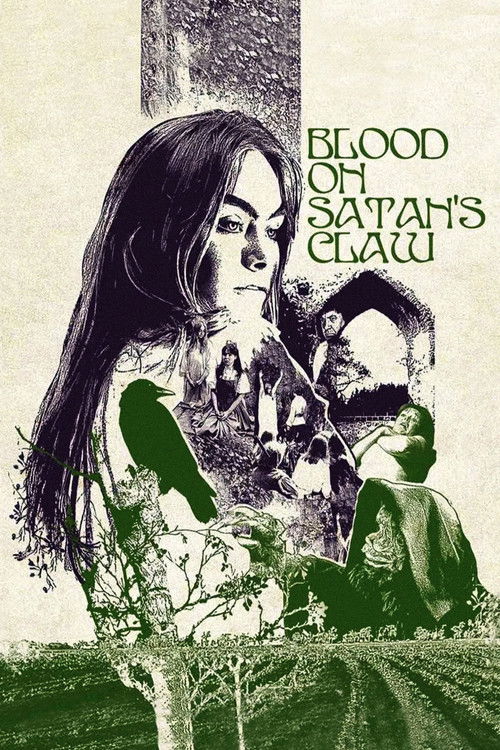
The Blood on Satan's Claw poster

THE BLOOD ON SATAN'S CLAW

1971 GB HMDB
January 28, 1971

After a landsman in 18th century England discovers a corpse covered in fur buried in a field, the town becomes infected by "the devil's skin," leading the local children to engage in demonic rituals and criminal behavior.

Directors

Cast

👍 👎 🔥 🧻 👑

Comments

Comments (0)

Crew

Production: Peter L. Andrews (Producer)Malcolm B. Heyworth (Producer)Tony Tenser (Executive Producer)
Screenplay: Robert Wynne-Simmons (Writer)
Music: Marc Wilkinson (Original Music Composer)
Cinematography: Dick Bush (Director of Photography)

REVIEWS (1)

Andrea Costantini
While plowing a field, farmer Ralph Gower finds a strange skull underground, with patches of fur and a terrifying gaze. After informing the village judge, the two return to the site, but strangely the head has disappeared. From that moment on, strange things start happening in the village, and the inhabitants who undergo the most changes are the teenagers. One of them is Angela Blake, who transforms from a model girl to a sensual temptress, also due to strange patches of fur forming on her skin. Released under the title "Blood of Satan's Claw" and retitled in the USA as "Satan's Skin," "La pelle di Satana" is a 1971 B-movie of demonic nature directed by television director Piers Haggard, which is chronologically placed between "Rosemary's Baby" and "The Exorcist." In reality, it has nothing to do with the two masterpieces of horror, being a period film set in 17th-century England, where the devil was worshipped with orgiastic rituals. The film starts off decently with the discovery of a head with a demonic appearance by a farmer. Initially, the villagers do not believe him, especially the judge, an upright and bigoted figure who governs the country. From then on, strange events begin to occur, starting with the inexplicable behavior of a young girl, who, apparently mad, is locked up in an asylum. The plot is clear up to this point, and although there are no moments of true terror (it is, after all, a B-movie from the seventies), there is curiosity to see the development of the events. Then, some things start not to add up, such as the total disappearance of the girl mentioned above, initially a character of apparent importance and then forgotten. Later, there is the inexplicable contagion of the village's youth, who begin to behave like true worshippers of evil with orgies, sacrifices, and so on, but whose motivation is not fully understood. It is understood that they have been touched by evil and that the initial discovery of the head has unleashed something, but no more detailed explanations are provided. This is a drawback from some points of view, as at the end of the film there are many doubts about what has just been seen, and one leaves the film with a sense of incompleteness that unfortunately hurts. It's a shame because the potential was there, and many sequences are really well made (and, to be honest, also a bit strong for the period), such as the dream of the young man who, believing himself possessed, amputates his hand, or the scene of the rape in the forest against a poor adolescent, satanic and full of perversion, given that the ones witnessing the violence are old men and boys. But the scene that remains etched is undoubtedly the inevitable female nude, an omnipresent element in the horror films of this period. This time it's Angela's turn (in name but not in fact), played by the talented Linda Hayden, who takes off her clothes, remaining naked in front of the priest, between whom there is an exchange of lines worthy of being remembered. "You are beautiful like an angel," says the reverend. "But I can love like a demon," Angela replies. Another positive aspect of the film is undoubtedly the rural Gothic setting. A credible period film, despite the not very high budget. On the contrary, one cannot say that the makeup and special effects are noteworthy. The creature's makeup is limited to the appearance of some claws, and the curse that affects the boys is represented by ridiculous patches of fur on the skin of the possessed. Angela's thick eyebrows are more ridiculous than terrifying. In summary, the film is not to be thrown away. It is a collage of beautiful scenes, sometimes self-contained, inserted into a poorly developed plot but which nevertheless allows the passionate viewer to watch it until the end, without regretting having wasted an hour and a half of their life.
👍 👎 🔥 🧻 👑

Comments

Comments (0)

COMMUNITY REVIEWS (2)

John Chard

John Chard

7 /10

Tigon's Talons.

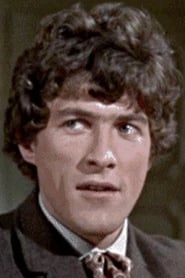
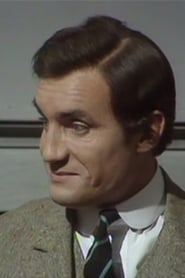
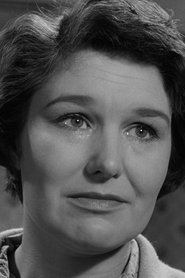
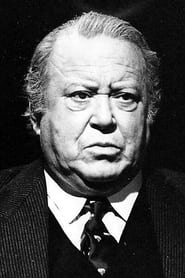
Out of Tigon Productions comes The Blood On Satan's Claw. Directed by Piers Haggard (who co-writes with Robert Wynne-Simmons) it stars Patrick Wymark, Linda Hayden, Barry Andrews, Michele Dotrice & Wendy Padbury. Story is set in rural 17th century England and sees a village fall under demonic possession after a living one eyed skull is unearthed by the local ploughman.

Well it's quite a title the film has got, the sort that conjures up many a blood curdling image. Yet it's some what misleading, but in a good way. There is indeed claws involved, and definitely "Old Nick" is part of the equation, but Haggard's film is more moody and quirky than the title suggests. It has definite links to Tigon's flag bearer, "Witchfinder General", though not nearly as clever or as brilliantly cruel as Michael Reeves' film. We are in the company of Wiccan ceremonies and satanically influenced children, throw in some sexually charged dalliances and we are good to go. Hell there's even some smarts in the writing about class distinction and snobbery.

However, the first half of the piece is more rewarding than the last half. The atmosphere and eerie thematics give way to standardised jolts and gore, with a finale that just comes off as slow-mo silliness that doesn't befit the earlier build ups in the script. The music (Marc Wilkinson), photography (Dick Bush), costumes (Dulcie Midwinter) and the acting (particularly petticoat terror Hayden) are of a very high standard. It's such a pity that the director loses sight of the tone marker set and fails to see it through to a satisfying conclusion. Still, it's definitely one of the better British horrors from the 70s - with eye catching period detail and a haunting poetic feel for the most part, The Blood On Satan's Claw is a safe recommend to those that like a bit of Witchcraft and Satanism in their horror diets. 7/10

Wuchak

Wuchak

6 /10

Creepy, unsettling, unconventional, realistic and artistic, but also tedious

In the early 1700s, devil worship rears its sinister head in a village in England. Barry Andrews (who looks like Roger Daltrey) plays the young man who initially acquires evidence of the deviltry while Patrick Wymark plays the investigator and Anthony Ainley the minister. The young females include Tamara Ustinov (Rosalind), Linda Hayden (Angela), Wendy Padbury (Cathy) and Michele Dotrice (Margaret).

When you think of 60s-70s British horror you automatically think of Hammer Films, but Tigon’s “The Blood on Satan’s Claw” (1971) doesn’t have that Hammer or Amicus vibe; or even American International. It’s avant-garde, inventive and lifelike with a harrowing pervasive dread. Unfortunately, it’s also tedious, particularly during the first half.

One sequence is especially unsettling and remains controversial to this day. However, it was preceded by non-horror films with scenes that were even more unsettling and controversial, like Roger Corman's "The Wild Angels" from five years earlier, which showed a bike gang beating up the kindly minister who performed the funeral of their fallen comrade, as well as totally trashing his sanctuary (!). Then two of the bikers cruelly rape their dead comrade's girlfriend (!). To top it off, they outrageously abuse his corpse at the funeral party (!!). "Last Summer" (1969) is another example, masquerading as a teen beach drama. So, while a certain scene in "Blood on Satan's Claw" is effectively unsettling, other movies outside the horror genre had already paved the way.

The film runs 1 hour, 37 minutes, and was shot just west of London at Pinewood Studios, Iver Heath, Buckinghamshire, and places nearby, like Oxfordshire.

GRADE: B-

Reviews provided by TMDB