

















The Verdict
The Cove is a residential complex inhabited by tenants of the most varied ethnicity and social class. Cleveland Heep, the all-around caretaker, alarmed by strange noises that punctually for some days come from the inner courtyard, one night nearly drowns in the condominium pool, but a mysterious girl manages to save him.
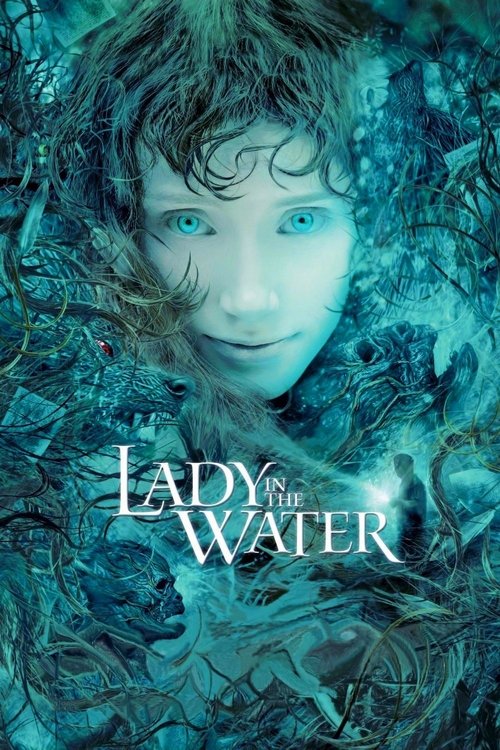
The Cove is a residential complex inhabited by tenants of the most varied ethnicity and social class. Cleveland Heep, the all-around caretaker, alarmed by strange noises that punctually for some days come from the inner courtyard, one night nearly drowns in the condominium pool, but a mysterious girl manages to save him. The girl, named Story, who is also the culprit of the night noises, is actually a Narf, a water nymph who came to our world to complete a mission and is now unable to go back. Cleveland and the inhabitants of The Cove will strive to help Story return to the Blue World and defend her from the Scrunt, monstrous beings determined to prevent the nymph from returning to her world.
In a gesture of anarchic authorship, Indian director M. Night Shyamalan continues a very personal path in the field of fantasy cinema, openly disregarding what is the Hollywood standard for genre films. Over the years and films, the child prodigy imported to Hollywood has built a now unmistakable brand that he imprints with force on each of his films, making them well recognizable to viewers as a "Shyamalan film." Despite the semi-flop of the previous "The Village" and his firing by Buena Vista, the author decides to bring to the screen a fairy tale of Eastern inspiration thought mainly for his own children and does so by inserting the story into a current discourse on collaboration between peoples and a more philosophical reflection on the individual task that every human being is called to perform.
It is clear that The Cove is nothing other than the planet Earth in miniature, a microcosm where different cultures and races live, apparently in a utopian peace. Cleveland is the point of contact between the different cultures and the different worlds, as well as the first to see and attempt to help Story, which will inevitably lead to the functional (and utopian) collaboration of all the inhabitants against a common evil that comes from the outside and that puts in danger not only the nymph, but the entire balance of the microcosm.
The Cove is certainly a reflection of the Village previously narrated by Shyamalan, isolated from the world (we will never see what happens beyond the courtyard except through the screen of the television, which invariably proposes images of war and horror) and threatened by supernatural creatures. But the recurring themes, or self-quotations, that the director scatters throughout the film, in addition to being of great interest to the viewer who follows the career of this young author, are also the occasion to find, in the sea of standardized products by the film industry, a drop of originality and a touch of authentic formal-narrative refinement. Not by chance, one of the perhaps most caricatured characters present in "Lady in the water" is a film critic, voluntarily depicted as an arrogant and unpleasant little man who puts his judgment as dogmatic truth, putting in danger not only himself, but the entire destiny of the characters of the shyamalanian microcosm. Perhaps the director has overdone the characterization of this character (personal motives of hatred?), making him also the protagonist of a metacinematographic scene that reflects on the standardization of American horror cinema, surely delicious but absolutely pointless.
Interesting is then the work done on the other characters and their characterization, which goes far beyond the stereotype, supported then by a group of excellent actors perfectly cast in their role. A special mention goes especially to the two protagonists: Paul Giamatti ("American Splendor"; "Sideways"), in the role of Cleveland, a man with a tragic past and an insecure present full of tics; and Bryce Dallas Howard ("The Village"; "Manderlay"), in the guise of the mysterious and ethereal nymph Story.
The direction of Shyamalan is, as usual, impeccable, this time focused on a quasi-minimalist technique that privileges extreme close-ups, anatomical details, and low-angle shots, here characterized then by a particular narrative rhythm from a role-playing game; and also of good level the careful photography of Christopher Doyle that manages to give a touch of naturalness even to the most improbable situations. Good also the digital effects with which the monstrous creatures are made, although it is not a wholly accurate choice (especially looking at the director's past films) to show them so well and so often, to the point of diminishing the pathos and the mystery related to the antagonistic and horrifying component of the story.
"Lady in the water" thus settles among the successful attempts of the talented Shyamalan, managing to perfectly blend fantasy and mystery, in a film that manages to leave the viewer with an unusual invitation to reflection, not extinguishing itself immediately after viewing, as often happens with films of this genre.
Comments
Comments (0)







Comments