













The Verdict
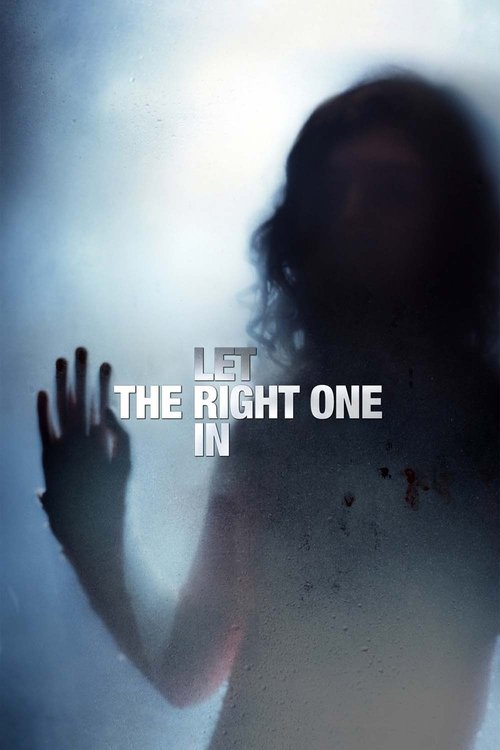
The twelve-year-old Oskar lives a difficult childhood: his separated parents are both too absent and his schoolmates insult and beat him daily. One evening, however, Oskar meets Eli, a girl his age who has just moved into the apartment next to his.
The twelve-year-old Oskar lives a difficult childhood: his separated parents are both too absent and his schoolmates insult and beat him daily. One evening, however, Oskar meets Eli, a girl his age who has just moved into the apartment next to his. The girl, however, does not go to school, rarely goes out and never during the day and shows an strange pallor. Little by little, a beautiful friendship is born between the two, but a problem arises: Eli is a vampire and the corpses that are piling up in the town in recent weeks are her work.
In recent months, the figure of the vampire seems to have returned to fashion, after a partial abandonment at the beginning of the third millennium. Someone could have imagined that the vampire did not blend well with the frenetic activity and sadism that horror has acquired in the more recent successful productions, unless it ended in contamination with action (which, in fact, has happened). However, "30 Days of Night" has shown us that the vampire is still capable of "biting" and has done so using a language that looked at contemporary horror as well as the past. But the commercial success, that of the tabloid front pages, came with "Twilight", adolescent vampirism that touched chords foreign to true horror, but brought back the figure of the vampire in the most romantic exception and almost against the current to the more muscular and bloody affirmation gained in the post "Blade" era. But as I said, the vampire has returned to bite for real and has little to do with the announced and targeted overseas successes, rather it comes from cold Sweden, is called Eli, is "more or less" twelve years old and kills because she must live. Eli is the protagonist of "Let the Right One In", the film that Tomas Alfredson has adapted from the successful novel of the same name by John Ajvide Linqvist, creating a touching and gripping film, probably one of the best of its kind in a long time.
The protagonists of the story are friendship and marginalization, transposed into the silhouettes of the two young protagonists, Oskar (Kare Hedebrant) and Eli (Lina Leanderson). Both are marginalized by society; one because he is the son of the first generation of the divorce law (the story is set in 1982), the other because she is a vampire. Oskar finds himself fighting alone against everyday life, deprived of a solid parental figure to guide him, since the mother is a career woman ready to approach him simply to watch a little television together in the evening and the father is always too distant and apparently more interested in his friendships than in his son. Naturally, childhood cruelty and bullying also play their part and thus the boy will become a victim of cruel mistreatment by his classmates. All this leads to a repressed resentment that erupts in the boy through a morbid interest in crime news and cutting weapons, with which he dreams of striking his bitter enemy. Thus, so much insecurity and human fragility are counterbalanced by the appearance of Eli, a little vampire so different from Oskar yet so similar. Eli is a predator, she knows how to defend herself and wants to teach it to her young friend as well, she kills indiscriminately for the simple nutritional need and her condition of immortality has led her to know the human being (and avoid it) better than man knows himself. However, Eli is also a marginalized person; literally, she is very similar to the prototype of the poor and homeless immigrant, she cannot have a social life due to her obvious condition as a creature of the night, marked by all the disadvantages that the vampiric fate has reserved for her. Eli has no one to share her frozen childhood with, only an elderly servant/tutor with whom she maintains an ambiguous relationship of complicity/love. Oskar and Eli are therefore two characters predisposed to cohabitation, made of communication conveyed by Morse code and blood kisses, purging the relationship of any explicit sexual implication, although traveling on the rails of a subtle morbidity that keeps in balance the asexual dimension of childhood and the more passionate one of adult love.
Alfredson, thanks to the excellent performance of the two main actors and the fluid screenplay by the same author of the novel, thus constructs a story that draws strength from the intimacy of the story but also from the universality of the message. The attention with which the characters are outlined and the alchemy between the various elements (implicit and explicit) of the story succeed in creating a perfect empathy in the spectator, accompanied by perfectly balanced rhythms between introspection and horror lashes, which have a great emotional and visual impact.
"Let the Right One In" is a film that deserves much attention, a real breath of fresh air in a genre that had somewhat lost its identity.
Must-see.
Comments
Comments (0)

















Comments