







The Hills Have Eyes backdrop
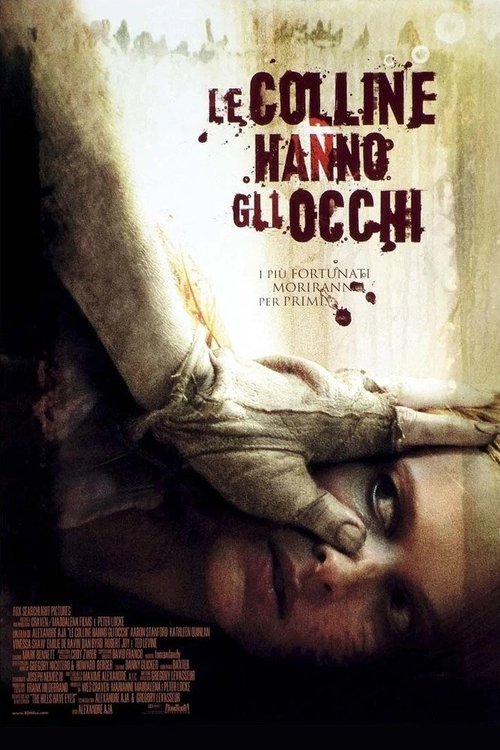
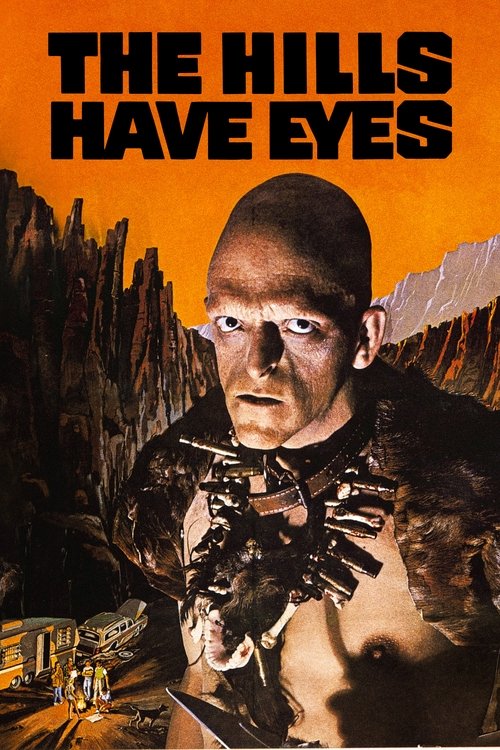
The Hills Have Eyes poster

THE HILLS HAVE EYES

1977 US HMDB
July 22, 1977

Taking an ill-advised detour en-route to California, the Carter family soon run into trouble when their RV breaks down in the middle of the desert. Stranded, they find themselves at the mercy of monstrous cannibals lurking in the surrounding hills.

Directors

Cast

👍 👎 🔥 🧻 👑

Comments

Comments (0)

REVIEWS (1)

Roberto Giacomelli
The Carter family is traveling in their RV towards California. The quickest route seems to be the one that crosses the Nevada desert, which many believe is used by the army for unknown nuclear experiments. A breakdown caused by an accident forces the Carter family to spend the night in the middle of the desert, but soon they will become prey to a ruthless family of mutant cannibals living among the hills. Famous as the second film by new horror master Wes Craven, "The Hills Have Eyes" arrives five years after his "The Last House on the Left" and, for the second time, undoubtedly leaves a mark in the dusty and bloody landscape of 1970s horror cinema. Clearly indebted to Hooper's masterpiece "The Texas Chain Saw Massacre," Craven's film carries forward, and perhaps exaggerates, his sadistic poetic of family revenge: in "The Hills Have Eyes," as in "The Last House on the Left" and subsequently in other of his works, at the center of the plot is the American family, or rather families. There is the degenerate, deviant family, composed of deformed outcasts and man-eaters, and the respectable one, belonging to the middle class, whose only means of survival is to regress to bestiality and to put itself on par with the first family, that of monsters. American society, therefore, generates monsters and the monsters shape other monsters; but Craven's discourse is not restricted to the United States alone, but is much broader: it is human society that generates monsters, which lurk in the darkness of a cave among the desert hills, as well as in the innate instinct of survival of the mildest human being, ready to come out and attack and devour innocence (not by chance the primary objective of the cannibal family is to eat the newborn baby of the Carter family and the first member of the cannibal family to perish is the smallest and visibly retarded one). Beyond the sociological interpretation, "The Hills Have Eyes" manages to have a great emotional impact on the viewer, generated by suggestive natural settings captured by a dirty and dusty photography, very much in the style of 1960s westerns, and by a violence, often only suggested, primordial and at times disturbing, made of men burned alive and knife wounds inflicted with animal ferocity. Inevitably, its release in theaters was accompanied by a sea of controversy (as had already happened with "The Last House on the Left" and "The Texas Chain Saw Massacre"), but also by a great public success that pushed Craven, in 1985, to direct a sequel, far removed from the charm that the first film conveys. The cast of "The Hills Have Eyes" is essentially composed of faces not very well known to the public, with the exception of Dee Wallace (here in the role of Lynn, the older sister) who will be the protagonist of numerous horror films ("Howling," "Cujo," "Critters," "Time Warp"), but also in the very successful "E.T." by Spielberg. Another recurring face in genre cinema, and here present in the role of the cannibal Pluto, is that of Michael Berryman, an American character actor with an unmistakable physique for horror films, who will return directed by Craven in "Deadly Blessing," "Invitation to Hell," and "The Hills Have Eyes 2," as well as in "Cannibal Holocaust" by Deodato and "The Devil's Rejects" by Rob Zombie. In conclusion, "The Hills Have Eyes" is one of the cornerstones of new horror, as well as one of Craven's best films. Gripping and disturbing. Essential viewing for a horror enthusiast. Curiosity. Craven recounts that for the realization of the screenplay he was inspired by a fact that actually occurred in seventeenth-century Scotland. There is a curious game of cinematic references between Wes Craven and Sam Raimi that has "The Hills Have Eyes" as the initiator: during Craven's film, one can glimpse on a wall inside the RV the torn poster of Spielberg's film "Jaws," as if to assert, on the part of the director, that one of his intentions was to succeed in making a film more frightening than the one with the killer shark. In one of the scenes of Raimi's cult film "The Evil Dead" one can glimpse on the wall of the basement the torn poster of "The Hills Have Eyes," a challenge that the director launched to Craven for the same reasons that pushed Craven to cite Spielberg's film. But Craven took up Raimi's challenge and returned the "favor" in "Nightmare," inserting in a scene a TV that was broadcasting "The Evil Dead."
👍 👎 🔥 🧻 👑

Comments

Comments (0)

Where to Watch

Rent

Apple TV Apple TV
Amazon Video Amazon Video

Buy

Apple TV Apple TV
Amazon Video Amazon Video

COMMUNITY REVIEWS (5)

John Chard

John Chard

6 /10

You folks. Stay on the main road now you hear!

After having announced himself to the horror hordes with The Last House on the Left, Craven's next horror pick would be this, The Hills Have Eyes, another slab of grit and grime.

A nuclear family head across the desert in their giant trailer only to break down and find there's beasties in the hills hungry for their blood.

It has become very much a popular cult pic with Craven fans, which is understandable given the brisk pacing, moments of intensity and suspense, while the allegories and messages are smartly inserted. But the low budget does affect the product, it looks cheap and renders much of the violence and sexual aspects (implied or otherwise) as being not very frightening or stomach churning. While some of the acting is very poor, further adding a cartoonish feel to what should have been a nerve shredding experience.

Above average for sure, but not the masterpiece some would have you believe. 6/10

Gimly

Gimly

6 /10

Though the case of The Hills Have Eyes is a rare one wherein I feel that the remake is in its entirety a better film than the original, Wes Craven's 1977 exploitation horror is still a solid movie, just one that doesn't succeed in its totality. Gimme a Beast spin-off anyday though.

Final rating:★★★ - I liked it. Would personally recommend you give it a go.

JPV852

JPV852

7 /10

This is one I could've sworn I had seen before and while I think I remembered a few scenes, the rest was a blank. In any case, I thought it was okay for a independent horror film with characters that at least weren't obnoxious. It's nothing special but I suppose entertaining enough. 3.5/5

CinemaSerf

CinemaSerf

5 /10

Despite being warned by a cranky old garage owner to stay on the highway, know-it-all "Big Bob Carter" (Russ Grieve) decides to take his family on a dirt track so they can try to find an old silver mine. The road is barely designed for a donkey, much less a car towing a caravan and so into a ditch they go and their troubles begin. Initially, that is just the inconvenience but when one of their dogs heads off, chased by his son "Bobby" (Robert Houston - clad in the tiniest pair of shorts that still appeared perfectly adequate for modesty, though), we start to realise that there is danger all around them. Yep, they have strayed into the territory of a family of interbred hillbillies who are quite happy to terrorise the family. Should they stay in their van or try to escape? What about the baby they have with them? At least they still have one more dog! Can they survive? To be honest, a combination of hysterical screaming and some terrible acting (except from the dog) made this nigh-on unwatchable for me. The production - single camera with terrible editing and continuity - seemed to lurch from one badly framed shot to another and the fact that this family of urban drips developed some ruthless desert-ninja skills in a matter of moments - especially the hapless "Bobby" who at least put some jeans on - just contributed to a scare free story that left me bored. Nope, just not for me...

Wuchak

Wuchak

5 /10

An Ohio family vs a clan of cannibals in the Southwest desert

Wes Craven developed this after the deserved success of “The Texas Chainsaw Massacre” with further inspiration stemming from the 16th century ‘Sawney’ Bean legend of Galloway, Scotland. “Deliverance” was also no doubt an influence, not to mention a little “Straw Dogs” seeing as how the theme involves civilized people turning to utter savagery to survive, which was also the moral of “Witchfinder General,” aka “The Conqueror Worm.”

The milieu and general vibe is similar to “Gargoyles” from four years earlier, but this is easily the least of all these movies due to a lack of artistry, dull storytelling, and comic booky antagonists. It would’ve worked better IMHO if the cannibal family was depicted in a more mysterious manner. Instead, they’re depicted in broad daylight pretty much from the get-go.

If you can roll with the cheesiness, however, the proceedings pick up in the last act with an interesting turn-the-tables element.

Janus Blythe stands out in the feminine department as Ruby, who thankfully comes to the fore in the final half hour. More should’ve been done with her. Janus happened to be one of the few good things about Tobe Hooper’s “Eaten Alive” from the year before. Dee Wallace (Lynne) is a slightly lesser highlight while conventional blonde Susan Lanier (Brenda) is a’right.

A sequel came out in 1984 (which I have yet to view; and probably won’t after seeing this), followed by a remake in 2006, which isn’t exactly great but it’s superior to this, plus a mediocre sequel in 2007. The Asylum’s “Hillside Cannibals” came out shortly after the remake and it effectively kept the proceedings raw, grim and horrifying. S. Craig Zahler was inspired by these films (and the “Wrong Turn” franchise) for his superior "Bone Tomahawk,” which is distinguished by being a Western.

It runs 1h 30m and was shot in Victorville in the Mojave Desert, which is located 85 miles northeast of Los Angeles.

GRADE: C

Reviews provided by TMDB