











The Verdict
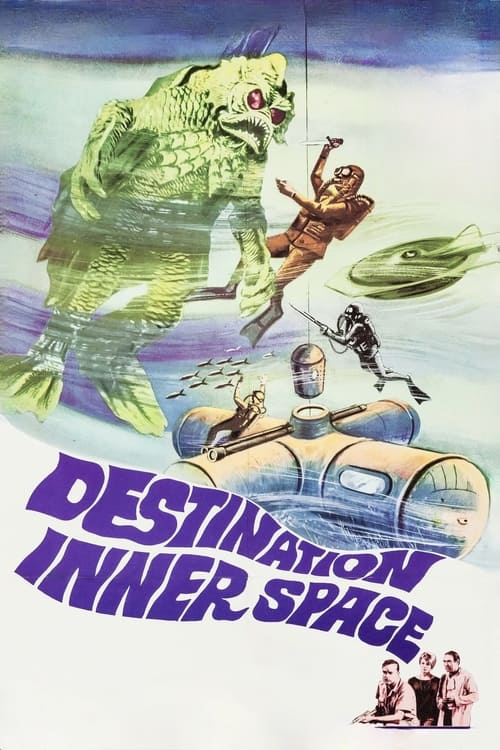
In an underwater laboratory, scientists spot on radar an unidentified object moving at the bottom of the sea at considerable speed and emitting ultrasounds that initially make one think of a whale. Commander Wayne rules out that it is an animal, as well as a submarine, so two divers, Hugh Meddox and Sandra Welles, are sent.
In an underwater laboratory, scientists spot on radar an unidentified object moving at the bottom of the sea at considerable speed and emitting ultrasounds that initially make one think of a whale. Commander Wayne rules out that it is an animal, as well as a submarine, so two divers, Hugh Meddox and Sandra Welles, are sent. Upon entering the mysterious vehicle, the two make the imprudence of bringing with them a cylinder, where scientific instruments seem to be enclosed, but the object is a sort of incubator containing an alien embryo. The cylinder, once brought to the submarine, breaks and a monstrous amphibian emerges, sowing death and terror in the laboratory.
Ah, the beautiful 60s of cinema, when four actors, a corner of a theater set, and a man in a rubber suit were enough to make a fun B-movie. When the smell of the Cold War still lingered, in the USA, Martian invasions were popular and monsters from beyond threatened Earth (read the United States), always and again echoing - often explicitly - the fear that the Russian invader would put a foot wrong. "The Invasion: Mars Attacks Earth" is no exception, whose explanatory title places it squarely in the genre.
In reality, this little-known film by Francis D. Lyon only has a tangential connection to the theme of invasions that the misleading Italian title (but also the original "Destination Inner Space" plays dirty) promises: there is a spaceship (submarine!) and a threatening monster from space, but one does not perceive nor really speak of an invasion and, above all, we have no science fiction setting that leads to the deep space of the American title.
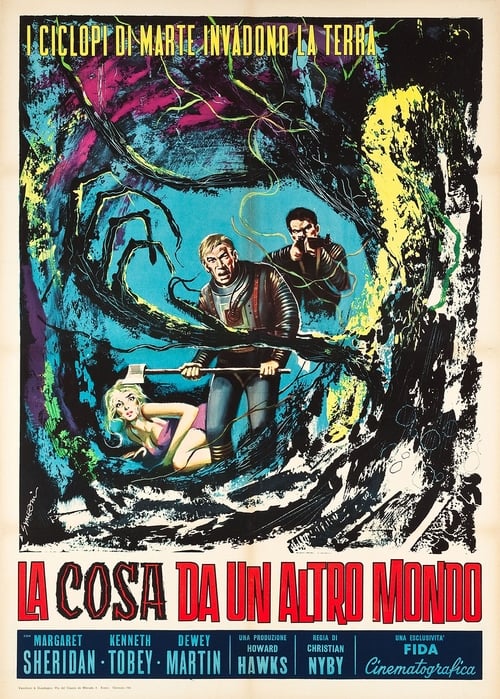
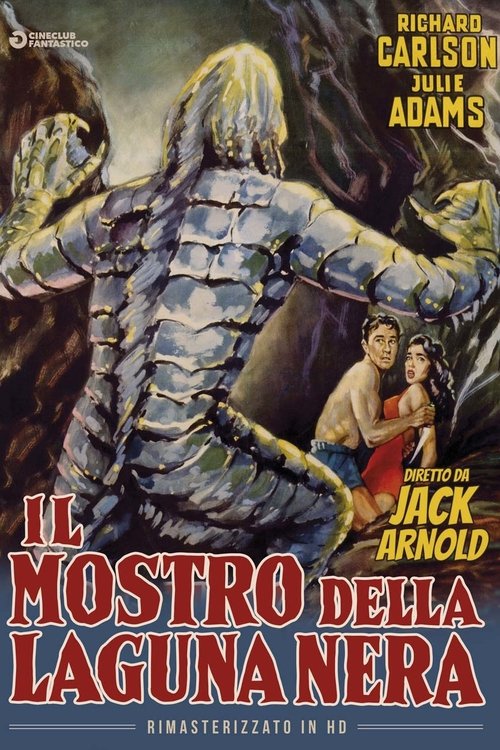
"The Invasion: Mars Attacks Earth" is a sort of mix between "The Thing from Another World" and "Creature from the Black Lagoon", where from the former, the dynamics of the story with scientists vs. alien monster in an inhospitable scenario are taken, with a pinch of "The Monster from the Space Ship" for location similarity; from the famous Universal film, instead, the main creature is taken, a sort of giant amphibian, more evil and less "tragic" than Jack Arnold's Gilman.
Francis D. Lyon, who in his career has done mostly television, does not worry much about the plausibility of the story - written by Arthur C. Pierce - and the development of the characters, immersing the viewer immediately in the action. This is surely appreciable, since a common defect of many fantasy-horror films of the period were the dead times given by the need to "stretch the soup" before bringing the monster on stage, but Lyon manages to fall into the trap of making his film poor in ideas and aimed exclusively at showing a creature fighting against a group of scientists. The spectacle surely entertains and, considering also the short duration, manages to keep the attention well awake throughout the time, but one still has the impression of having seen a film that adds nothing to the genre, rather tends to get lost in the magma of monster movies of the period.
The curious thing about "The Invasion: Mars Attacks Earth" is that it poses as an aquatic imitation of "The Thing from Another World" in the same way that in the 80s films like "Leviathan" or "The Creature from the Abyss" posed as imitations of "Alien". And this less than noble observation paradoxically works in favor of Lyon's film because it gives it that aura of precursor of a certain cinema that will develop in the following decade, when alien monsters or mutants will unleash in underwater research stations, following the narrative construction and success of "Alien" and its sequel.
Good craftsmen, though not very impactful, the actors, among whom stand out Scott Brady ("China Syndrome"; "Gremlins") and the voice actor Mike Road, who play Commander Wayne and his adversary Maddox, as well as the beautiful Wende Wagner ("Rosemary's Baby") who portrays the explorer Sandra.
Cute the look of the amphibious monster, made by Richard Cassarino and played by Ron Burke, a clumsy big fish on two legs that has a certain kitsch effectiveness.
Deserves half a pumpkin more.
In DVD from Mosaico Media.
Comments
Comments (0)





Comments