
















The Verdict
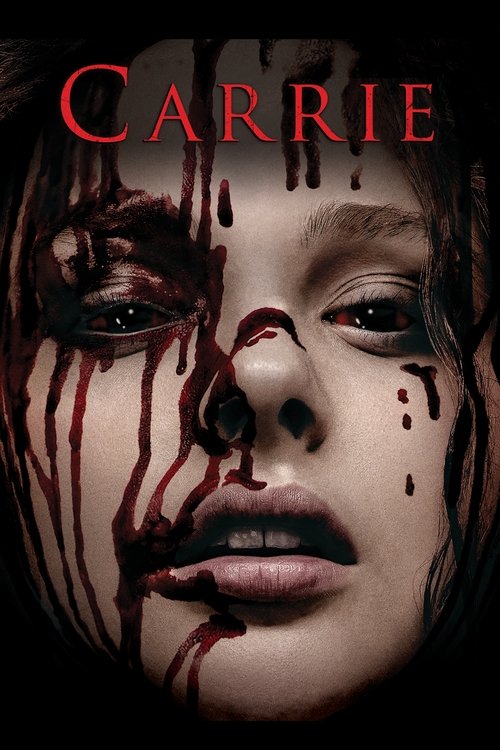
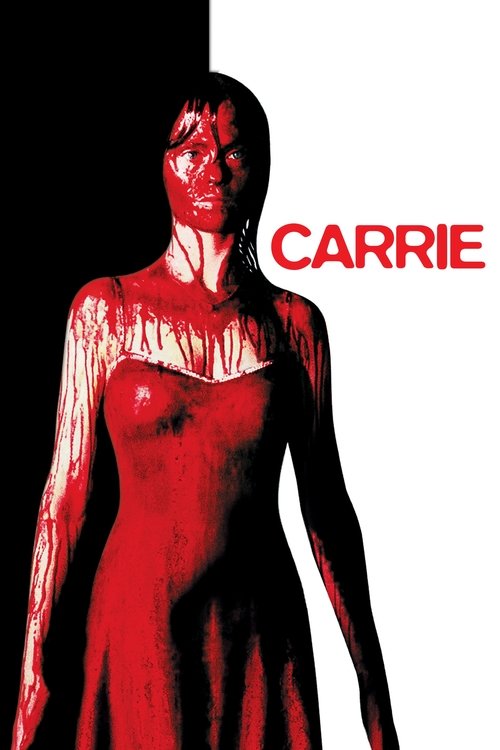
Carrie White is becoming a woman. Her first menstruation throws her into terror and her reputation as "strange" contributes to making her the school's laughing stock.
Carrie White is becoming a woman. Her first menstruation throws her into terror and her reputation as "strange" contributes to making her the school's laughing stock. Much of the blame for the girl's marginalization goes to her mother, a fervent Christian fundamentalist who keeps her away from reality and raised her in the fear of committing sin. But along with sexual maturation, Carrie also develops psychic powers that allow her to move objects with the power of thought. First frightened, Carrie will learn to control her powers and make them an effective weapon of revenge against those who mistreated her.
And think that "Carrie" was picked up from the trash by Tabitha Spruce, Stephen King's wife, where the author had thrown it because he was dissatisfied with the work… at least that's what the legend says. Because we all know how things turned out and how, over time, the writer's intuition sharpened, turning into King Midas syndrome, meaning everything he touched from that moment on turned into gold. But let's believe the legend. It was 1973 and at the time Stephen King wrote stories that were published in installments in the magazine Cavalier. "Carrie" was supposed to have the same fate, only the starting material gave too many ideas to limit it to a few pages and so the author decided to expand it, turning it into a novel. The initial dissatisfaction turned into success, because "Carrie" was bought by a large publishing house and published in 1974, receiving appreciation and good sales. This is the genesis of "Carrie," a novel destined to have a second life thanks to the magnificent film that Brian De Palma directed in 1976. To this day, "Carrie – The Eyes of Satan" is one of King's favorite films based on his works, and certainly we can't blame him, given the stylistic and narrative perfection of De Palma's work, which not only launched him into the Olympus of important directors but also created imitations of all kinds. But "The Spell," "Jennifer," "Patrick," "The Initiation of Sarah" and "Aenigma" are only the illegitimate offspring, because in 1999 the belated official sequel "Carrie 2: The Rage" arrived and in 2002 the first remake, for TV.
Now, however, even "Carrie – The Eyes of Satan" has its own beautiful remake for the big screen, for the consumption of new generations who, with every probability, have never seen De Palma's film. And what a beautiful remake, since the work signed by Kimberly Peirce is one of those films that leave you fully satisfied not so much if compared to the original work – a comparison that, as often happens, leaves the newcomer as the loser – but if framed in a very precise process of revisionism.
First of all, it must be said that Kimberly Peirce, a director known to the public for the Oscar-winning film "Boys Don't Cry," makes a real remake of De Palma's classic and not just a new filmed version of the novel, as had happened with the 2002 TV film, thus adopting much of the variations that had already been made to the story by De Palma. The most clamorous licenses taken by this new film towards the original, which anchor it even more to the novel, are: the insertion of Chris's snobbish father; Carrie's awareness of her powers, which leads her to practice lifting objects in her room; the restoration of the original name of the gym teacher who is Miss Desjardin as in the novel and not Miss Collins as in the 1976 film; greater spectacularity in the finale.
Aware of the nature of the operation, the elements of personalization are applied, ranging from a necessary technological update to a very interesting and singular point of view on the affair. The update is realized in the use of smartphones by Carrie's mean schoolmates at the top moment of the shower, with which they record the cruel act of bullying and then upload the video to YouTube, amplifying the scope of the poor victim's shame… a video that will have a central role even in the moment preceding the revenge. In short, one of those trifles that do not change the narrative structure by a single comma but coexist naturally and coherently with the work.
The unprecedented point of view, however, lies in the totally feminine gaze on the affair. The novel was written by a man, the first film directed by a man, and despite the protagonist and much of the supporting cast being women, what prevails is an evident male gaze on the female universe, where Carrie's power is experienced almost as a curse that leads to physical and spiritual liberation. In Kimberly Peirce's version, who is a woman starting from who sits behind the camera, the discovery of ESP powers does not equate to "being a witch" but to finally having the "power," the situation under control, an opportunity for Carrie to be respected and to take revenge on a life that has always asked her to be a victim. In the 2013 remake of "Carrie," all decisions are made by female characters, whether it be Carrie White herself, Sue Snell, Chris, or Miss Desjardin. The film begins with a birth, a preeminently female act, whose painful and suffered traits are emphasized, framing the condition of the woman predisposed to suffer but also to have the power to give as well as take life. And the film concludes with the announcement of a pregnancy, which, by chance, foresees the birth of a girl. The 2013 version of "Carrie" is totally gynocentric: everything really revolves around the female universe.
Truly commendable is the work on the casting, which has two spot-on choices in Julianne Moore, in the role of Carrie's excited and cruel mother, and Judy Greer as the gym teacher. Then there's Chloe Grace Moretz, a talented actress and frankly very good in this film as well, who convinces to a certain extent because she's too pretty to be a credible Carrie White… but if we think that Stephen King had suggested Lindsay Lohan for the role, we can consider ourselves highly satisfied with the production's choice.
"The Eyes of Satan – Carrie" is one of those remakes that work wonderfully, faithful to the original but with changes that make it really appealing to both a young audience and those who loved De Palma's masterpiece. A classy film that at the same time knows how to be sufficiently sadistic to capture the attention of horror fans.
Comments
Comments (0)




















Comments