



The Verdict
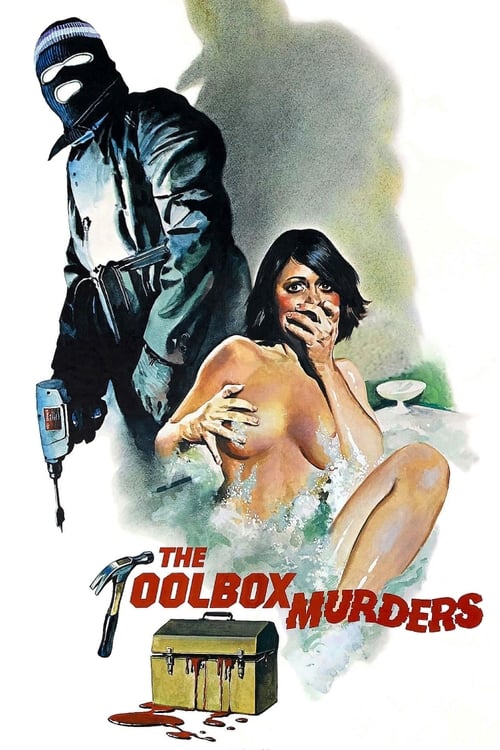
A residential complex on the outskirts of Los Angeles becomes a "hunting ground" for a ruthless serial killer intent on killing, in the most atrocious ways, young and seductive women. The murders follow one another until one night, the killer kidnaps the fifteen-year-old Lourie, leaving the police in the dark.
A residential complex on the outskirts of Los Angeles becomes a "hunting ground" for a ruthless serial killer intent on killing, in the most atrocious ways, young and seductive women. The murders follow one another until one night, the killer kidnaps the fifteen-year-old Lourie, leaving the police in the dark. It will be up to Joey, the brother of the kidnapped girl, to track down the serial killer to find and save his sister.
It's recognizable: in wanting to start a discussion about horror cinema, and in particular analyzing post-modern horror cinema, the 1970s were undoubtedly a very prolific period and one in which the quantity of horror productions often went hand in hand with quality. It is precisely in this period that some of the greatest cults (one could comfortably speak of "masterpieces") of the genre are born and it is precisely in this decade that the names of some directors stand out from the crowd, capable, with their works, of rewriting the rules of the genre or imposing new ones.
But in recognizing the non-negligible richness and quality of this decade, at the end of the day, one tends to always end up in the commemoration of the "usual" list in which only a few titles are listed that, being attributed to names of a certain importance, result, according to common thinking, in being the main milestones reached by the genre in this
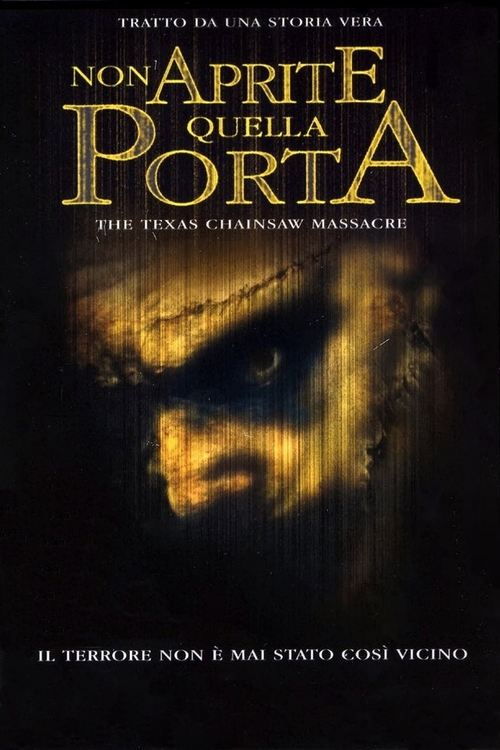
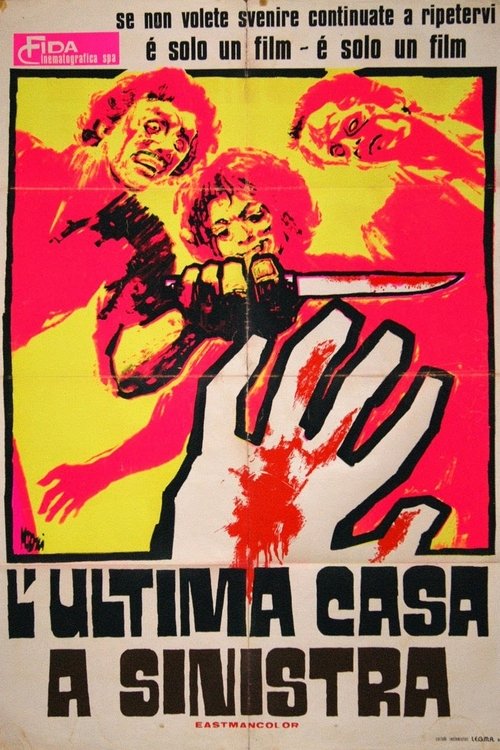
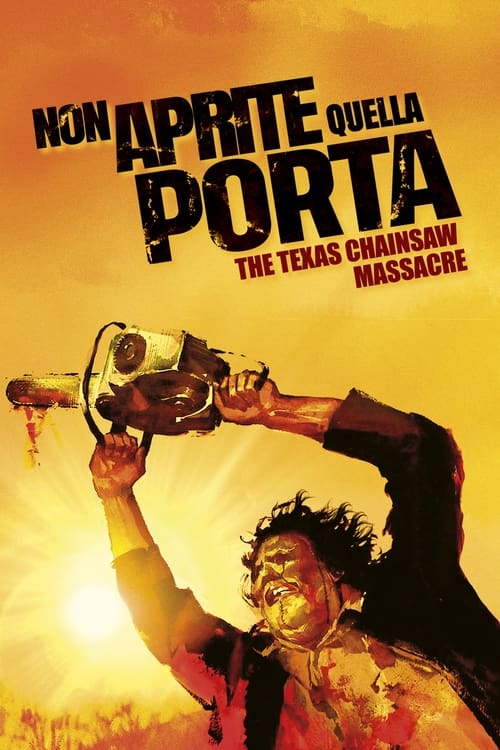
determined period. One will therefore resort, with the remembering (rightly) of titles such as "Don't Open That Door", "The Last House on the Left", "Halloween", "Zombie" and so on. All films certainly worthy of representing the genre with their heads held high, but unfortunately, on certain occasions, in order to insist on praising the usual and now well-known titles, one tends to minimize the decade by neglecting and overshadowing those smaller films, those films that, for one reason or another, never managed to break through but that, objectively speaking, have nothing or almost nothing to envy to all their more famous "colleagues".
Here, "The Los Angeles Slayer" fully falls into this category.
Directed by Dennis Donnelly in 1978, "The Los Angeles Slayer" is an interesting and fascinating thriller/horror that, although it became a small cult object by a very restricted circle of horror fans, never managed to reach that just (and one could say deserved) fame capable of consecrating it unanimously as an authentic cult of the genre.
The story told in the film is one of the simplest, "The classic thriller!" one would think, but in reality the film directed by Donnelly has nothing predictable or already seen because it intends to abandon any known narrative scheme to run in favor of an innovative narration, almost above the lines, capable of changing the face of the film very quickly so as to surprise the spectator minute by minute.
The film opens with the sudden presentation of the killer who is shown to us as a large man, his face covered by a balaclava and who walks around carrying with him a toolbox where he keeps all his "arsenal" (the same toolbox that gives the original title to the film, "The Toolbox Murders"). Once the killer is presented, the film proceeds with an unstoppable chain of murders, which follow one another rapidly, destined to calm down only after the kidnapping of the young Lourie. At this point, the film, which until now had appeared as a mosaic entirely formed by ferocious murders, prepares to assume more classic connotations, thus allowing itself some small narrative stops to succeed in characterizing the few characters on stage and to give the right articulation to the investigation carried out by the brother of the kidnapped girl. But when the film seemed to have stabilized, resulting in a slightly more innovative thriller than usual, here it prepares to show a new face again, and it does so in an epilogue so delirious and out of the ordinary as to bring to mind that perversion
shown by T. Hooper in films such as "Don't Open That Door" or "That House Near the Swamp".
But what makes this film an undisputed cult is not only the crazy narration supported by a good script, but one must also recognize the work of Donnelly many other merits including a particular ferocity in the exposure of the murders, a ferocity that will never culminate in the splatter effect put on display but which prefers, on the contrary, the use of a suggested violence, only shown at times, capable of being just as crude to make "The Los Angeles Slayer" a disturbing film.
Not to be overlooked, moreover, is the masterful combination — present almost exclusively in the first part of the film — that comes to establish itself effectively between horror and eroticism, a combination that, in addition to playing an important role in the "explanation" at the end, contributes to making the film even more excessive and morbid than it already is.
Impeccable the direction of Donnelly (usually involved in television projects) who knows how to demonstrate, on more than one occasion, particularly inspired reaching the climax during the surprising (true cult scene of the film)
murder of the girl in the bathtub with a nail gun, a sequence that, well directed and enhanced in the editing phase, would deserve to be studied and analyzed in all the most prestigious film schools.
Interesting, and intelligent, the use of the soundtrack that, in addition to boasting a memorable main theme, is almost entirely composed of melodic country songs capable of softening the violence of the scenes as best as possible to generate a harmonious audio-video contrast.
In short, "The Los Angeles Slayer" is a really surprising film, an unfairly little-known film and that would deserve to be included in the list regarding the major cults of the 1970s decade. The younger spectators, perhaps, may not like it due to a highly raw and somewhat "dated" visual quality (although, in the opinion of the writer, this is perhaps one of the film's greatest merits), but for all the others, it remains a film to be rediscovered.
Note: In 2003, the film was the source of inspiration for a pseudo-remake by Tobe Hooper distributed in our market with the title "The House of Massacres" (in the original still "The Toolbox Murders").
Comments
Comments (0)












Comments