









Le Verdict
La famille Collingwood s'installe dans la maison près du lac pour les vacances d'été. Mari, dix-sept ans, demande la voiture à ses parents pour aller en ville rendre visite à son amie Page et passer la soirée avec elle.
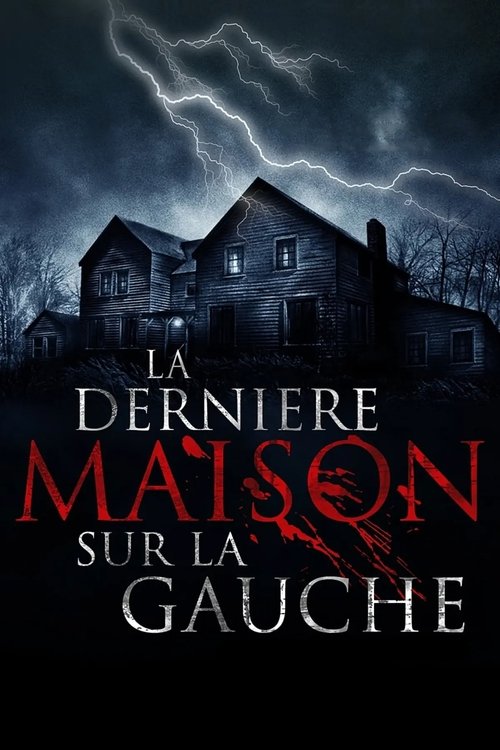
La famille Collingwood s'installe dans la maison près du lac pour les vacances d'été. Mari, dix-sept ans, demande la voiture à ses parents pour aller en ville rendre visite à son amie Page et passer la soirée avec elle. Malgré de nombreuses recommandations, ses parents acceptent. Les deux jeunes filles rencontrent Justin dans le supermarché où travaille Page, qui les invite dans le motel où il loge avec ses parents pour consommer des drogues. Page accepte et entraîne avec elle la réticente Mari ; mais arrivées sur place, les deux jeunes filles se retrouvent prisonnières de Krug et de sa famille, un assassin fraîchement évadé qui leur vole la voiture et les séquestre. Pendant le trajet, cependant, Mari tente de s'échapper et fait sortir la voiture de la route ; alors Krug, furieux, décide de tuer les deux jeunes filles après avoir violé Mari. Avec la voiture accidentée et au milieu d'un orage, Krug et sa famille décident ensuite de demander l'hospitalité dans la première maison qu'ils trouvent sur leur chemin, ignorant que la porte à laquelle ils ont frappé est justement celle de la maison Collingwood.
Il existe certains films qui devraient rester uniques, qui n'ont besoin ni de remake ni de restyling d'aucune sorte ; ce sont ces films fortement ancrés à une époque, à un courant social et cinématographique, qui fonctionnent surtout en rapport au contexte dans lequel ils ont été produits. "La Dernière Maison sur la Gauche", petit chef-d'œuvre d'ouverture de Wes Craven, peut paraître, à l'œil contemporain, comme un film brut, maigre et inégal mais à l'impact visuel et contenutistique encore aujourd'hui inchangé ; nous parlons de l'un des piliers de l'horreur postmoderne, fondateur d'un sous-genre – le rape & revenge – briseur de règles et de tabous qui a lancé dans l'olympe des maîtres de l'horreur le réalisateur de "Nightmare".
Penser à refaire pour les nouvelles générations un film qui parle un langage fortement "seventies", qui réfléchit sur une génération – les enfants fleurs – en perdition, qui cite la Famille Manson et se fait fort d'une mise en scène qui rappelle les reportages de guerre – celle du Vietnam – sans se faire de scrupules concernant le sadisme, la violence explicite et les humiliations sexuelles est une bataille perdue d'avance. "La Dernière Maison sur la Gauche" est un film unique et légendaire, pour cette raison, pour le reste de la critique, on évitera de mettre en comparaison les deux pellicules pour une évaluation plus possible objective du film de Dennis Iliadis.
Commençons par dire que "La Dernière Maison sur la Gauche" est un bon film, mais il a le défaut de fonctionner parfaitement sous certains aspects et mal sous d'autres, créant une alternance qualitative qui lui donne un fastidieux sentiment de déshomogénéité.
Iliadis, réalisateur grec choisi par Craven lui-même après avoir vu son film d'ouverture "Hardcore" – drame sur la prostitution infantile – , a une main sûre et démontre un excellent métier grâce à un style qui alterne des moments frénétiques à d'autres plus calmes, presque statiques, de manière jamais banale, trouvant un juste compromis entre style moderne et classique. Le choix d'ajouter des scènes à l'histoire originale a parfois été une bonne idée, réussissant à allonger considérablement le film (environ 110 minutes, contre les 82 du prototype) de manière fonctionnelle. Aucune longueur, seulement des ajouts qui donnent de l'épaisseur à certains personnages et clarifient certains passages sans trop laisser de place au hasard. Ainsi, l'évasion de Krug est montrée (c'est justement avec elle que s'ouvre le film), comme pour créer une auréole de mythification plus grande autour du personnage, la famille Collingwood a un passé et une dimension externe au drame qui se consomme dans le film, la bande de criminels finit près du lac pour une raison bien précise, et ainsi de suite. De tout cela pourtant on ne réussit pas toujours à toucher la cible et l'ajout d'un frère mort dans le passé de Mari sert à bien peu si ce n'est à justifier le pendentif grâce auquel les époux Collingwood commenceront à soupçonner, tout comme nous montrer Mari comme une championne de natation au début du film est un prétexte qui fait presque sourire par son évidence connaissant l'utilité que lui servira cette capacité.
Si, en bien et en mal, le scénario d'Adam Alleca et Carl Ellsworth ("Red Eye" ; "Disturbia") est quand même volontaire dans l'esquisse des personnages et des situations, étrangement les caractérisations de la bande de criminels sont négligées, qui ne réussissent pas à aller au-delà de l'étiquetage évident de "méchants de la situation". À l'exception de Justin, le fils adolescent de Krug, interprété par Spencer Treat Clark ("Gladiator" ; "Unbreakable"), le reste de la bande est décidément monocaractère, une bande de méchants qui a sa seule particularité dans le fait d'être une famille. Même Krug, le leader interprété par un terne Garret Dillahunt ("No Country for Old Men"), nous est présenté comme un peu charismatique et peu crédible plurimeurtrier. Probablement le problème majeur réside surtout dans un choix discutable de casting, acceptable dans le département "gentils" mais inefficace dans celui des "méchants" ; en pratique, il manque les bonnes têtes et seulement Riki Lindhome ("Pulse" ; "La Fille du Meilleur Ami") semble avoir les physiques du rôle pour la partie de Sadie.
Nous parlons d'une production moyenne-grande et par conséquent le film se présente dans un emballage impeccable. Ce qui surprend, étant donné qu'il s'agit d'un film somme toute consolateur et bon enfant (choix discutable de faire sauver certains personnages), c'est la brutalité de certaines scènes et de certaines situations, accentuée à certains moments par l'extrême réalisme des mêmes, caractéristique qui lui a valu en Italie l'interdiction aux mineurs. Sans aucun doute, on se souviendra particulièrement du viol de Mari et de la mort de Francis, même si à un certain moment cette verve réaliste et dérangeante laisse inexplicablement place à une scène finale aux limites du ridicule qui risque, entre autres, de créer des problèmes logiques et de continuité narrative : il suffisait de finir le film quelques minutes plus tôt et de laisser dans le tiroir l'inutile envie d'émuler "Saw".
Dans l'ensemble, cependant, "La Dernière Maison sur la Gauche" est un film bien emballé qui divertit malgré la longueur inhabituelle et se défend bien dans le paysage cinématographique actuel, toujours plus affamé de violence. Probablement, il plaira surtout aux nouvelles générations, tandis que ceux qui ont grandi en connaissant – et aimant – le film fondamental de Craven, pourraient entrevoir, au-delà de la mise en scène impeccable, seulement cette inutilité de fond propre à une histoire qui n'appartient plus à nos temps.
Commentaires
Commentaires (0)













Commentaires