
The Verdict
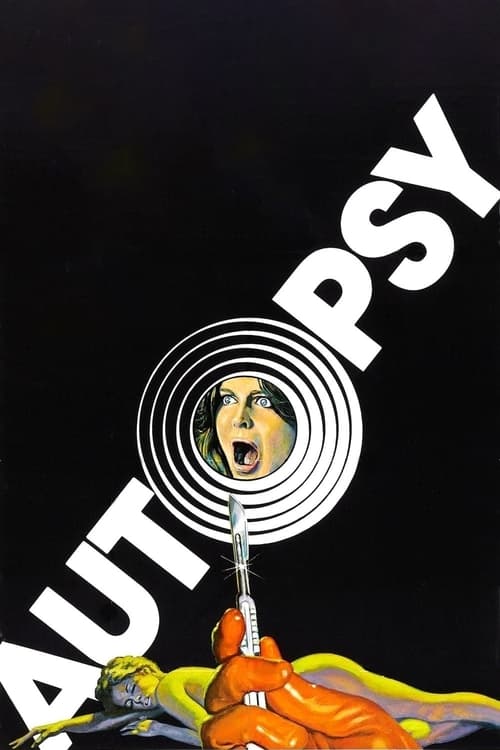
In Rome, during the summer, a series of suicides occur that the public opinion attributes to the nefarious influence of a solar phenomenon. Researcher Simona Sanna, who frequently has visions of corpses coming to life, is working on a thesis about cases of murder disguised as suicide when her father's young lover is found dead on a beach in Ostia.
In Rome, during the summer, a series of suicides occur that the public opinion attributes to the nefarious influence of a solar phenomenon. Researcher Simona Sanna, who frequently has visions of corpses coming to life, is working on a thesis about cases of murder disguised as suicide when her father's young lover is found dead on a beach in Ostia. Everything points to it being a suicide, but Paul, the woman's brother, is convinced that his sister was murdered. Simona, who begins to suspect her father's involvement in the woman's death, has come into contact with Paul and at the same time has also fallen into the clutches of a mysterious killer.
Before ending his film career with the Mel Brooks parody "Frankenstein alla Italiana," in which Aldo Maccione plays a super-endowed monster, Armando Crispino had attempted a second foray into thriller territory with "Sunspots." Just as had happened with "The Etruscan Kills Again," the Biella director mixes realistic tones with supernatural suggestions and, in this case as well, the result is uneven.
In "Sunspots," Crispino's hand is noticeable, especially in the dual nature that drives the story forward: on one hand, there is the classic whodunit with a killer who reaps victims, on the other, a subplot with anti-realistic tones that stands as an element of novelty within a saturated genre often dedicated to repetition. "Sunspots" indeed presents a magnificent introduction, a sequence of gruesome suicides shown in a nearly lyrical manner, a high-impact sequence that is precisely the reason this film is often remembered. The story continues with almost surreal tones, showing us the morbid and unsettling necrophilic visions of the protagonist, tormented by the living dead who mate and demand her favors. It is a dazzling beginning, one of those that immediately piques your interest, so full of promises and expectations for a strange variant of the usual thriller.
Unfortunately, Crispino does not keep his promise, and after the first twenty minutes "Sunspots" begins to slow down, to tame itself, to conclude in the most banal way possible.
The story takes on a giallo hue, as is acceptable, but without any imagination and in an even too relaxed manner, giving the film a slow, indeed boring pace, that fails to captivate the viewer any further. The final revelation, then, is highly disappointing, with a motive pulled by the hair and too similar to a thousand others seen in thrillers of that era, a bit like what had also happened in "The Etruscan Kills Again," in the end. And all of this is a shame, because the premise really did make one hope.
All in all, overlooking the disappointment that inevitably befalls the viewer upon first viewing, one still finds in "Sunspots" a series of elements that draw attention to it and manage to make it stand out from the crowd.
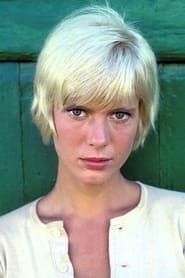
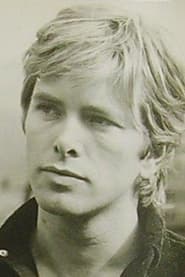
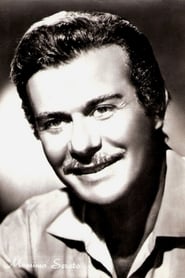
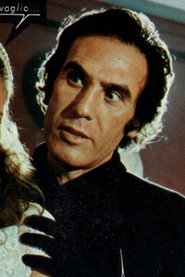
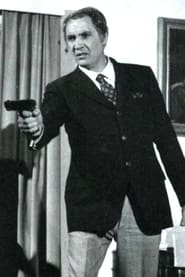
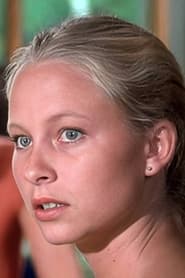
First of all, one can notice an effective construction of some characters, starting with the protagonist, a talented Mimsi Farmer ("Four Flies on Grey Velvet"; "The Perfume of the Lady in Black") who brings to life a girl with a twisted psyche and difficult to assail. The young researcher has an explicit repulsion for sex: she leaves her boyfriend high and dry and in the hospital a colleague who tries to rape her. Yet the girl dreams of corpses that grope her and abandons herself to the overly affectionate attentions of her father, a good Carlo Cattaneo ("The Betrothed"; "The Five Days of Milan") who here has a soft spot for young girls. Crispino, also a screenwriter together with Lucio Battistrada, is keen to create a climate of morbidity that pushes much on the erotic dimension, aiming especially at "perverse" psychologies and over-the-top characters, and he succeeds for much of it. However, not everyone is convincing and some supporting actors, especially male ones, do not appear particularly inspired, starting with the character of Ray Lovelock ("One Shouldn't Defile the Sleep of the Dead"; "Being Twenty") and the unpleasant Paul of Barry Primus.
Even the gore department, though limited to a handful of scenes (almost all concentrated in the first part), is very appetizing and presents horrifying and realistic special effects.
"Sunspots," therefore, starts as a delectable and anomalous novelty to soon transform into a giallo too conforming to the genre. Here and there there are glimmers of interest, but the feeling of a wasted opportunity is always prevalent.
Curiosity. At the time of the release of "Sunspots" in Italian cinemas, masks without holes for the eyes were distributed to spectators entering the theater, which were recommended for the more impressionable ones for the most cruel scenes.
Comments
Comments (0)



Comments