

The Verdict
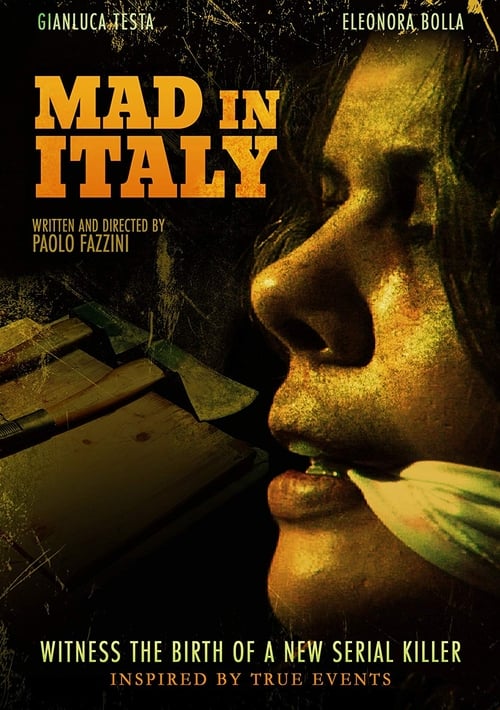
Davide is a young warehouse worker living alone in the countryside house left to him by his father. But one day, Davide is suddenly fired and his world collapses.
Davide is a young warehouse worker living alone in the countryside house left to him by his father. But one day, Davide is suddenly fired and his world collapses. In financial difficulty and unsuccessful in finding another job, the young man decides to kidnap the young daughter of an industrialist to demand a ransom. But things get complicated and Davide's mind seems invaded by dangerous demons.
From the press kit of "Mad in Italy," we can read: The global economy is hit by the American economic crisis and important political changes seem to overturn governments. [...] Inspired by real-life events, MAD IN ITALY drags us into a chilling and disturbing reality. And this handful of sentences can effectively summarize the strong point of the debut feature by Paolo Fazzini, a thriller that finds its originality in the desire to infiltrate the social sphere, in a critical situation that affects Italy (and not only), especially regarding youth precarity, which often pushes those overwhelmed by it to reprehensible actions. But the curious thing is that "Mad in Italy" managed to predict this phenomenon, to anticipate it, since it was filmed when the word "crisis" was not yet common and having the luck to be ready for the public right at the "ongoing crisis."
It is interesting, therefore, the use of a theme rooted in the social sphere, such as youth unemployment, to kick off a thriller that would not have displeased the audience of certain 1970s Italian noir films, with constant references to an "italietta" like the current one that forces people to commit the most terrible actions to "survive." However, this social aspect that makes the difference in a film that remains of genre is perhaps more relegated to intentions than to facts. "Mad in Italy" takes inspiration from these events, which are declared at the beginning of the film as real, and poses several "reminders" with Davide's attempts – in vain – to find work in companies that prefer a university degree (as if this, in reality, were really sufficient...). For the rest, however, one gets the impression that the film divides too sharply into two souls that do not manage to coexist naturally: on the one hand, we have this halo of social commitment that seems to almost suffocate everything and everyone, on the other, a spirit of genre film that would like to stage the story of a "madman" who kidnaps a girl. The two faces do not appear to be of the same coin and the film seems to have difficulty getting started, it proceeds continuously with hiccups and finally concludes almost as a non-event, in one direction or the other.
Seeing the protagonist going around job interviews, dealing drugs, and taking care of a gagged and tied-up girl tells us one thing, which is perhaps the true reason for the film. But then finding the same character pursued by disturbing visions that seem to have sprung from a ghost story by Takashi Shimizu or playing the psychopath by disemboweling and hitting unfortunate people tells us another thing, and this other thing, in the context of the film, is intrusive, jarring, making the horror component of "Mad in Italy" superfluous and gratuitous.
The staging, however, is decidedly praiseworthy, with beautiful photography – curated by Mirco Sgarzi – that alternates realistic light cuts with others that prefer colored gels of Bavarian memory. The soundtrack also knows how to make itself remembered, thanks to electro-pop sounds that underline the images in an original way.
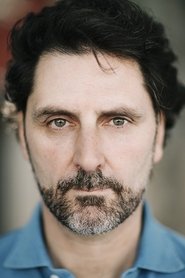
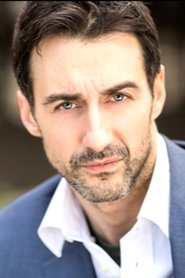
Good work from the actors, which mostly revolves around the two protagonists Gianluca Testa, with a sufficiently haunted and hallucinated look to make his character credible, and Eleonora Bolla who will later be a co-protagonist in "Come è bello far l'amore" by Fausto Brizzi, who offers a very convincing performance for the kidnapped girl.
In conclusion, "Mad in Italy" shows itself as a film with great potential not entirely expressed, remaining more on the conceptual level than on the factual one. Perhaps it would have been wiser to work by subtraction on the screenplay, giving greater identity to a film that wants to be of "weight" but continuously declares its belonging to the horror universe, which perhaps did not fit here much.
Comments
Comments (0)

Comments